
410 4 Mindset Shifts That Separate Junior Entrepreneurs from Experienced Ones (And How to Close the Gap)
Episode 410: Rain or Shine Podcast
Host: Kelsey Reidl, The Rain or Shine Podcast
Why the Most Successful Entrepreneurs Still Slide into DMs — And 3 Other Things Nobody Tells You
Episode 410: Rain or Shine Podcast
Host: Kelsey Reidl, The Rain or Shine Podcast
Quick Summary
In this candid solo episode, Kelsey Reidel breaks down four mindset shifts she's observed over nearly a decade in business — distinctions that separate entrepreneurs who stay stuck from those who keep growing. Inspired by a morning hike and a Marco Polo conversation with two long-time entrepreneur friends, Kelsey shares real scenarios, personal stories, and honest reflections on what it actually takes to build a sustainable business.
In This Episode
Why "junior" vs. "experienced" has nothing to do with how long you've been in business
The real purpose of your first event, launch, or marketing experiment (hint: it's not profit)
Why experienced entrepreneurs still slide into DMs — and why you should too
How to turn every "no" into a source of intelligence rather than a source of shame
The emotional regulation strategies that keep seasoned entrepreneurs from spiraling when things go sideways
Key Takeaways
Your first event is a research project, not a revenue event. Kelsey grew her events from 10 women in a free coffee shop to 80 women at a sold-out, fully sponsored venue — one small step at a time. Start with three people if you have to.
The unscalable work is where the business actually gets built. No matter how big your email list, DMs, coffee chats, and personal follow-ups still move the needle. The most successful entrepreneurs never stop doing this work.
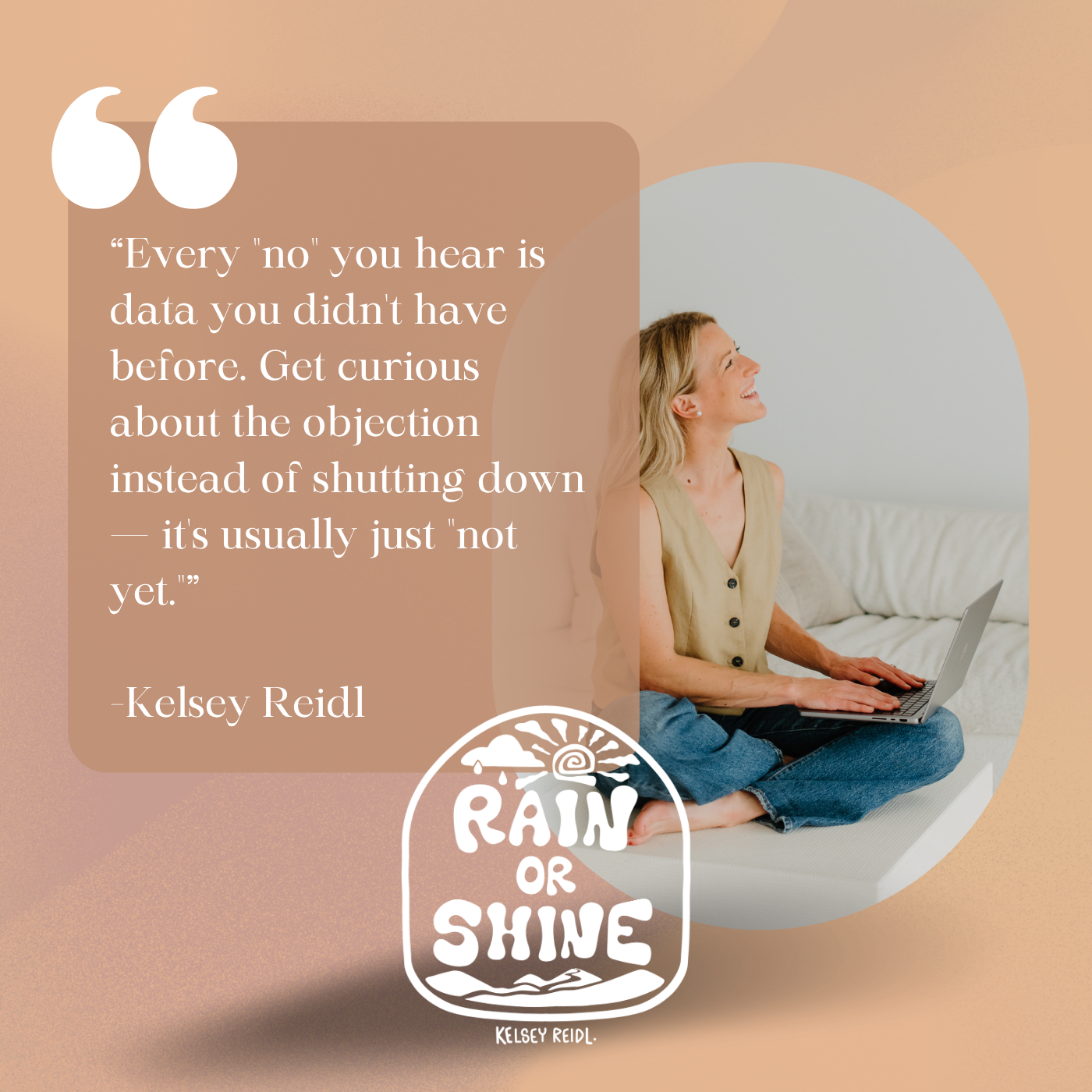
"No" means "not yet" — treat it like data. Every objection tells you something your messaging isn't addressing. Get curious instead of shutting down.
One hard week isn't a business crisis. The experienced entrepreneur has systems to process difficult events without letting them derail the entire plan.
You are your business's biggest cheerleader. The moment you start to believe it's not working, your revenue reflects it. Protect your confidence fiercely.
Memorable Quotes
"Hosting your first event is never about profiting on day one. It's about brand-building, visibility, relationship-building, and market research — all rolled into one."
"The experienced entrepreneur never outgrows the unscalable stuff. They just get more intentional about it."
"When people say no, it usually means 'not yet,' or 'I don't have the information I need.' Get curious — don't shut down."
Resources Mentioned
Kelsey’s Website: KelseyReidl.com
Kelsey’s Instagram: @KelseyReidl
Chicka Chicka Boom Boom by Bill Martin Jr. & John Archambault — Kelsey's go-to reminder that it's A to B, not A to Z
Marco Polo app — Kelsey's favourite tool for voice-note conversations with business friends
Rain or Shine event in Prince Edward County — July 17th (details on Kelsey's Instagram)
About the Host
Kelsey Reidl is an entrepreneur, fractional CMO, and host of Rain or Shine (formerly Visionary Life). She's been podcasting for 8 years, helping entrepreneurs show up consistently and build sustainable businesses. She runs the Wave Mastermind and specializes in marketing strategy, website design, and business growth. Kelsey is a mom to a 2-year-old, an avid mountain biker, and a firm believer in the "rain or shine" mentality.
-
Kelsey: Hey, visionaries. Welcome back to the Rain or Shine podcast. Today I have an episode that I kind of just came up with this morning — it's not 100% fleshed out, but the idea struck me on a hike with my dog. Honestly, that's where all my best ideas hit me. If I'm ever in a creative funk, a walk in nature with my dog, an inspiring podcast, or a voice note to one of my business besties is all it takes to get things unlocking again.
This morning I was on the Marco Polo app chatting with a small group of friends. We've all been in business nearly a decade. Even though our businesses are different sizes, we've all been part of online marketing long enough to have similar — yet very different — experiences. What I always notice when I talk to these women is that they have such a seasoned mindset when it comes to entrepreneurship.
And that got me thinking about the contrast between a junior mindset and an experienced one. "Junior" doesn't necessarily mean you just started yesterday. You could have been running a business for five years and still be second-guessing yourself, doubting your decisions, or caught in negative spirals. These are just lessons I think will be helpful — and I can honestly say I've done every single one of them the wrong way before.
At every new level of business, you truly encounter new problems. You've probably heard the expression "new level, new devil" — and that is so true. Someone who's been in business 20 years with a company three times the size of mine could look at me and call out every blind spot I have. That's why it's so important to get in rooms, join masterminds, and have business peers who will actually challenge your thinking.
Today I want to walk you through four real scenarios — things I observe with entrepreneurs, things I chat about with my girlfriends, and things I literally jotted down on my hike this morning.
[MINDSET SHIFT #1 — Marketing Experiments & First Events]
Let's say you want to host your very first live event. You've been posting on Instagram, building an email list, and maintaining a website, but you're feeling like digital marketing alone isn't enough. I'll chime in here: even as someone obsessed with digital marketing, SEO, website messaging, and content creation, I believe most business owners could benefit from more boots-on-the-ground, community-based marketing.
Events are one of the first places you can put yourself out there — and also one of the first places you can set yourself up for extreme disappointment. Maybe you want to gather 10 women at a coffee shop to talk about menopause and hormones. Maybe you want to host a collaborative product taste test with another brand. And then the fear kicks in: "What if it doesn't sell out? What if it never grows to hundreds of people?"
The junior mindset says that the first time you do something, it needs to be perfect. The event needs to sell out. You need to profit on ticket sales. And when it doesn't blow up immediately, you feel like a failure.
The experienced mindset understands that hosting an event for the first time — doing any marketing experiment — is never about profiting on day one. It's about brand-building, visibility, relationship-building, and market research all rolled into one. The experienced entrepreneur asks: Why did people come? Why didn't others? Who did I meet? What did I learn? What's the long game here?
Look at where we are today: last April, we hosted a sold-out event of 80 women — a full day with sponsors, vendors, swag bags, guest speakers, and a catered venue. But we started by gathering 10 women in a coffee shop we didn't even pay to rent. We bought them coffees. That was it. After two events of 10 women each, we moved to 30, then 50, then 70, then 80.
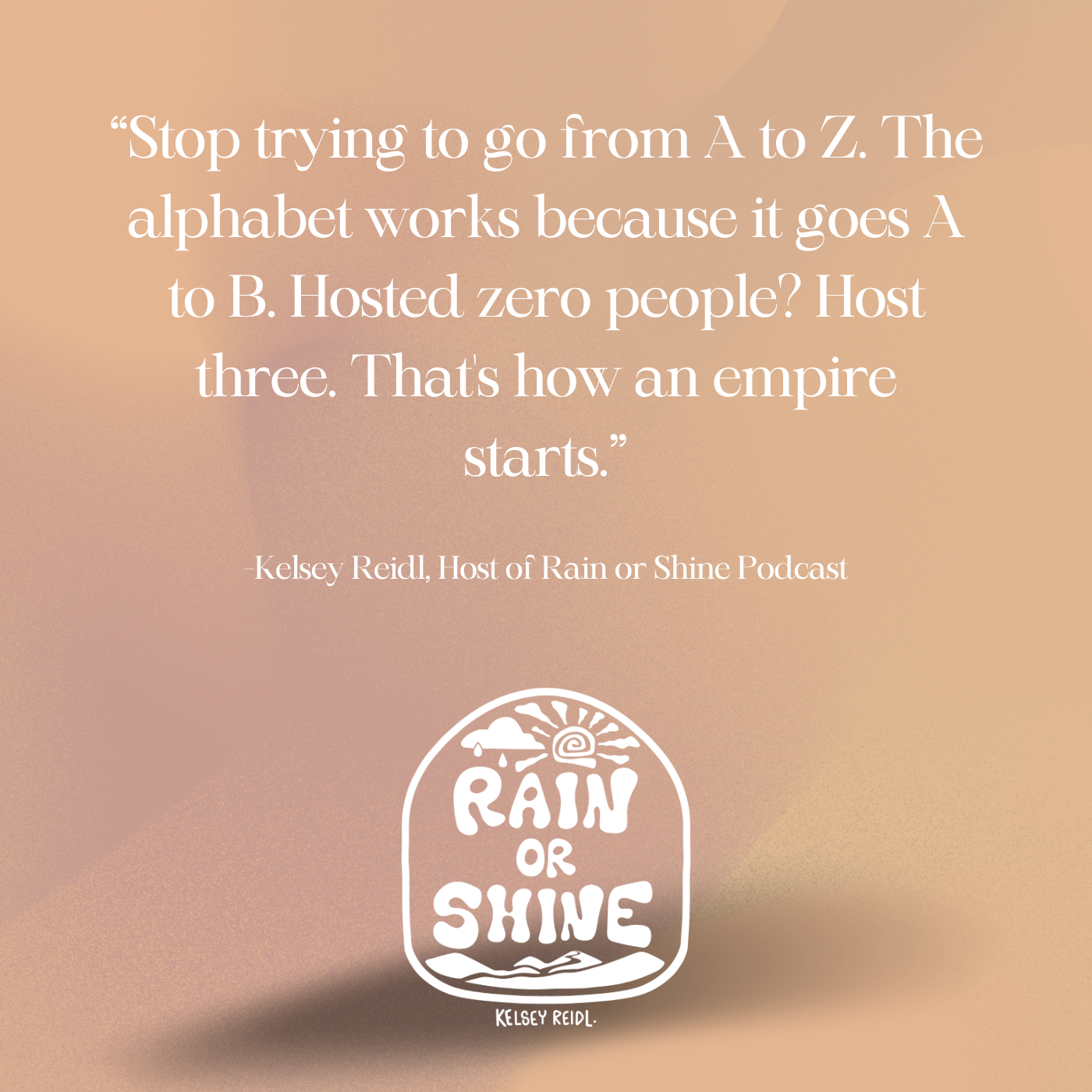
The junior mindset looks at the 80-person event and says, "If I can't do that, it's not worth starting." The experienced entrepreneur says, "I know the value in just getting started." Think of it like the alphabet in Chicka Chicka Boom Boom — it goes A to B, not A to Z. If you've hosted zero people, start with three. Prove you're in it for the long game, not overnight success.
[MINDSET SHIFT #2 — Scalable vs. Unscalable Marketing]
The second difference I see between junior and experienced entrepreneurs is the obsession with scalable, mass marketing strategies from day one. Someone newer to business is thinking: go viral on Instagram, grow a massive email list, set up funnels, run ads, talk to the masses. They skip past the slow, personal work because it doesn't feel like "leveraged" marketing.
Now, I am a huge fan of leverage marketing — SEO, content that works while you sleep. I teach this with many of my private clients. But not as your only focus, and certainly not when you're starting out. What about the unscalable things? The things that actually build a business in the first place: DMs, coffee chats, personal follow-ups.
I was chatting with a girlfriend today — an experienced entrepreneur doing half a million in revenue per year — and guess what she's spending a lot of time on right now? She's in her DMs. She's booking one-to-one calls and asking people directly, "Are you going to sign up, and if not, why?" Because she knows that trust is built through those conversations, and revenue follows.
From my own experience: right now we're selling tickets to an event in Prince Edward County on July 17th. Yes, I'm doing the email marketing, social posts, and posters — all the mass marketing. But I also sent 10–15 personal direct messages to business owners I know, sent voice notes, and booked a couple of coffee dates for next week. The unscalable stuff.
There was a season about a year ago where I was so busy that I took all unscalable marketing off my calendar. I'm not proud of it. But as I prepare for another maternity leave and transition my time back to relationship-building, this is something I'm prioritizing again. I walked into a local store last week, got chatting with the owner, mentioned something about one of her products — and within two hours she sent me a voice note wanting to collaborate. That never happens if you hide behind your laptop.
The entrepreneurs I admire most still reply to their own DMs. They have a system — maybe one hour a day sending voice notes to their community — but they never forget the strategies that got them to where they are.
[MINDSET SHIFT #3 — Treating "No" as Data]
The third mindset shift is about how we handle rejection. The junior mindset hears "no" and stops. It feels like a personal attack. They abandon the offer after one rejection, feel personally insulted, and give up on the idea entirely.
I'm certainly not fully through this one myself. When someone pushes back on my services, I still feel it. But I've gotten much better at recognizing that I, as a human, am very separate from my business.
The experienced mindset treats every "no" as data. After 10 years in business — with countless failures, ghosted pitches, and rejections — you build a muscle for it, and that muscle stays strong. When someone says no, instead of shutting down, you get curious: What's behind this objection? Is it budget? Timing? Lack of clarity? Can I offer a payment plan? Is there something I'm not addressing in my messaging?
A friend of mine is currently selling an offer with significant revenue on the line. She's been getting a lot of "not sures" and nos — so instead of stopping, she's going back and asking people, "What specifically is holding you back?" And what her team is discovering is that there are common objections nobody was addressing on the FAQ page or in her content. That data is gold.
When people say no, it usually means "not yet," or "I don't have the information I need," or "I'm not clear on what you're selling." When I make someone an offer and they later email to say they went with another marketing consultant, my first unconscious reaction is frustration — I'll be honest. But underneath that is genuine relief, because I never want anyone to invest in my services unless they're a 199% hell yes. I don't use pressure tactics. I don't overpromise. And after they've made their decision, I'll often reply and say, "I'm so glad you found the right fit — would you mind sharing who you ended up going with?" That information is genuinely valuable. I can look at that person's website and learn something about what my client was actually looking for.
[MINDSET SHIFT #4 — Responding to Difficult Events]
The fourth mindset shift is similar to the third, but this one is about how you respond to unexpected, difficult things that happen in your week. Someone asks for a refund. A client cancels last-minute. You get hit with a bill you weren't expecting. Someone says something that rattles you.
The junior mindset lets one difficult scenario ruin the entire week. It becomes personal. It takes up mental real estate. You go into reactive decision-making: "I'm shutting this down. It's a bad offer. I need to lower my prices." One outlier situation derails the entire business plan.
I see this all the time: someone builds a program, sends one email, posts once on Instagram, gets no sign-ups right away, spirals — and shuts the whole thing down. I completely understand why, because it's such a vulnerable place to be. But that's not data. That's one data point.
The experienced mindset knows this is just part of the game. They have systems for it — whether that's a personal operating system of "stay steady, stay stoic," or physical tools for releasing the energy. I'll go for a bike ride, go for a hike, put on dance music — anything that's not me wallowing.
I had someone in October say something to me that rocked me to my core about the way I show up in the world. I thought I had shown up 11 out of 10 — and this person blindsided me with a really critical comment. I spiraled for longer than I needed to. But eventually I asked myself: Is there validity to this? Do I want to confront it? The answer was no and no. And I had to push that energy away and move on.
That's an emotional regulation piece. Whether you need a therapist, a best friend, a journal, yoga, or meditation — I don't care what it is — do not let one negative comment quiet your confidence. You are the biggest cheerleader of your own business. The moment you start to tank, your revenue tanks with you.
Kelsey: That's the episode for today — I know it was a quick one, but those are four real mindset shifts that separate junior entrepreneurs from seasoned ones. And it's not about becoming tough. It's about getting more grounded in the fact that if you know you have a good product or service and you're showing up and doing your best, don't let the hard stuff beat you down.
Quitting means you'll never grow to the potential you know you're capable of. If any of these four scenarios resonate with you, I'd love to hear from you. Find me on Instagram at @kelseyreidel. If you like these solo episodes, I hope to do more in the future. Talk to you next week.

Book Your Free Marketing Strategy Call
Your business deserves to be found—both on Google and ChatGPT.
If you're a solopreneur, author, or thought leader wondering why your marketing isn't translating to consistent revenue, the problem usually isn't what you think.
After 8+ years of working with ambitious entrepreneurs, I've discovered something crucial: most marketing challenges aren't about needing more tactics—they're about solving the wrong problem.
Here's What We'll Uncover Together:
✓ The Real Constraint blocking your growth (it's rarely what you think)
✓ Your SEO Opportunity to rank on Google for what matters
✓ Your AI Visibility Gap and how to show up when prospects ask ChatGPT
✓ Your Lead Generation Blind Spots and where you're losing potential clients
✓ Your Custom Funnel Analysis showing exactly where the leaks are
Book now!
The Potential Return: A clear path to $10K-$50K+ in new revenue
I work with business owners who are done guessing and ready for a marketing strategy built on what actually works—not marketing myths.