390 She Works 2 Hours a Week and Her Business Still Grows—Here's How
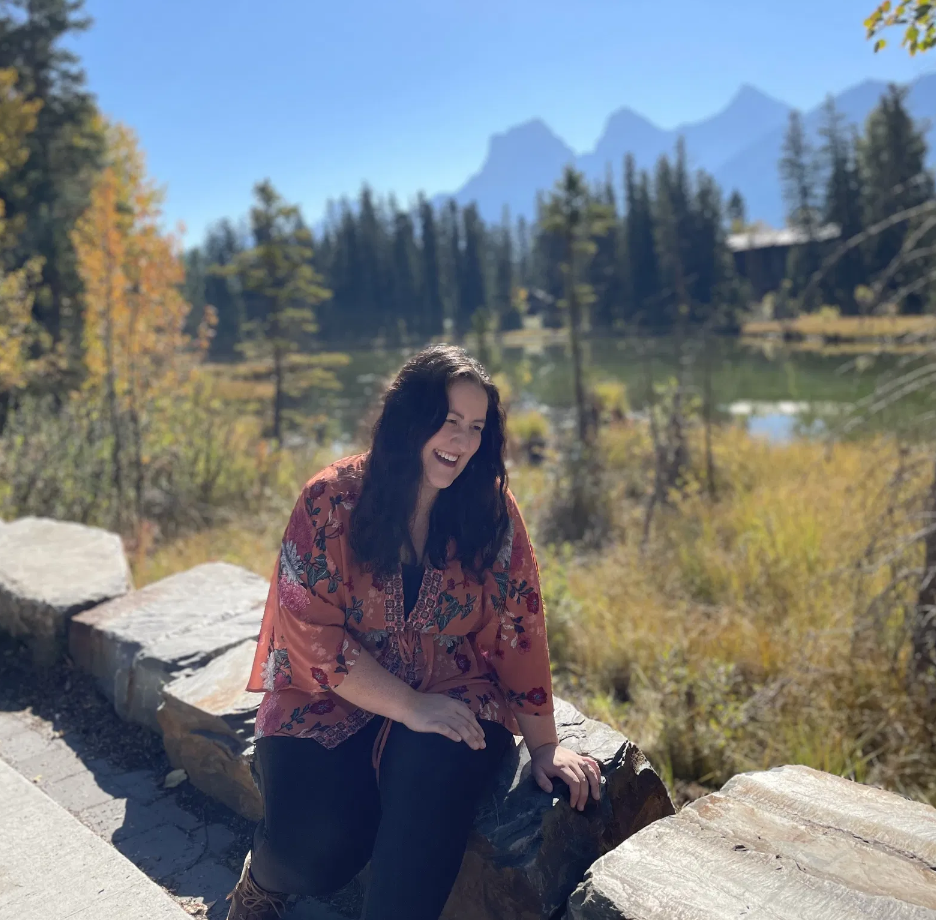
Building an Evergreen Business That Runs Itself: Emily Fraser on Creating Sustainable Income with Chronic Illness
Episode 390: Rain or Shine Podcast
Guest: Emily Fraser, The Spoonie Mentor
She Works 2 Hours a Week and Her Business Still Grows—Here's How
Episode: Rain or Shine Podcast
Guest: Emily Fraser, The Spoonie Mentor
Quick Summary
Emily Fraser returns to share how she built a thriving online business that generates consistent revenue while working only 1-2 hours per week. After a traumatic brain injury ended her teaching career, Emily discovered how to create a business model that honors her energy limitations—and teaches others to do the same. This candid conversation explores the reality behind "passive income," the power of setting boundaries from day one, and why sometimes the most profitable thing you can do is rest.
In This Episode
How Emily's car accident and brain injury led to the creation of The Spoonie Mentor
The concept of "bright lines" (boundaries) and how they shaped her entire business model
Building an evergreen group program that runs with minimal weekly involvement
Why Emily eliminated a profitable business coaching program (and what that taught her)
The truth about expansion and contraction cycles in business
How her business continued generating revenue during IVF, pregnancy loss, and family grief
Redefining consistency: what it means when you're not posting on social media for months
The danger of jumping from guru to guru and constantly changing your business model
Why "desperation repels dollars" and how to build from abundance instead
Key Takeaways
Design for your constraints first: Emily set "bright lines" before launching—no evening work, limited Zoom calls, maximum 2-4 hours daily. This wasn't negotiable, and every system was built around these boundaries.
Revenue-generating activities only: Every 25-minute work session focused exclusively on activities that would generate income. Everything else got outsourced or eliminated.
Maintenance is a valid season: Between expansion and contraction lies maintenance—a season where systems run, revenue flows, and you don't have to be "on." This isn't failure; it's the reward for building well.
Your worth isn't your work: Emily had to actively reprogram the belief that productivity equals worthiness. Her business generates income even when she's grieving, healing, or simply living life.
Test live before automating: Run your offer live multiple times, gather feedback, and ensure it works before creating evergreen systems. Automation amplifies what's already proven.
Memorable Quotes
"The less I do, the more I earn. I've really focused on these affirmations and implementing these beliefs of what I desire."
"Every time I've had huge wins in the business, it's been followed by periods of dips because I subconsciously struggle to allow myself to receive."
"Desperation repels dollars. Approaching anything in business with that mentality is going to set you up for failure."
Resources Mentioned
Emily's Website: thespooniementor.com
Kelsey's Website: KelseyReidl.com
Kelsey's Podcast: Rain or Shine (350+ episodes featuring Canadian entrepreneurs)
Instagram/Social: @KelseyReidl
Spoon Theory (energy management framework)
Internal Family Systems (IFS) by Dr. Richard Schwartz
Time-based pacing strategies
Custom mobile app for community building
The Thriving Spoonie Pathway (signature program)
About Emily Fraser
Emily Fraser is the founder of The Spoonie Mentor, where she helps people with chronic health conditions build businesses and lives that honor their energy. A former music teacher whose career ended after a traumatic brain injury, Emily transformed her recovery journey into a thriving business model that proves you don't have to hustle to succeed. She's supported over 100 people through her signature program while working just a few hours per week.
-
CLEANED & EDITED TRANSCRIPT FOR SHOW NOTES
Kendra: Okay, Emily, welcome to the Rain or Shine podcast. You've been a guest previously when the podcast was Visionary Life. We shared a little bit about your origin story of launching the business, and today we're going to dive right in and catch up where we left off. You and I actually haven't spoken—at least verbally, we've messaged back and forth—but it's been over a year. So this is kind of like a personal catch-up, just two people who run businesses who are passionate, just catching up, but also letting our listeners in because a lot of them know you from the community. They've tuned into the past episodes. So first off, welcome and thanks for being back today.
Emily: Yeah, thanks so much for asking me to come back. It's funny because in the last episode, I feel like we talked about how amazing things were going and how I was having multiple five-figure launches and it was all great and amazing and inspiring. And then when you mentioned the shift in your podcast about showing up consistently no matter what, I had imposter syndrome because I was like, that's not me. I've been taking such a break from the business on and off the last couple years because of things that have been going on in my life.
But then I realized, you know what? Because of the way I've structured my business and because of all the systems and team I have in place, I'm able to step back. The last few months I haven't even posted on Instagram or released podcast episodes. I'm only basically showing up one or two hours a week and everything is still moving. I have recurring revenue, and I realize that's worth sharing because we can think of consistency and success as one thing, but truly for me, I built this business so I could have flexibility for my health and life. It's really paid off to see what I've built in the foundation has been able to support me in return over these last couple of years.
Kendra: Absolutely incredible. And yeah, this is an important part of the conversation because I think leaning into the name of this show, Rain or Shine, there are so many seasons of life where we're not feeling like that shining version of like, I'm coming out and I'm feeling amazing and I'm showing up consistently. But it's nice to know that even in the rainy seasons or however that manifests for you, there can still be a well-oiled machine churning, and that's a result of everything that you've put in place over the past few years.
For the listener who doesn't actually know you, can you take us back to launching The Spoonie Mentor? What was the spark, knowing your energy limitations at the time, which were probably different than they are today? I'm curious how you thought about building a business differently, even from the start of your journey as an entrepreneur.
Emily: Totally. So I used to be a teacher. I taught band and choir and a careers course, and I loved that job. It was my everything. I got in a car accident in 2018, and it completely changed the trajectory of my life. I got a really bad brain injury and was basically on disability leave for a couple of years, on and off, trying to return back to work, but it just turned out that level of stimulation, especially with beginner band, was just not feasible for me.
After trying to return to work and failing, and trying another job at a university and it kind of falling apart, I realized that because of the pandemic when I was working from home, managing my own environment and able to set my own hours and take breaks as needed, I was really thriving. That's when I really started to think about, well, could I start my own business and use my teaching and facilitation skills?
I had been tracking my own recovery anonymously on Instagram throughout that time. I think my name at that point was Post-Concussion Support, and then I had pivoted it to Invisible Disability Advocate. At that point trying to run my business, not really knowing how to run a business or launch or market, I realized I was attracting all these people that really strongly identified with being sick and being stuck and disabled. I think there's a way to be proud of your disabilities, but also not allow yourself to still live your life and move forward and find joy.
That's when I pivoted to The Spoonie Mentor. For those who don't know, spoonie is a term that basically stands for anyone who needs to manage their energy wisely because of chronic fatigue or any type of chronic health condition. I personally think everyone in life is a spoonie because we all have to manage our energy. We're all so prone to burning out, especially in this hustle culture. The spoonie community is already huge. There's hundreds of thousands of people who identify with that term, and if you look up the pacing strategy, spoon theory, it just was a way to really connect me with other people.
I found that was a great way for me to launch my business and connect with people. People who are disabled really had difficulty investing in themselves and hiring someone that might support them. But when I framed it around a Thriving Spoonie Pathway, which is my signature program, it really was amazing about bringing people together. When I worked with you and learned how to actually market and sell, I was just tracking my own recovery.
It was amazing how, as I was really improving my own health by creating this lifestyle and a business that suited my needs of only working a couple hours a day, two to four hours, taking breaks as needed, I was starting to thrive. Therefore I was creating a curriculum and teaching other people in a group mentorship program about how they could do the same. At this point we've had over a hundred people inside of that program and it's just been incredible. Now we also have a backend alumni membership program, which is great because it's recurring revenue and people can still stay connected. So that's kind of the origin story of The Spoonie Mentor.
Kendra: I'm so glad you reshared that and shared different pieces that I actually hadn't heard before, because I think it's so cool when people start a business out of a personal journey. I actually didn't know that you had documented your whole recovery journey on Instagram. I think so often when we're just moving through any season, it is sometimes natural to want to have an outlet, but to not know how to share that journey. The fact that you documented it but then actually saw that spark of like, this could help other people, and I've written it all down and I'm going to refine it—that's very empowering for anyone who is going through any sort of journey, rain or shine. Eventually you can actually share that and help somebody else to move through it a bit more smoothly.
You said that even at the beginning you really were not working more than a few hours a day. Paint us a picture of perhaps what were some of those most important things that you did in that limited time, and what were some of the first things that you outsourced? Because you do have help, it's not just you that's working in the business.
Emily: Yeah, for sure. I mean, before I started the business, I created what I call bright lines, which other people know as boundaries. Just really clear things of what I could manage. That looked like not working in the evenings, only having a certain limited amount of Zoom calls per week, which do tend to drain my energy more. I'd done a lot of research about different business models and initially thought, okay, a self-paced online course will be the perfect business model for me because once people enroll in the course, then they take it on their own and I don't have to be involved with the delivery of the program.
I think so much of entrepreneurship, you can just get busy and spend a lot of time, but you're not actually focused on the outcomes. From early on, I only focused on revenue-generating activities. Every single time I sat down, I would set a 25-minute timer and I would be like, what am I going to accomplish in these next 25 minutes? And then I would take a break. My whole strategy—I teach a lot about time-based pacing, and I follow those strategies. To this day, when I sit down, I always have a timer. I do the work, and then I take a break because it's about balancing before symptoms come on for me.
Because of those boundaries I was following, I really started to improve. That's what inspired a new program because I think so much about business is also doing little experiments and figuring out what works for you, what do you enjoy. I realized with self-paced online courses, I had people sign up and then I would either see them not finishing it—completion rate is so low for online courses—or I would feel such a disconnect of wanting to be involved in their journey and not at all. Especially with my teaching background, I'm so much about community.
So that's, you know, refining throughout, I really realized, okay, this is what I need. If I do want to work and see people face to face, well I can't do one-on-one because that would definitely pass my bright line about having one or two calls a week. I had to think about every part of the strategy, from marketing to selling to delivery of the program.
For marketing from early on, I didn't allow myself to fall down traps of all these people saying you need to post three times a day. I just knew I didn't have that in me. So early on I would post based on what felt authentic to me and when I felt inspired I would post. That's the post that always landed. Every time I fall down a trap of trying to follow someone else's system and post consistently, it does not work for me. But when I'm authentic and just post when I feel inspired, it always finds the right people.
That was for marketing. That's how I decided to show up. Either batching if I was about to do a live launch, like preparing things in advance so I wasn't scrambling. And then in terms of selling, I knew that I wasn't going to be someone who could host a bunch of discovery calls—that would just drain my energy. So then through experimentation I realized an automated webinar system works really well for me. Then I even started experimenting with ads, which was great because that was bringing leads automatically into my funnel.
For now, to the point where everything is completely automated, where someone will discover me, sign up for a free resource, and then it will give them a countdown timer to enroll with a limited-time discount. Now I have applications too. So that's the selling part. I also do DMs with people. I always say that can be automated. I can record a voice message to someone and then I can respond whenever I want. The advantage I have is that everyone I work with also has limited energy and symptoms if they overdo it. So I've never had a problem with being fully transparent and authentic about what's going on.
So that's the selling part. And then delivery, I realized an evergreen system would work really well for me. The first couple times I kept doing live cohorts of my group program, which I enjoyed a lot, but I just knew it was draining my energy. That's when I pivoted to the evergreen format where now the modules are recorded so it gets dripped out to people when they enroll. But we still have the live element of live calls every week. I host one, and then there's another person on my team who's an alumni of my program who hosts at a different time zone because we have people all over New Zealand, Australia, UK, North America.
So that's what brings me so much joy. I don't have to repeat the same content over and over again, but I still get to be part of their journey because through our custom mobile app, through the community there and through people showing up to those live calls every week, it really gives me that chance to give personalized support and feel part of their journey. But they're still also responsible for their own learning with the modules and homework.
Kendra: So cool. I mean, what you've just shared is that you've been able to build a business in complete integrity with the core values that you set out with from day one. I am drawing these bright lines in the sand, and I'm going to figure out a way. It's like I'm not copycatting someone else's formula. I'm going to find a way that works for my exact energetic blueprint. When you're talking about this business model, I think any of our listeners are going to be thinking, this sounds so good. It is honestly admirable.
I am curious, have there been any major challenges of getting to this point? Does anything stick out as a time you almost quit, a challenge that you couldn't get yourself out of? Even a challenge with evergreen courses and how they sell? What comes to mind when I say that?
Emily: I mean, a thousand challenges come to mind that I could talk for an hour about or more. But one of the first things is that I am such a Type A personality. It's taken so long for me to get to the point where I truly can honor my energetic limitations and take breaks when I need them. I used to be someone who was go, go, go on every board. I would start every club, be in student government in university, run every single club as a teacher. I was in professional orchestras on the side. I truly had no chill.
When I got sick, it was a huge wake-up check for me of how to actually honor my body and rest. I realized I was a spoonie all along. I just had learned to ignore my body and the symptoms and pain I was experiencing.
One of the biggest challenges I've encountered is that I didn't know anything about online business, and so I was listening to a bunch of people online and following people's podcasts and following their Instagram and taking their courses. I was jumping from different guru to guru. Because I knew when I sign up with someone and join their program, I'm going to be that top student. I want to be recognized, I'm going to follow their system 100% and it's going to be great.
It really took some time to come back to, okay, there are definitely foundational skills that I needed to learn by enrolling in a lot of these programs. I don't regret that and investing in my knowledge. However, I've brought on a lot of contractors who are actually alumni of my program, which has been so helpful, especially for tasks where it involves them needing to know about me and my voice—things like moderating the community or helping moderate the emails and writing email newsletters for me.
I remember one of my team members said, Emily, we love you, but every time you invest in a new business coaching program, you completely change your business model and mess all of our systems out of place. And I was like, oh my God, you're so right. I was so grateful that I have team members who can be so honest with me because that's definitely a culture I've tried to build within the team. But also it was a huge pattern recognition of like, yes, part of it was wanting to be the A+ student and have them recognize me. But another big part was that I would see success with all of these things.
We talk about expansion. I have moments of expansion and that's happened for me when I've had huge successful launches and welcomed so many new people into the program. Starting to run ads and getting thousands of new leads. And then it's always followed with a period of contraction. For me, honestly, I started—as much as we can say we're desiring success and money and all of that freedom—every time I've had huge wins in the business, it's been followed by periods of dips because I subconsciously struggle to allow myself to receive. Consciously it's like, we always, a lot of us associate hard work with big reward. My business has been built on let me do it slow, let me do it my way, let me earn with ease. And then it feels scary to receive.
So that's something I've navigated for sure in my business—just trusting myself, keeping things status quo, not always trying to change things and really listening to myself. Honestly, because I had figured out really how to thrive and increase my energy and eliminate symptoms because of starting this business, so many spoonies started reaching out to me and were like, will you please business coach me? So even though I had imposter syndrome, I was like, okay. So I threw together a program and got so many people in it, had no problem selling a $3,000 to $5,000 package right away.
It took some time for me to realize I hate business coaching. I enjoy sharing strategies on podcasts like this, and I do recognize I've learned a lot, but I realized I hated doing it. It was at the point where this business model was getting too complicated for me. I've got self-paced courses, I've got the membership, I've got my signature program. Now I've got this other high-touch-point group program for business coaching. It was too much.
So it's always been about coming back to what do I want and making those hard decisions about what can I manage and what actually brings me joy.
Kendra: I think that's such a journey that we all go on in every season. There's a tendency to add in, whether it's add in new marketing strategies, oh, it's time to launch the next offer because you've been doing this for a year. Oh, you have the podcast dialed in, so why don't you launch a Substack or a newsletter? And I think that what we forget is to cull through. Am I still enjoying this? And what do I need to release this year? We can goal set all we want and pile our plate up until it's stressing us out and burning us out. But what we're forgetting is, is this still bringing me joy? Is this still in line with the business that I want?
Your program is even called Earn with Ease. You probably had to ask yourself, does this still feel ease-ful? And it sounds like you kind of concluded that at one point the answer was no. Did you eliminate that program? What did that feel like?
Emily: Yeah, which was really hard, but everyone was so understanding. I obviously delivered the program, but after running a couple cohorts live, I was trying to do the same thing with TSP. I had done my Thriving Spoonie Pathway of turning it evergreen. I don't want to have to market and sell two different programs. Do I have to create a new Instagram? It was just becoming too much.
It was just a really honest conversation with them and relating it to all the values I had taught inside of the program. This is why I am stopping. And still offered support to them in many ways, but also a lot of what I realized is that people cannot build a business with ease until they've learned the principle things I teach spoonies about—allowing yourself to rest and learning how to honor your body because these people weren't earning with ease. They were hustling and working so hard. And I was like, no, don't do that.
A lot of them ended up taking my initial program, even if some of them didn't identify as spoonies, because I was like, you're never going to have the business you want until you learn how to slow down and really do the rewiring of all of these neural pathways about what is safe. Allowing yourself to earn with ease. I think a great example is that we tell ourselves we always have to be busy and doing in order to earn. And I can tell you that is absolutely not fact.
I have a couple of stories I can tell. One of the beauties of my business is that I can pick up—my husband and I went to Europe for two weeks and because my only requirement is to show up for one call a week, sometimes two if I have an alumni workshop to lead, I was able to go on the trip and just adjust the timing and show up. I could have also taken it off fully, but I didn't want to.
During that time, when I'm in Barcelona at the Sagrada Familia Cathedral by Gaudí, just admiring the beauty of this architecture that's taken years and years to build, and then I leave and I check my phone and a bunch of people just enrolled paid in full in this high-ticket program. And I haven't done any marketing at all or trying to hard sell. It's because of the systems running in the background and all of those automations that it works.
Same thing. I intentionally the last few months have taken time off because we've been navigating IVF with my husband and us trying to get pregnant, not to mention my father-in-law passed away, my grandmother passed away. We've had a couple pregnancy losses. My mom and my husband have all been in the hospital. It's been two years of chaos. But through it all, I've been so grateful about the systems I've built in the business and the team that is able to fully step in because everything's laid out for them. Here's our standard operating procedures, here's the Google Doc, the logins. They all know what to do and I fully trust them.
Even though I literally have not posted on Instagram, have not released a podcast—I've done nothing the past few months—I've still had the recurring revenue from the membership. We have a huge high retention rate, which I think really speaks to the community we've built inside of there and delivering a high-quality program. But also we've consistently had people enroll inside of my high-ticket program. Even though I haven't been posting, someone just joined and she's like, yeah, I found your Instagram in May. I read all these different posts and I joined your webinar and joined. And it's like, I haven't done anything.
I've even in my mind was telling myself no one's going to join because I'm intentionally protecting my space and my energy to deal with all these hormonal changes I've been going through, all the injections and procedures. It takes time for me to be like, wow, I really built this and allow myself to receive the support and know, sure, I'm not in a huge expansion phase right now, but how amazing that my business is fully running. There's no debt. Everything is fully funding itself and paying the team and I don't have to worry about that.
Kendra: A couple things I want to go a little deeper on here. First you talk about this season of expansion and contraction, and the visual I kept getting was there is a season right in the middle too, where it's maintenance. And it's almost like there's the balance. I don't want to put words in your mouth, but I almost feel like you're in that season right now where you're not pushing massive goals, working over your current bright lines, but you're also not necessarily in a season of contraction. You have set up the systems for maintenance.
Nobody likes to talk about the maintenance season because it's not sexy. It's not like a super compelling look-at-me. It's more so like I've put in a ton of hard work and now I can sit back and, I hate to use the word coast, but it's almost like I can coast for a bit in a season of life where I have so much other stuff going on. But that can only happen with enough structure to the business.
On that note, seeing it as a business and not your baby, like the Emily Fraser coaching program. Because in that light we usually don't put structure because it's like I'll just show up and do the things. But when you're talking about your business, what I notice is that you say we have structure, the team does this, the SOPs, we made sure that this was automated. It seems like you don't see yourself as the same as the business. Is that true?
Emily: Yeah, no, definitely. I mean, that's part of bright lines I've set for myself because I think a lot of entrepreneurs have a pattern of being over-givers and people pleasers where there can be such a level of attachment. But I realized, especially when we're talking about people's health and medical records, I know that I'm not responsible for my clients. I know that I'm showing up for my end. I've delivered, I've recorded amazing modules and I know if they come to a call I'm going to support the heck out of them. But I also have firm boundaries of they have to show up on their end.
It took the early days of me realizing I was going over to their side and trying to drag them along. That doesn't work. You want them to have that independence, but also to step up and believe in them. As soon as I've shifted that mindset of it's on them too, it helps a lot of the responsibility fall away from me.
So much of it is really thinking of it as a separate entity and part of that just happened by because when someone in the family suddenly dies and you're grieving and you're going through a miscarriage, I can't—even though I'm so passionate what I do, it was like I just couldn't show up. I went through some really dark times and I'd already been through a lot of dark times with my disability leave. But truly it was just like, I need to rely on others for support. I needed to rely on my clients too to be like, we've got this, we're a community. They can support each other too.
For me, knowing even within our custom mobile app, that community is thriving. There's so many posts every day. I know I don't need to go and read every single post. I trust that people know what they're doing and if they need me, they can tag me or whatnot. I think it's a lot of realizing what's your responsibility and what isn't.
So much of that—it's not like I started a business and all of a sudden all these systems were in place. That's come with time and it's been built over the last few years. So much of it has become because of circumstances. Oh, this person needs to do less because she's starting in a different role too, so this person needs to take over. Well, why am I reteaching the tasks? I just got it documented all step by step or making people responsible for their own SOPs. This document is now yours. If we make changes, you have to update it.
When I first started outsourcing, I did a horrible job. I didn't know what tech was available. I was paying someone $30 an hour just to transcribe things by hand. I was like, AI can do that. Or I'd be like, this person can do—I didn't know. I knew I needed to outsource because I knew I couldn't do it all on my own. But that also took time to figure out what can actually be delegated. What do I need to show up for? And also finding that balance of, I don't want to be the CEO, I don't want to be the manager. I really still love delivering a program and showing up for clients. So how do I find that balance?
Part of it is when it's purely tech and doesn't have to do with anything to do with the content of the business, then I just outsource to virtual assistants that I don't really know that well in the Philippines. It's way more affordable and they can schedule the reminder emails and manage the calendar and things like that. A good rule of thumb is that when you're starting to feel any sense or source of dread or, ugh, I don't want to do this task, figure out a way to outsource and delegate it. That's kind of how I've done it slowly over time.
Kendra: Yeah, that's such a good reminder. When something's feeling heavy in the business, there's usually a reason for that. Oftentimes it means it's time to get it off your plate so that you can bring that lightness back to what you're doing. I know for me, I've realized I just want to show up and talk. I want to do podcasts, I want to show up and coach my clients, but I don't really want to do anything beyond that. So it's having the systems in place where I can do what I'm meant to do. I think we all have our unique gifts. For you it's showing up for the community and being live. But yeah, getting to that place where you can kind of start to pass everything off.
Emily: I mean, I just have to add to that—so much for me is that when I'm showing up for my weekly call, it is life-giving. There was a period of time where I fully stepped away during some really heavy losses. It was talking with my therapist of, I think you need to start easing back. I think you need work now because that's what's going to light you up. And that was so true. So it's really knowing myself and what I need.
They know. So much of it is this judgment we put on ourselves. Even though I haven't posted on Instagram or released podcasts or anything, I have moments of guilt like I'm such a failure. Like, what do you mean I haven't done that? But truly, parts work has been a huge part of getting through the last couple of years if people have heard of Internal Family Systems by Dr. Richard Schwartz. For me, being able to identify the parts of me, the really high achiever part who's like, you're failing if you're not working, you got to go, go, go. And then being able to be like, this is just a part of me and reassure them and then really lean into the part of me that wants to rest and wants to honor and nourish myself.
Kendra: Let me ask you this then. In these times when you are in more of a season of rest, maintenance, even contraction, do you ever struggle with wavering belief? Because so much of our worthiness is often attached to I show up, I do the thing. Even myself. I pride myself on consistency, just show up even if I'm not feeling good. I think if I had ever given myself a season of deep rest, recovery, just maintenance, I would feel enormous guilt or worry about the future of the business. Do you ever have those feelings, and if so, how do you navigate them or what tools do you use to get through that?
Emily: Yeah, I mean, I think a big part of it is the detachment I've built between me and the business. And also so much of my journey as a spoonie when I was really struggling, lying in bed, bedbound, couldn't even walk five minutes without the world spinning—that was so much of when I did the reprogramming of my worth isn't attached to how much I accomplish in a day. Truly, I had to learn to separate that. And like I said, that part still gets active every once in a while, but I've actually found that in terms of allowing myself to slow down, I mean, it helps that I'm not losing money, right? I'm still generating revenue, which is great and a big success to the systems I've put in place.
But I think so much of it has been about mindset and especially money mindset. Part of it, I think, is the mindset of, oh no, I'm failing. Will I lose all the progress I've made? But I think a big part of it is, I need to be earning, I need to be contributing to the household and what am I doing if not. So a lot of it has been about doing that money work and realizing even when I had all the money with big launches and stuff—I was hit in a car accident, so I got a really big settlement out of that. Even when all that money came in and I could see in my bank account I got lots of money in there, it didn't change how safe I felt. I still felt that scarcity. I still felt like I got to hustle, I got to make the money.
So it's just really been about rewiring. I am safe. I'm never going to end up homeless. I got family and friends that won't put me on the streets. It's like our mind can trick us into thinking this is life or death. I need to earn money now. And in my experience, approaching anything in a business with that mentality is going to set yourself up for failure because then it's coming out of desperation. And I always say desperation repels dollars. I think that's why I truly have set the belief that aligned people are going to come and join the programs as needed without me needing to step in. The less I do, the more I earn. I've really, really focused on these affirmations and implementing these beliefs of what I do desire.
I know that I still have a big following. I know that as soon as I decide I'm ready and easing back in, it's not going to impact things. I'm sure there's people that don't even know I haven't posted. I still—for example, one of my team members accidentally sent out an invitation to the client Zoom call, and so someone showed up and she was just like, I just want to, I got this email and I'm pretty sure it was an accident, but I just wanted to hop on and tell you I love your podcast. And it's like, I haven't released an episode in a year. It just reaffirms these things of the value I have provided is still out there.
Really rewiring, what does consistency mean for me? And knowing the impact I have had and knowing that I've done it in the past. I can show up again in the future, but with IVF and all this journey, a big part of my motivation for setting everything up this way was because I wanted to be able to step away from mat leave and have it all in place. It just turned out that having all these systems set up in place ended up being a huge blessing for me navigating all these other losses in my life. So that was a blessing in disguise.
Kendra: So cool. Is there—I mean, there has been a lot of changes in the world of online marketing, evergreen funnels. I know this is not necessarily your topic of expertise, but you've learned a lot just by building out such an evergreen and systematized business. But I am curious, has anything drastic changed in terms of what's working or what's not working that used to work? So I feel like we could get some insider scoop from you just based on what you're seeing in the market right now.
Emily: Yeah, I mean it's definitely harder than it used to be to get people to watch a webinar, things like that. But that's why I can find myself getting in a pattern of overanalyzing and listening to all these people and this fear-mongering of what is working, what isn't working. And that's why I pivoted a lot of times. What it comes down to for me, instead of trying to follow someone's system perfectly—that's not going to work for you—every time something has worked for me wasn't because I was following someone else's system step by step. It's when I really thought, what is going to work for me? What fits with my needs, my values, my health, and putting that in place.
Honestly, a lot of my systems have been hacked together and I know I need to go and change some things, but it's still working. So it's like we can, if we're constantly in the pursuit of something, it's like, you know what, it's getting the job done.
Honestly, in my mind I'm like, there's so many changes I can make, but I really think part of the issue too—I'm big on tracking metrics. I haven't been for the past few months, but I usually am really big on tracking metrics and it just takes away a lot of the overwhelm in business just to focus on a certain metric you're tracking and then trying to improve it. Because if you're trying to get an evergreen webinar in place or automated system, changing 10 things at once, there's no way to collect that data and see what's actually improving what.
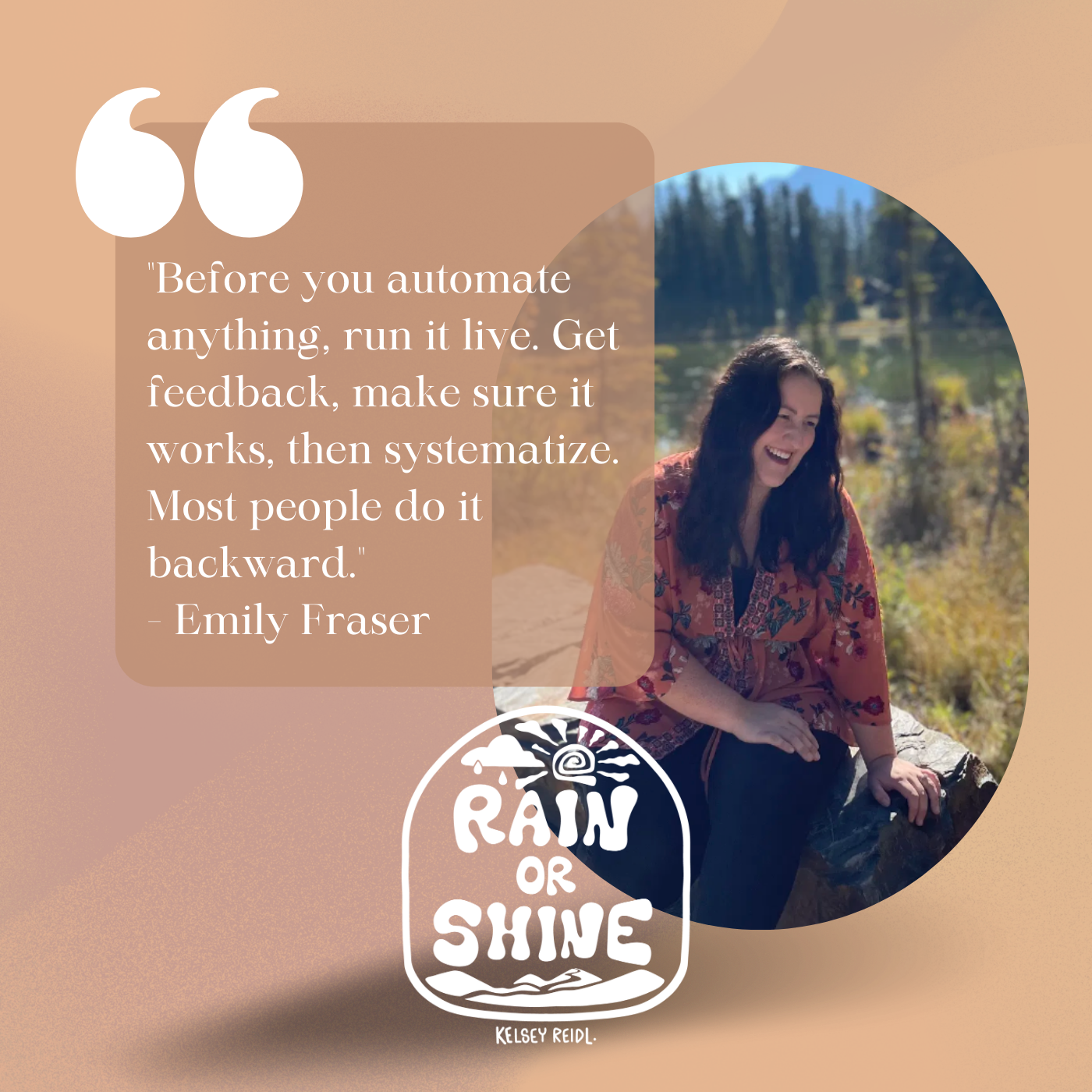
So I personally think, and that's what I did, is before you build anything evergreen, you have to run it live. You have to get that feedback. You have to make sure it works. And then you can automate it. But a lot of people try to do the automation first, and I don't think that's a way to success.
Kendra: I love that you shared this because I think we could look at business owners like yourself and just assume that you set everything up day one and if you pulled the curtains back, everything's perfect. But it's just so refreshing and it's true for every business that there is no magic formula or success blueprint that everybody's using. And if they just opened their secret box, everything would be revealed. It's like, no, we all have this mishmash behind the scenes. We figured things out kind of as we were going through it. We identified what's the one constraint I'm going to solve today, and then I'm going to fix that and tomorrow I'll probably choose something else. And then it ends up being this hodgepodge, but it's like, you know what? Good enough. And we will get to greatness. But hey, it's working for the time being.
Emily: Totally. I think that's refreshing and something I am looking forward to doing too is—yes, an evergreen system works, but I actually, what I've seen is that evergreen systems work best when it's also supplemented with one or two launches throughout the year. Because people need to know what's going on and even people that maybe watched a webinar, didn't join, they need another opportunity to hop on board. So it's just letting people know, this is what's going on. I still get so many DMs that are like, when's the next cohort? And I'm like, I haven't had a cohort in two years. People can join whenever they want, but whenever I get questions in the DM like that, I know that's on my marketing. I need to share more information and tell people what's going on.
Kendra: Absolutely. Yeah. I think such an important lesson from this conversation that we've just been having is that consistency looks different for everybody. That's something that's very apparent to me through chatting with you is that at the beginning of this podcast, you said, yeah, for some people on Instagram, consistency is you need to post three times a day on Instagram. And for other people it's once a month, once a quarter at this point, because I've been in that season of expansion. Now it's just showing up when I can, when the bandwidth is there. And consistency can be on a longer time horizon. When you look back at your business over the last three, four years, it's like, yeah, I've been consistent, but not at the volume or at the expense of my energy. So I think just that word, it has so many different connotations to it of what consistency actually looks like.
Emily: 100%. Yeah. And also modeling that to my clients is so important because they, we have to be honest about what we're going through and knowing that it's okay. I'm not showing up 100% and that's okay too. Even on our call this week, someone's like, I haven't read every single post, so therefore I haven't been going inside the community. I was like, you do not need to read every single post. I don't. And I'm the mentor. It's like, don't catch up. Just jump in.
I think a lot of this is the guilt that we're putting on ourselves of everything needs to be perfect and I always need to be making more and more and more money. And truly that was my mindset for so long of I just want to get to $100K months and all these things. And at a certain point I paused and I was like, wait, so much of this is to really help people. So many people I work with are on disability leave or making no money. I have lowered my prices over time because I realized that's one of my values. I want to make this accessible. I have increased payment plan options. I have reduced my own goals and I don't view that as a failure because for me that's success because I realized I was striving for something that isn't really me. I actually don't want that.
Kendra: Oh, that's such a juicy topic. It's something I've just been thinking about so much is the season of just being content and being like, I am good. That's not something we need to be ashamed of because for too long the conversation around was growth, growth. What are your goals for the year? And always needing to have that next level. But it's like, what if I just want to enjoy what's been built and not put that pressure on a season of life that already has enough going on? So it's almost just relieving when I hear other people talk about that, that it's okay to just stay at whatever level you want or just sit back and be in a season of contraction and don't worry about it. That is truly just the ebbs and flows of life. So it's just nice to have these conversations and to realize that business growth doesn't look one way. Sometimes it almost feels like the opposite, but that's still a season that's going to move you towards greatness in the end.
Emily: Yeah, because life is full of ups and downs and I've definitely had more dips lately, but also I know that the things I'm learning through the period that I've been going through is going to translate in how I show up as a business owner and how I show up to support my clients. So none of it is ever a loss, even if you're in a contraction and viewing it as a failure or that you're not doing enough. I promise you're learning lessons throughout this that are going to apply. And if I know anything for certain, it's that there's always a reason for hardships and those challenges turn into lessons that end up leading to your biggest successes.
Kendra: That is juicy and it's so true. Sometimes it's hard to see it at the time when you were just deep in it, but looking back on tough, challenging times, I think we can always draw from it and say, yeah, that was meant to be because this or something better.
Emily: 100%.
Kendra: Emily, this has been such a fun catch-up and just so grateful that even in your season of not being super, super online, that you agreed to come on the show. So if people do want to connect with you, whether they are spoonies themselves or if they just resonate with the fact that spoonies are protecting their energies—so are a lot of women and people who have experienced burnout who have done business that goes against their design and they're looking for a different approach—where can they learn from you, find your evergreen content, and stay in touch?
Emily: Yeah, for sure. Instagram's probably the best way to send me a message there at The Spoonie Mentor, or yeah, my email, emily@thespoonymentor.com.
Kendra: Amazing. Well, thank you Emily, and we wish you all the best.
Emily: Thank you.
Book Your Free Marketing Strategy Call
Your business deserves to be found—both on Google and ChatGPT.
If you're a solopreneur, author, or thought leader wondering why your marketing isn't translating to consistent revenue, the problem usually isn't what you think.
After 8+ years of working with ambitious entrepreneurs, I've discovered something crucial: most marketing challenges aren't about needing more tactics—they're about solving the wrong problem.
Here's What We'll Uncover Together:
✓ The Real Constraint blocking your growth (it's rarely what you think)
✓ Your SEO Opportunity to rank on Google for what matters
✓ Your AI Visibility Gap and how to show up when prospects ask ChatGPT
✓ Your Lead Generation Blind Spots and where you're losing potential clients
✓ Your Custom Funnel Analysis showing exactly where the leaks are
Book now!
The Potential Return: A clear path to $10K-$50K+ in new revenue
I work with business owners who are done guessing and ready for a marketing strategy built on what actually works—not marketing myths.