VISIONARY SPOTLIGHT
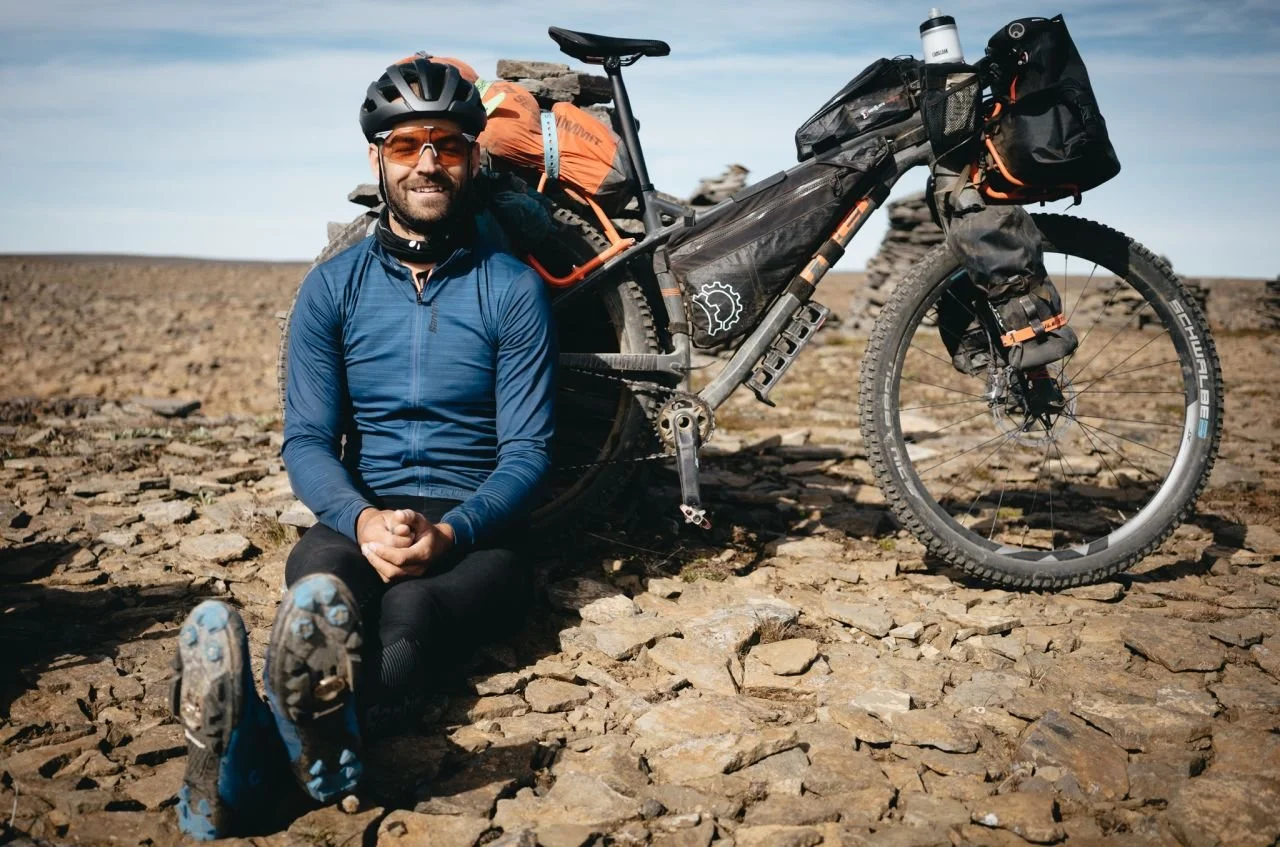
Photo: Adam Morka, LinkedIn
Some entrepreneurs make growth look like a science. Adam is one of them, and he's refreshingly honest about what breaks along the way.
Adam joined me on the Rain or Shine podcast running on very little sleep (hello, life with a one-year-old), and still brought so much energy to our conversation about Trail Hub, event marketing, and what pro athletes and founders have in common. He went from professional mountain bike racing to helping scale a tech company to a founder exit, and now he's grown a former ski hill into one of Ontario's most exciting event and recreation destinations. So for this Visionary Spotlight, I'm pulling from our conversation to bring you his journey, in his own words.
Tell us about your business and how it started.
Trail Hub sits on 142 acres right in the middle of a 6,000-acre conservation forest. For most of its history, the property was a ski hill called Sky Loft. Adam's in-laws acquired it out of receivership near the end of COVID, in April 2021, and renovated it to bring it up to speed.
Adam stepped in in May 2023. His first move was to look at the core products and services and the revenue model, build a forecast and budget, and decide what percentage of gross sales would go to marketing. Then came a full website rebuild, plus systems the business didn't have yet, like HubSpot, Slack, and payroll.
How did your background lead you here?
Adam has always lived in two worlds: high-performance athletics and business. He started in professional mountain bike racing and built a coaching business to fund his racing career, since sponsorships were hard to come by. At the same time, he was helping his wife Emily, a two-time Olympian, build her online profile through content marketing.
That content marketing work led him into tech, where he joined a SaaS company as roughly employee number 15. Over seven years, the company grew to 175+ staff and ended in a successful founder exit.
Being close to the executive team taught him what it takes to build toward an exit and report to a board.
He sees a lot of overlap between the two worlds. "As an athlete, there's a big visionary element, no different from entrepreneurialism. You kind of have to have that vision in your head before you can become that person."
What's the real story behind the growth?
Marketing, and a lot of it. Trail Hub invests upwards of 10% of gross sales into marketing every year, and the results speak for themselves: 170% year-over-year revenue growth from 2023 to 2024, 70 to 75% from 2024 to 2025, and an expected 50% this year.
In 2025, the website drew 375,000 visits and converted roughly 10% of that traffic into customers, compared to the 2 to 2.5% most businesses see. Once the new site was live, Adam turned on several channels at once: paid social and search through Bloom (a Toronto and Montreal paid media agency), organic social, and email marketing through HubSpot.
The surprise? The lag. Revenue didn't really catch up to the marketing for six to twelve months. "Year one I was a little short on revenue targets because I was overly optimistic and didn't account for that lag, but year two we made up for it tenfold."
How did you navigate a major setback in your business?
Growth came with growing pains. "We pretty much broke our operations team." There were HR issues, hard lessons in customer service, and accounting software that couldn't talk to any of their 14 SaaS tools.
Adam's perspective is that this is just part of building. "As an entrepreneur, you're just creating something out of nothing. It's all going to be iterative and evolutionary."
“You can have the most perfect blueprint, but there are going to be challenges you didn't plan for.”
-Adam Morka
Why use events as marketing?
For Adam, it's one of the best marketing investments a business can make. "If you do it properly, you can run the event at break even or with a profitable margin, and then you're also getting content and awareness out of the event itself."
Trail Hub spent its first two years focused on what the business could support right away, like events and the restaurant, while building trails and planning the bike shop in the background. Now it's shifting back toward recreation, with events that help drive it: a trail running race called The Whole Enchilada last year, and a Bike Fest this year.
One case study he loves is supplement brand BPN's "Just One More" event in Texas, a 24-hour, four-mile-lap running challenge. It cost upwards of $100,000 to produce, but between the media impressions, athlete live streams, and follow-up content, it delivered roughly a 10x return.
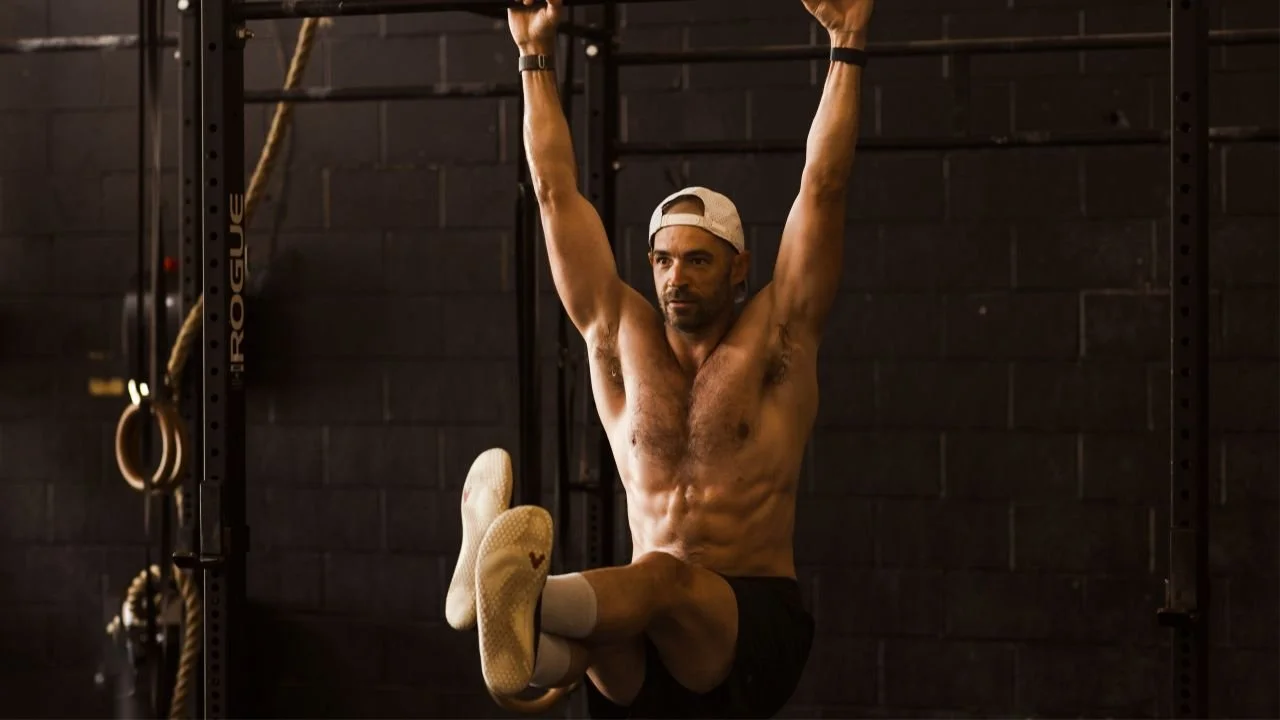
Photo: Adam Morka, LinkedIn
What's next for Trail Hub?
With growth starting to hit operational capacity, Trail Hub is planning to break ground in 2027 on 15 eco-luxury cabins, which will open up plenty of cross-promotion across everything else on the property.
What’s something you always do?
Block his calendar, and not just for work. His morning workout, family time, and personal development time (reading and podcasts) all live on his calendar. "I kind of live and die by the calendar." He's also strategic about meetings. Instead of letting people book whenever they want, which leads to chaos and constant context switching, he's intentional about how they line up across the week.
Was there a moment when your dreams came true?
Julie auditioned for Healthy Gourmet on the Oprah Winfrey Network on June 6, her birthday. She felt great about it, and then heard nothing for six months. Slowly, she let go of the outcome. But she kept the faith, even writing her own little chant (a riff on a Smash Mouth song) that she'd sing in the shower. Then, on Christmas Eve, she got the call: "We'd like to offer you Healthy Gourmet. Are you still available?" The show went on to air in 78 countries. "Keep the faith. Somewhere, at some point, there will be resonance."
Advice for other entrepreneurs having a rough day?
Stick to the schedule. After a rough night with a one-year-old, Adam still started his day the same way: a quick workout, a good meal, and some family time. "I'm big on energy, and one of the reasons I work out first thing in the morning is to raise that frequency right away. I can typically carry it through the day."
And remember that you can't make everything a priority. As Alex Hormozi puts it, "If everything matters, nothing does."
“The standards you hold your organization to are essentially the business you create.”
-Adam Morka
A resource that’s added value to her journey?
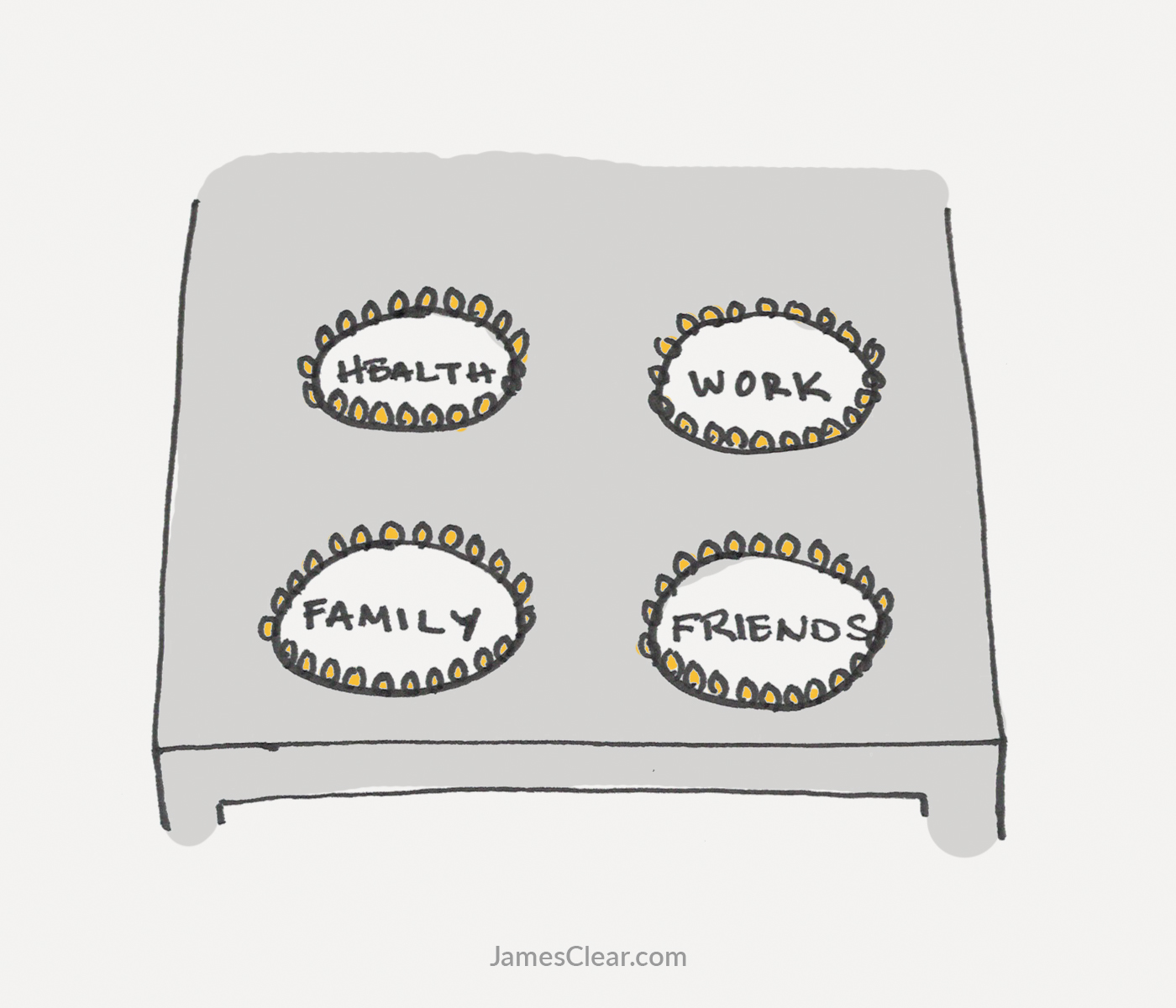
A framework Adam uses to stay intentional with his focus. Picture four burners: family, work and finance, health and fitness, and friends. The theory says you can really only run two of them exceptionally well at any given time, which makes choosing where to put your energy all the more important.
Adam's full story, including what's happening at Trail Hub, can be found on the Trail Hub website and his LinkedIn and Instagram.
Visionary Spotlight
Want to be featured in an upcoming Visionary Spotlight?
Email support@kelseyreidl.com