395 Marketing in 2026: Why POSTING MORE & Leaning into the UNCOMFORTABLE are Non-Negotiable with Melissa Dlugolecki
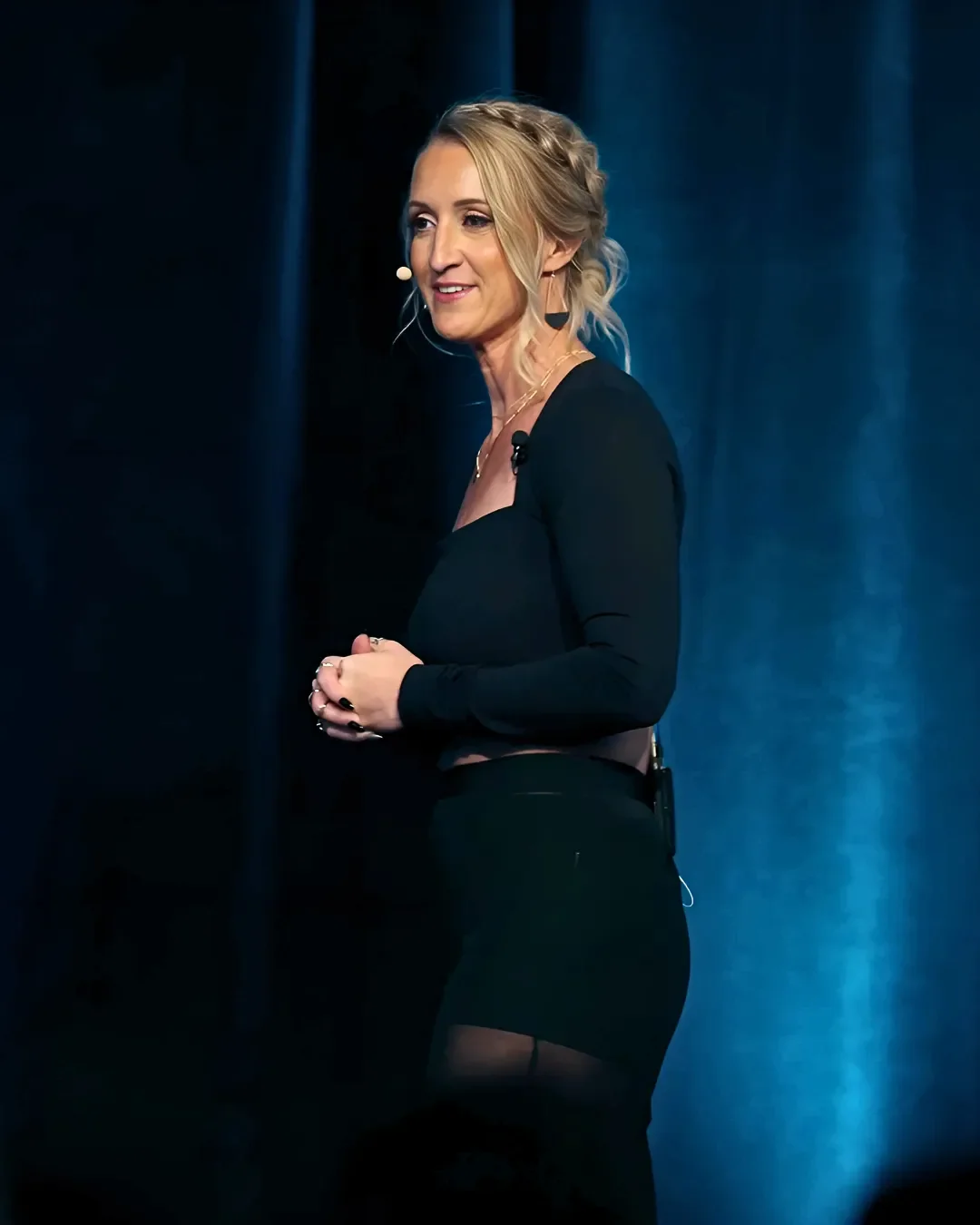
Marketing in 2026: Why POSTING MORE & Leaning into the UNCOMFORTABLE are Non-Negotiable
Episode 395: Rain or Shine Podcast
Guest: Melissa Dlugolecki, Marketing Agency Owner & Author
Marketing in 2026: Why POSTING MORE & Leaning into the UNCOMFORTABLE are Non-Negotiable
Episode: Rain or Shine Podcast
Guest: Melissa Dlugolecki, Marketing Agency Owner & Author
Quick Summary
Marketing expert Melissa Dlugolecki shares her unconventional journey from celery juice educator to seven-figure agency owner, revealing why volume and brand consistency are the only strategies that matter in 2025. She opens up about transforming grief into purpose after losing her daughter, and why the lessons from that journey make entrepreneurs unstoppable.
In This Episode
Why volume is non-negotiable in today's saturated market (and how to achieve it without burnout)
The two-person brand persona exercise that instantly clarifies your positioning
How Melissa applies Tom Brady and Bill Belichick's mastery mindset to business
The parallel between the grief journey and entrepreneurship
Why "it's too saturated" is just an excuse hiding deeper fears
Systems and strategies for producing 60+ pieces of content daily across multiple clients
The Kintsugi philosophy: filling your cracks with gold
Tactical tools from grief work that transform business resilience
Key Takeaways
Volume + Brand = Visibility: Success in 2025 requires showing up everywhere, consistently. Your "rent" is no longer a physical storefront—it's your online presence.
Don't Take Anything Personally: Whether it's compliments or criticism, your worth isn't determined by others' opinions. This protects you from emotional rollercoaster decision-making.
Mood Follows Action: Waiting to feel motivated means you'll never move forward. Commitment shifts energy, not the other way around.
Your Brand Mitigates Risk: Consistency across all touchpoints (not just social media) creates the security buyers need to invest in you.
Saturation is a Mindset Problem: The real issue isn't too many voices—it's unclear expectations and resistance to reality.
Memorable Quotes
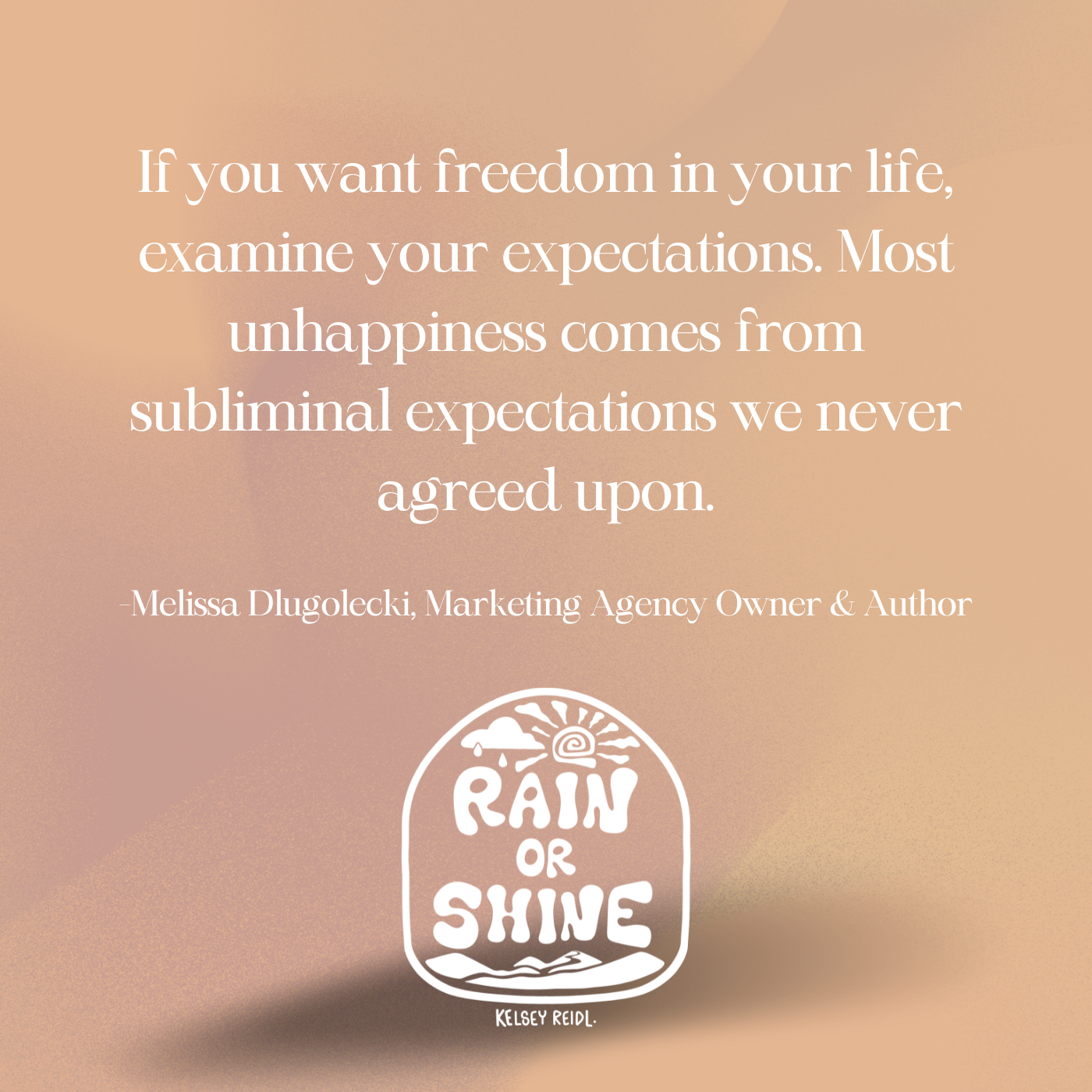
"If you want freedom in your life, examine your expectations. Most unhappiness comes from subliminal expectations we never agreed upon."
"It's a volume game. You have to be on demand when the buyer is ready to consume—not when you feel like posting."
"Your brand is your rent in 2025. Just like brick-and-mortar businesses paid for storefronts, we pay through visibility."
"Entrepreneurship is ego death after ego death. The post didn't perform well? That's your ego thinking everyone's watching."
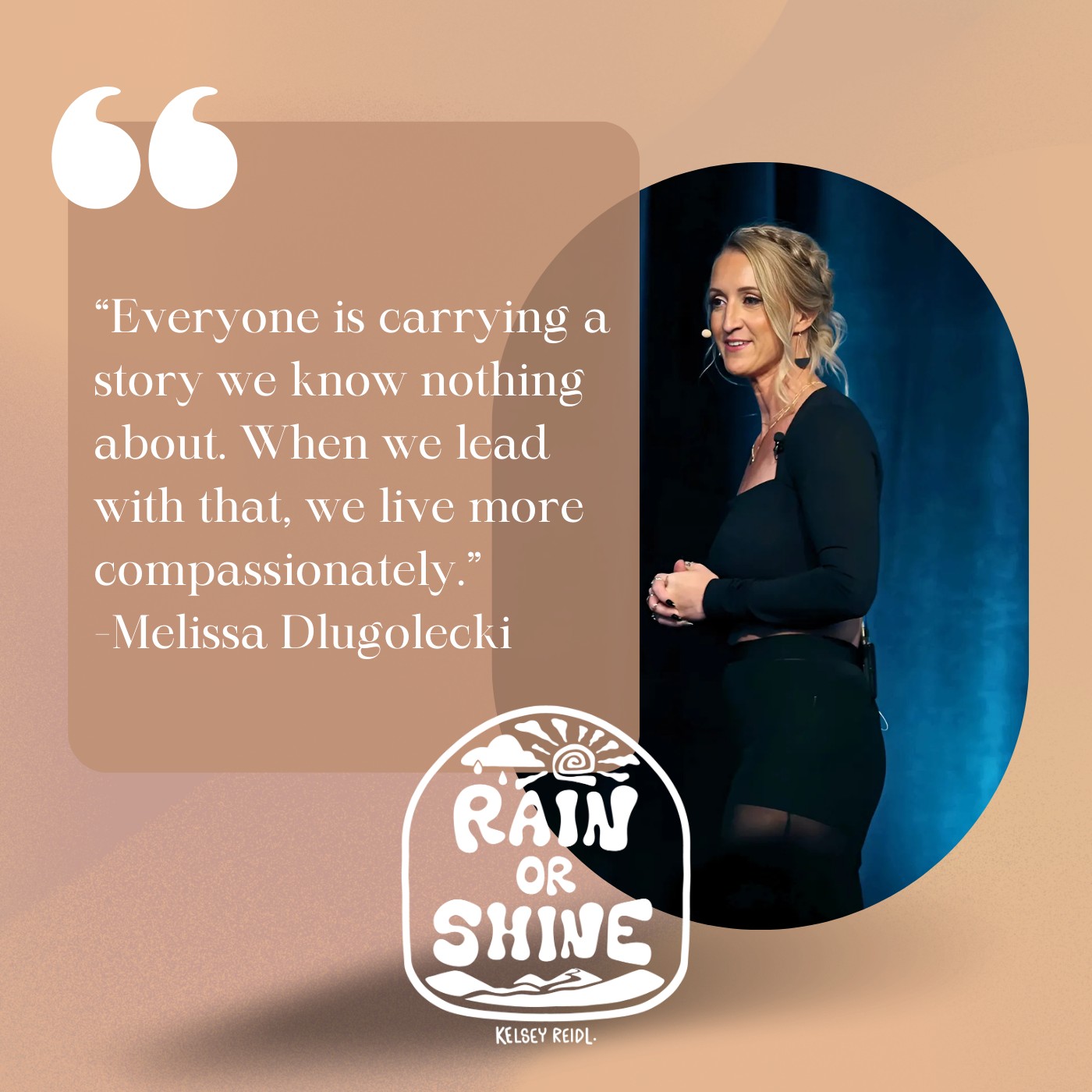
"Everyone is carrying a story we know nothing about. When we lead with that, we live more compassionately."
Resources Mentioned
Book: The Four Agreements by Don Miguel Ruiz
Book: Scar Tissue by Melissa Dlugolecki (available on Amazon and Kindle)
Documentary: 30 for 30 series on Tom Brady and Bill Belichick
Philosophy: Kintsugi (Japanese art of repairing with gold)
Concept: Chop Wood Carry Water
Project Management Tools: Monday.com, Trello, Asana
About the Guest
Melissa Dlugolecki is a marketing strategist, agency owner, and author who helps entrepreneurs build powerful, cohesive brands. After growing a holistic health business to seven figures in 13 months, she pivoted to solve the marketing pain points she witnessed in her clients. Melissa's approach is informed by her background in psychology and sociology, her experience as a high school educator, and the profound grief journey following the loss of her daughter, Laden, in 2014. She ran the Boston Marathon five times in her daughter's memory and channels a unique blend of optimism and data-driven precision into everything she creates.
Connect
Melissa's Instagram: @melissadlu
Melissa's Website: speakingofmelissa.com
Melissa's Book: Scar Tissue (Amazon, Kindle)
Kelsey's Website: KelseyReidl.com
Kelsey's Podcast: Rain or Shine (350+ episodes featuring Canadian entrepreneurs)
Kelsey’s Instagram: @KelseyReidl
-
CLEANED & EDITED TRANSCRIPT FOR SHOW NOTES
Kelsey: Melissa, welcome to the Rain or Shine podcast. I am so thrilled to be sitting down and chatting with you. I've gotten to know you a little bit through the Mentor Collective Mastermind where you are the marketing coach, and every time I either listen to you speak or tune into one of your podcasts, I feel like I learn how multifaceted your journey is. I feel like you are the perfect guest to share a little bit about your story and where you're at today on the Rain or Shine show. So first off, thank you for being here today.
Melissa: Oh, thank you so much, Kelsey. I'm super excited to be here. And I think that really speaks to the power of getting in rooms and Zooms where you can just connect with people and expand. So I'm super grateful that happened for us and to be here with your community.
Kelsey: Absolutely. Yeah, one of my goals after taking a maternity leave for a year was to get back in rooms, and that was my goal in January 2025. I just kind of forgot how expansive it is to put yourself at events, networking groups, masterminds. It just put me back on the rocket ship after feeling like I was a little stagnant. I was like, all I needed was to meet a bunch of new people like I did the past eight years before I took a break. So anyways, very grateful to these rooms to be able to connect with people that maybe I otherwise wouldn't cross paths with in my small little town here in Canada.
Let's start with some rapid fire, Melissa. What is your favorite way to wind down after a long week of running your agency? I see how busy you are. I just assume your schedule's very packed. You also love to work out and take care of yourself. So what do you do to unwind after a busy week?
Melissa: Friday nights are typically silent solo nights. I'm very introverted, believe it or not, and for me, there's a lot of energy expenditure all week. I love pouring in, but what I have found is actually silence. I won't even voice note out loud typically on Friday nights, and then a really good workout Saturday. By the time I leave that workout and get home, I feel really recharged.
That's been a ritual I've done for a long time, probably dating back to when I was running Boston Marathon. I ran it five years in memory of my daughter, which I'm sure we'll get into at some point. But every Friday night was like a night for me to kind of connect with my grief at the time and what I was feeling, to decompress from the week. Of course, you're not going out on Friday night when you're getting up to run 10 to 20 miles on Saturday morning. So it kind of became a habit since 2015. Ten years now of just very inner time checking in with myself, no stimulation, resetting my nervous system into a great sweat session on Saturday, and then I'm good to go.
Kelsey: I love this. What that brings up for me is the importance of blueprinting rituals that feel really good. I think in every season of running our business, it's gonna look a little bit different, but what I've noticed is that for us, it may not look like we just take Saturday, Sunday off because we're not working a typical nine to five. Sometimes we find these rituals in our week. It's about finding what are those things that bring you back to wholeness and creativity, get your energy back. Blueprint that and use it for as long as you can because that's like a tool in our toolkit to be able to pour more deeply into our clients.
Melissa: A hundred percent, yes.
Kelsey: What is a book or a podcast or a person who has impacted your life?
Melissa: The Four Agreements, hands down. One of the books I think about, reference and reread more than any other book. The Four Agreements in their surface level state are so simple, but if you truly apply them in every aspect of their being, it is really challenging. So I'm always deepening into that book.
And believe it or not, Tom Brady and Bill Belichick. For those of you who do not know, they were the quarterback and head coach duo for the New England Patriots. I'm from Boston, and when I was going through a really tough time, I kid you not Kelsey, I would watch 30 for 30s and documentaries on their journey and how they came from nothing and how hard they fought and how relentless they were and how nothing was emotional. Everything was just a process and data driven. I remember just binging that for hours in some of my darkest times as something to hold onto for possibility.
I was never like a fangirl in the way that many people might anticipate. I was a student. I was genuinely a student of the way that they approached mastery and I really stepped into what I value as mastery over doing more. There's a lot of different things I could coach, teach, and do and sell. How am I focused on mastery?
Kelsey: Oh my gosh, there's so much to unpack there. Yeah, first of all, we'll put the Four Agreements book in the show notes. That's a reminder to me to reread it because I read it like 10 years ago and I loved it, but I haven't read it since. You said something there that I wanna double tap on. You said that nothing is emotional, especially as it relates to the Tom Brady journey. Do you apply that same mentality to making business decisions? Like say you get up in the morning and you're feeling emotional as many of us do. Do you just say F it, do the work? Or is there room for being like, someone said something mean about me yesterday online, and I'm just gonna go hide for a bit. What's your thought on nothing as emotional as it relates to the entrepreneurial journey?
Melissa: It's everything because we make it so personal. Coming back to the Four Agreements, don't take anything personally. It's one of the agreements. I go so far as, well, I appreciate compliments and I receive them, I don't take them personally because I can't let somebody's opinion and perspective of me impact me that greatly. I have to, at the end of the day, feel really good about how I'm showing up.
There are always days where if I made decisions for my business off of feelings or emotion, we'd be on a rollercoaster. Think about the human experience. It's a rollercoaster. So it is my job if I'm in responsibility to my business to create a steady foundation. Now where I'll fluctuate slightly is let's say I'm just feeling off. Maybe I don't get into that creative project that day. Maybe I don't have that outreach for something that I need to be in a really good energy for. But I am still moving through and finding the things. Honestly, what I'll find is that when I stay committed, it shifts my energy anyways and I'm in a better place.
Kelsey: Yeah. I always think of the phrase, mood follows action. So if I just stay in action, because I'm not feeling it, I'm never gonna feel better. But sometimes just sitting down and being like, all right, let me browse some emails, read a Substack, I'm like, all right, let's go baby. It's such a good reminder because what I find is that a lot of business owners in their first zero to five years, they let their emotions dictate the way they show up and whether they work or not. It's like this is a strategic business decision to write a Substack once a week or to go to a networking event every other Friday. It's not about how you feel, it's part of the plan in order to grow. And of course there's wiggle room, but I appreciate that perspective of don't take it so personally. It's not emotional. The life journey is so emotional that if we let that impact business, we may not see that consistency and growth that we're all desiring so deeply.
Alright, let's rewind a little bit. I'm curious, going back to your journey, I know you haven't always been running a marketing agency. Can you take us back to the moment when you launched your business and how did this all come to be? Because I believe you started more in the nutrition and juicing space. That's actually very similar to my background. I was a holistic nutritionist 12 years ago, building an online business and then got into marketing. Take us back to a little bit of that earlier origin story and then how you ended up building this marketing agency that you have today.
Melissa: Yeah, I started as like a celery juice girl. I was holistic health and mindset. My background was actually in psychology and sociology. I was a high school educator for 10 years. I then began teaching yoga. I had people ask me, would you mindset coach me? Because I'm like giving them life lessons while they're in downward dog.
I started doing juicing workshops and coaching on that. So I coached women both privately and in a group community and within 13 months, we grew to a seven figure business, all organically, no paid ads. And I realized I understood messaging, marketing and branding in a way that wasn't commonly talked about. It wasn't anything fancy. I'm not a very fancy person and just letting that build into my brand.
I started then coaching other people in how to build their business and realized that where people kept coming to me over and over was marketing, messaging and branding. The agency, as you can relate to, is more of a headache than just coaching. Margins are lower. The QA needs are way higher. The workload is higher, but it solves such a problem.
I was seeing my clients, I would coach and consult and they would hire out and they would get smoke and mirrors. They get people who didn't really care, they weren't getting clear communication, or they had to go to nine different places to hire a video editor, a graphic designer, a copywriter. Honestly, I think entrepreneurship is just about solving problems and the bigger the problems you solve, the more lucrative you're going to be. So I just became obsessed with solving this problem of creating this one spot with a very vigorous, New England Patriots, Bill Belichick, Tom Brady approach to building up people's marketing and sales funnels. It was all very organic and authentic to me.
Kelsey: I love that you say you were not fancy, you weren't trying to be someone. You weren't starting this journey in the holistic health world like, I'm just gonna show up and I'm gonna start seeing what my clients are asking for. You're teaching yoga and they were probably saying, whether it was actually verbally or not, I want more from you, Melissa. You kind of followed that nudge. I think that's such an important reminder that where we start as entrepreneurs is not always where we are going to end up. It literally is an evolution. If you're not willing to show up, pay attention and continue to solve new problems so that you don't fall stagnant, that's when I think you become irrelevant.
You didn't cling on to that initial identity of, well, I'm just gonna stay in the holistic health space and keep going. You're like, actually there's new problems opening up here. Why don't I just keep following my own curiosity to see how I can solve them? I think that's super important to not feel so rigid in any identity.
Melissa: I don't know anybody who has longevity in the online or even brick and mortar industry with longevity of not just sustaining, but longevity in growing to new levels, who's in the same niche or offers that they started in. So I would just say not only could it happen, it's going to happen if you grow.
Kelsey: So true. Speaking of evolution, I feel like this is such an appropriate time because we're recording this at the end of December 2025. I know both you and I love to just dissect what's going on in marketing and what trends are happening and what's working, what's not working. I feel like it'd be fun to get into a little bit of just marketing deep dive. I'm curious, what do you feel is working really well for clients of yours right now, or even for your brand as it relates to marketing and visibility and getting more engagement? What is working right now that you wish people talked about more or you wish people knew?
Melissa: Two things come to mind right away: volume and a cohesive brand. I just have to say it's a volume game. It is absolutely a volume game, and you have to let go of perfectionism. You gotta let go of control. If you want to be seen, you have to put out enough content to be seen and let go of the idea that everybody is gonna see that post the moment you post it and be ready to buy.
You just have to stay on people's radar so frequently that when they, in their own life are ready to buy, they're thinking of you because you've been so present and so visible. You have that volume and you're so consistent. It's being on demand when the buyer is ready to consume. If you're only posting and you don't get results right away, or your volume isn't frequent enough, you're not gonna be on anyone's radar, period. If you're not on people's radar, they're not buying from you.
Secondly, if you're not consistent and do longevity, if you don't get the result right away and you stop posting or you pull back, they're gonna forget about you. So that volume and consistency is huge.
Kelsey: Yeah, and I feel like that's the advice that I don't think anybody wants to hear. Because it almost goes against what we were saying the last 10 years of work less and make sure you're not trying to stretch yourself thin. But I totally agree with you. We are in a day and age where attention is fractured, especially as it relates to all these platforms. Nowadays the people who are winning are the ones who are showing up everywhere.
That does mean you better activate that LinkedIn that's been dead. You better consider getting on TikTok because you're already creating the clips and making sure you have impressions happening all over the internet. Especially when we think of AI search engine visibility, it pulls the person who's most credible and how do you get credibility on the internet? You have a presence on all of the major platforms. People are talking about you on Reddit, they're blogging about you, they have a YouTube video where you're mentioned. Sadly, volume is super important.
Before we go on to the next thing that's working, the brand, for somebody who's struggling with volume because they're like, I'm a solo entrepreneur, I only have so much time in the day, and I don't have the budget to necessarily hire a huge production team, what is something simple that they can do to increase their volume without feeling totally burned out?
Melissa: Two things. One, have a system in place. For me, the content capacity that we have is very much rooted in the system that we have. My team, for me alone, we are doing six posts a day on Instagram, four on my personal, and two on my book page. We have clients that we do one, two, or three or four a day. If we just take mine and we have about 40 to 50 clients, we are producing, let's just call it 60 pieces of content a day. That's not including landing pages or lead magnets. We can only do that because we have our systems so dialed in.
Start simple. Have one section where all of your assets go. I personally use Monday. You can do it in Trello, you can do it in Asana. But up top, it's just all of the folders for copywriting, all of the Dropboxes, all the Google drives. Then put all your ideas in another section under it. Then what you're gonna start working on. Then keep your assets. We put all the assets in there once they're posted for repurposing.
Nobody's watching that closely. It's very humbling. If I put up a photo or a reel with a different hook or a different caption, different quote that I put up a few weeks ago, no one notices because I'm not that important. And the other is there is a level of investing and outsourcing. I don't know when it's the tipping point for somebody's business, but I've always invested beyond my comfort level to grow my business and the things that I don't wanna do.
I run a marketing agency. I hate making content. I don't do my own. I like the strategy and the ideas, but I say a long time ago you wanted to start a business, it was only brick and mortar options really. You're paying to be in the phone book. You're paying for billboards, you're paying for advertising. You're paying to rent a space, an office space. Nowadays, I think that our rent of 2025, 2026 is being visible online.
Kelsey: That's such a good analogy that I've never heard before because I think a lot of people, they want their startup costs to be zero. They want their profitability to be a hundred percent. But it's like, you know, we're running a business. You also said you always invest a little beyond your comfort zone. Not playing a hundred percent conservative game, but going, hey, if I wanna make big leaps, I'm gonna have to find those rooms or mentors or strategies that I might pay for. When you pay, you can make that accelerated jump, especially when you do it strategically.
Okay. Let's go to number two that you said is working, and I think you said cohesive messaging and brand.
Melissa: Yeah, a hundred percent. People misunderstand brand. I did. I didn't like brand at first. I was like, brand is for fake people. No, no, no. Everyone has a brand. It's just whether or not it's working for you and whether or not it's clear to your potential customers, to your community, to your clients. Everyone has a brand. Once I figured this out, it was like, oh right. My brand was very much like no frills, a TV, we use barbells, we travel a lot, we whiteboard, building it around the things that are authentic.
Now what most people do is they think that brand is only relevant to their marketing and social media, a photo shoot, a color palette, a font. That's not it. Those are vehicles that can bring your brand to life, but your brand goes from the opt-in when clients first find you, potential clients, through nurturing and connection through your sales process, through onboarding, through retention and referrals.
I really work to bring our clients' brands alive in all five touch points in the funnel. Making sure that happens is going to increase your average client spend, the length that they stay and referrals, and it's gonna attract more clients because it feels secure. If somebody feels confusing, do you wanna give your money to them? No. Somebody feels solid, consistent, and clear. That creates a sense of security. Consumers need a sense of security to risk because taking a chance and putting money towards a new goal or something they don't know how it's gonna go is inherently a risk. So your brand mitigates buyer risk, perceived buyer risk.
Kelsey: I'm obsessed with this and I think that the phrase that I always say is consistency breeds trust. I've heard you talk about this before, but you post yourself working out all the time. How does that necessarily exactly relate to join my agency? Well, it doesn't, but people see you are a person of consistency. You are strong, you are dedicated, and that breeds trust. Which means that when people invest their hard earned dollars with your agency, they're like, yeah, I can trust her the same way I trust she shows up for her workouts when she says she's gonna attend.
I know it almost seems disconnected, but all the things that we do outside of work kind of proves the type of person that you would be as a leader, as an entrepreneur. So if you are someone who's sharing a personal brand, don't be afraid to show those things that you do that build trust and that are consistent and that, whatever your core values and personality traits are, show that because that'll attract the type of person that resonates with those.
Melissa: There's so much fake, especially with AI. There's so much smoke and mirrors. Then there's so much with AI. People, I believe, are craving just authenticity more and more and more.
Kelsey: You talk about something called, I don't know what it's called, like brand personas and you pair two people together. Can you talk about that? Because I had never really heard that philosophy before, but I think my listeners will really resonate with that.
Melissa: Sure. The way that I teach this to my team and to the clients that we support is if two famous people were to have a baby, who would they be? And related to your business. This gives both if you have a team helping you or yourself, if you're making your own content, building out your own brand or a potential buyer, an immediate understanding of who you are. Because if they don't know you yet, but you can reference two famous people that are well known, or certain values or characteristics or personalities or niches, that is going to make it so much more clear in who you are.
I did this with my team a while ago. They said that I am Elf Will Ferrell in the movie Elf and Bill Belichick, the Patriots coach. Now if you know Bill, I have these two old dudes, you know what I mean? Like, but it's not about aesthetics, but Elf is just this wildly optimistic, sees the wonder in things. And that is a big part of me, almost to a fault sometimes. I don't see red flags.
And then the other side, the way I run businesses is very data driven, process driven. I don't get too high, I don't get too low. A big sale comes in. I don't get too excited. I really don't. We lose a client. I don't get too down. I really don't. That's something I told you I really channeled from Bill Belichick and studying their thing of mastery. So if I said to people, especially when Bill Belichick was coaching, oh, I'm like, if Elf and Bill Belichick had a baby, it's me. Now all of a sudden they can associate me with things more clearly. Does that make sense?
Kelsey: It does perfectly. I need to do this exercise for myself because I still don't know who my persona parents are. But I do remember, so many years ago I was watching a Marie Forleo YouTube video and she basically was describing how she birthed the idea of her book tour and she's like, imagine a Beyonce concert, but attending a live taping of the Oprah show. And I was like, I immediately understood what she was trying to create. It was not just a sit down interview, it was gonna have dancing and lights and spectacles and music. And I was like, that is the most brilliant thing. She just described something using other things and it anchored exactly who she was. I think that's such a cool exercise for somebody who's like, I'm trying to define my brand.
Let's shift gears to social media marketing. The thing that I always hear is, is it saturated? There's so much content, blah, blah, blah. Do you think there's such thing as saturation as it relates to putting more clutter on the internet or someone new starting a brand and they're like, oh, is it too late to start my Substack because it had its rise in the last year and now I feel like it's saturated. I'm curious your thoughts on that word.
Melissa: I'm just gonna be so honest. If anyone is hiding behind, and yes, hiding behind, it's too saturated, you are looking for an out and an excuse. You're not looking for a solution and you're not looking for an understanding. Nothing. What is too saturated? By default, saying it's too saturated implies that there is an expectation of what it should be, that there should only be a certain number of people.
It's not too saturated. It just is what it is. We have billions of people in this world. This is the way that the world is moving. This should be an expectation. You wanna resist it, you're gonna be left behind. Sorry, I'm just super blunt. But you wanna resist it, you're gonna be left behind. You wanna complain about it, you're gonna be left behind. You wanna wait for it to get more quiet, you're going to be left behind.
It's like going against a wave crashing, or you go with the wave. Going with the wave, and this is where it's a volume game, and this is where I do think you have to be more discerning. This is exactly what I said, why I think the two most important things are volume and brand. People are making more buying decisions around your brand. Do they trust your brand? Is your brand clear? I think you just have to be more discerning in your brand, exactly what I said before, and you have to have more volume, exactly what I said before. This is why I think those things are the most important because there is more noise. Yes, but it's reality.
For me to say it's too saturated means that I have some subliminal expectation of how many people Mark Zuckerberg should allow on Instagram. So let go. I always tell people when you have something like that, what's your expectation? Like you want freedom in your life, and this is a lesson that I learned in my grief journey. What's your expectation? Because most unhappiness and suffering comes from subliminal expectations that we just have in our head, either for the way the world should work, the way our relationship should work, the way our partner should show up, the way our team should be. We have these expectations that weren't necessarily even agreed upon.
Kelsey: So juicy. You've kind of revisited these concepts of volume and brand, and I really think the listeners are resonating with that. I think the piece that I wanna crack into before we shift into your book Scar Tissue is what role does experimentation play in all of this? Because I'm thinking about the listener who's still early in the journey. They're like, yeah, I'd like to increase my volume, and I kind of know my brand. But they're still in this experimentation phase and I think the moment something doesn't work, they're like, okay, put the brake on. No more volume. And then they're like, I don't even know who I am anymore. They're not sure and they just kind of shut down. I'm just curious your thoughts on experimentation as it relates to making sure we're putting the volume of the right stuff and that we can keep showing up confidently that I'm building the right brand for my company.
Melissa: Here's what I'll say, and I'll say it with more compassion, but entrepreneurship, I love it. My background is psychology. You wanna get to the next level, it's gonna be ego death after ego death after ego death. It's just true. Us thinking that every single person is seeing that post and paying that much attention, and the post didn't perform well and everyone's noticing, it's our ego getting in our way. Test, test, test.
The benefit of volume and that benefit of how saturated it is, is that no one's paying that close of attention. I just want your face or your username, or your ideas, or your offers popping up, popping up, popping up. I will tell you what happens is when you attract new users, they're gonna go to your content, they're gonna binge your page. That's about it. Then you're gonna start populating for them in their algorithm and they're just gonna see your face and you're just gonna stay on their radar. But people are not long-term reading all of your content. They're just not.
I mean, I can tell you even for Alex Hormozi, I love his work. I am not reading all of his posts, watching all of his reels, reading all of his captions.
I just wanna add to that, that it is a muscle to build over time. So the ego deaths don't just happen. I don't say it as if like, oh, it should be easy. It's a muscle that you build over time. It's like driving at first feels labor intensive. You're 10 and two, and then all of a sudden you're like, how did I get here?
My first post that I was putting up, especially because they were more personal around my grief journey, around my loss, around mindset and health, I deleted some of them. And I panicked. So I do wanna just offer that it is a muscle that you actually build. So if you're like, well that doesn't feel attainable, I used to be in that position, but from just reps and consistency and humbling myself day after day after day, that I'm not that important, it really helped me.
Kelsey: Yeah. That's a good reminder that when you and I are having a conversation, we are people who have been in this game for years and years and years, and we put ourselves out there so many times that it's like, okay, that muscle of resiliency, our skin has become thicker because we've done this over and over and we've had the negative comments and we failed and we've fallen on our face. But yeah, for somebody who is in those earlier stages, just know that it's going to feel hard, it's going to feel sticky. And we're speaking as people who are kind of a little further along going, I know this sucks. I know it's hard to experiment. I know volume feels impossible right now, but keep going.
If this is that little glimmer to not quit on your business, because a lot of people are closing doors right now going, this is hard. But fast forward a few years, the people who stay in the game are gonna be the ones who are the go-tos in their industry. And I really do believe that right now. So if you learn nothing else from this podcast, it's like stay the course and try to listen to what we're saying more as like your older besties versus just toughen up. Tough love versus a hundred percent real.
So you recently launched a book called Scar Tissue. I wanna hear a little bit more about the background of what brought you to write this book. I love the tagline. You kind of describe it as a story of what it takes to rebuild after loss, and a reminder that your deepest wounds can become your greatest strength. Kind of piggybacking on the conversation we were just having that sometimes when bad things happen, you can actually come out of the other side stronger.
For someone who hasn't been exposed to your journey of what you went through as it relates to grief and what this book ultimately came from, can you give us a little bit of a rundown of your backstory? Because it's incredibly powerful and I know a lot of our listeners are gonna resonate.
Melissa: Thank you. I mean, it's the purpose of everything that I do. The book is my mission. The book was written really in honor of my daughter Laden, and she passed away in 2014. We spent 99 nights in Boston Children's Hospital and she died of a disease not very well known, though it is becoming more researched, called necrotizing enterocolitis, NEC for short. Her case was termed a catastrophe. So my whole world was rocked. My identity taken. Life as a mom, I remember saying, I'll never have a Christmas, or I'm not Santa again. And all of these things. It was just like, who am I?
As I began, there's a saying, there's a belief in Japanese culture and it's called Kintsugi or philosophy rather. Kintsugi came from ancient Japanese ceramics that were brought to kings, emperors really. And sometimes they would get smashed in transit. What they started doing was taking the smashed ones and repairing them with gold in the cracks. And then those became more desirable.
So it's this idea that I went through when I was completely smashed and shattered of how do I fill my cracks with gold? How do I find the wisdom in this loss? How do I honor my daughter through the way that I live, the way that I learn? Then the way that I share what I've learned. My grief counselor told me, I'll never forget, my grief counselor saved me, but she looked at me and said, Melissa, someday you're gonna write a book.
Now for reference, I could barely get outta bed at this time in my life. I would roll out of bed, a bed full of all of her things, and I would pick up the same wrinkled clothes I put on. I would count down until four o'clock when I thought it was acceptable to sit down at the TV and I would watch Seinfeld because it was light and I couldn't handle anything heavy. And I would have chips and cheese and wine and look at her pictures and cry. That was me. So I have so much compassion for anyone, whatever you're navigating. And I have so much belief and what's possible on the other side.
The book is really a toolkit for anyone navigating anything challenging. It could be divorce, it could be empty nest, it could be pet loss, but the tools are not rooted in just a very intense death, like the loss of your child. There are tools that are universally applicable through the things we all go through, because one of the chapters of the book concludes with this theme of sonder. Sonder means that everyone is carrying a story we know nothing about.
I guarantee anyone listening here has a story that I know nothing about. So I honor that story and I think that we, when we learn to lead with that, we live more compassionately.
Kelsey: It's so beautiful that you say you can turn something painful into kind of your purpose and something beautiful. What were some of those, and I know you talk about this in the book, what were some of those tactical things that you did in order to begin alchemizing deep pain and intense grief, which is just indescribable, to feeling that, you know, it's hard to put words behind. What were some of those things you did to alchemize grief, pain, and just deep sadness into something beautiful?
Melissa: First of all, part of the book is about not bringing toxic positivity, so I don't want anyone listening to think like, oh, I'm so glad this happened to me. In fact, every chapter breaks down a toxic positivity statement and how to reframe it and how to respond. Like, well God wouldn't give you anything more than you can handle. Not helpful. Laden wouldn't want you to be sad. And then it's like, well now I feel guilty for feeling sad because I am sad. Also not helpful, but people are trying to help. So the book is very much about not taking anything personally. That was a huge thing. Very tactical in my grief, to not take anything personally.
Second thing is I actually really studied grief. I'm an educator and a teacher in my background, and so I think that's naturally my style and I like mastery. The more I could study what was actually happening to me, the less overwhelming it felt because I understood it more. So I would encourage anyone navigating something to kind of study the energy of grades of loss. Again, this could be divorce, this could be an aging parent. I have a woman I worked with and empty nest was really hard for her. And those are all grief.
I break it down in the book, so hopefully that serves. A couple really tactical things was understanding teammates that no one in your life can meet all of your needs, but you wanna position people to succeed. So my brothers were really good distractors, but not really good listeners. My cousin's wife was an incredible listener. She was like two degrees of separation, so not too close where it would shatter her, but close enough. And she was a mother. Just finding how other people can support you, because I will tell you that people innately do wanna help and support.
Kelsey: You've said a couple things here, like don't take it personally, build your support team, which almost resonate with when you talk about grief and when you talk about entrepreneurship. I'm curious, do you see a lot of parallels between the grief journey and the entrepreneurial journey?
Melissa: Oh, I talk about that all the time, and the lessons that I learned in grief helped me build a successful business. I told my publisher, I'm like, I'm sorry, every entrepreneur needs to read this book. Even if they haven't navigated loss because it will give you the skillset and the tools that actually will help you in life and business. Because if you apply these in your relationships, your relationships will 10x. If you apply them in your business, your business will 10x.
They're actually to help you from being really broken to coming back together. But you don't have to be broken to apply these lessons. And if you are fine, you know. But I literally told my publisher, every entrepreneur needs to read this book.
Kelsey: It's funny because my next question for you was gonna be, who is this book truly for? And I think that's incredible that every entrepreneur can benefit from it because of the parallels. So I highly encourage everyone to go get a copy of Scar Tissue and we believe it's available on your website, on Kindle. You can get a hard copy on Amazon. So we'll definitely link all of those in the show notes.
Melissa: Thank you.
Kelsey: You're so welcome. Let's kind of start to wrap up here. I'm curious. What are some tools or strategies or tactics that are keeping you joyful in your life and business in this moment?
Melissa: I think, oh, that's such a great question. I mean, nothing crazy to me. When I even applied to work with Chris, who we both know, on my application, I put, my approach is chop wood carry water. So I don't ever do anything that's really, if anyone listening isn't sure what that means, chop wood, carry water is just kind of doing the simple things over and over every single day. Chop wood, carry water, chop wood, carry water.
I don't have anything that's like the new thing. I work out, I walk my dog, I take care of my team, I serve my clients. I say no, I guess. I mean, the biggest thing is I say no to things that I don't want to do, and I say no to clients I don't want to serve. So I think saying no is probably what then leads to the most joy because I don't have anything in my life that drains my energy. I really don't. House care maintenance stuff a little bit drains me, but we outsource that.
Kelsey: It's something Chris actually always says. He says, the money's in the monotony sometimes. It's just, sometimes we just stay with the same monotonous schedule that is good for our souls. Instead of being like, oh, I'm just gonna go try out this new thing. Sometimes you find a rhythm and it works. And you're like, I don't need anything radical. I need this beautiful, consistent cadence that allows me to wake up, feel confident in the way I am approaching my day, feel confident in my energy and bandwidth needs for the day. I just, I love that sometimes just finding a rhythm and, I don't know, I don't wanna say the word coasting because I don't think that's a good word, but just finding a rhythm that works and duplicate and duplicate and duplicate doesn't need to be extreme or radical or anything outlandish. Just what works for you.
Melissa: Exactly. And I think the more you find joy in the simple monotonous, the more joy you feel.
Kelsey: That's so true. And that literally is the perfect way to start ending, because the concept of the show rain or shine, it really was birthed. I was listening to an episode of, I think it was the Chris Williamson podcast, and he said something like, to be upset on a rainy day is to not understand how the world works. It's like waking up and being like, oh shit, it's rainy. I can't go for my run today. But of course there's gonna be rainy days. Why are you upset? Because, duh. Because there'll be a sunny day tomorrow, but we need the rain. You're gonna have 20% rainy days, so stop basing your life around I only do it on a sunny day, or I only do it when it feels good. It's like sometimes we just gotta show up whether we feel like it or not.
Melissa: A hundred percent.
Kelsey: Melissa, this has been so fun. I'm so grateful to you for taking the time. I'm curious, where can people find you if they want to follow you personally, get the book or consult with your agency? Give us all the places.
Melissa: Absolutely. I hang out on Instagram a lot. It is my name, Melissa, one L, two S's, and then Dlugolecki, which is not easy. But if you just put DLU, I tend to pop right up. My website is speakingofmelissa.com. That's got my book on it, all the ways you can work with me. But if you're on Instagram, just pop in and say hi. I love chatting in my DMs and just, I hope this shared value and thank you for having me with your community.
Kelsey: Of course. We know you post multiple times a day, so we're gonna head over and consume all of this incredible content that you're putting out. Thank you so much, Melissa. We wish you all of the best.
Melissa: Thank you.

Book Your Free Marketing Strategy Call
Your business deserves to be found—both on Google and ChatGPT.
If you're a solopreneur, author, or thought leader wondering why your marketing isn't translating to consistent revenue, the problem usually isn't what you think.
After 8+ years of working with ambitious entrepreneurs, I've discovered something crucial: most marketing challenges aren't about needing more tactics—they're about solving the wrong problem.
Here's What We'll Uncover Together:
✓ The Real Constraint blocking your growth (it's rarely what you think)
✓ Your SEO Opportunity to rank on Google for what matters
✓ Your AI Visibility Gap and how to show up when prospects ask ChatGPT
✓ Your Lead Generation Blind Spots and where you're losing potential clients
✓ Your Custom Funnel Analysis showing exactly where the leaks are
Book now!
The Potential Return: A clear path to $10K-$50K+ in new revenue
I work with business owners who are done guessing and ready for a marketing strategy built on what actually works—not marketing myths.