401 How Olympic Beach Volleyball Pioneer Margo Built a Career Without a Playbook
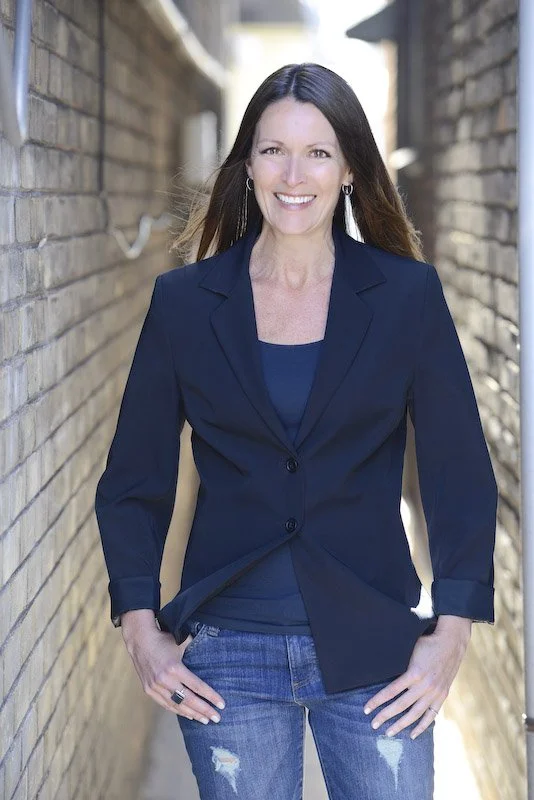
401 How Olympic Beach Volleyball Pioneer Margo Built a Career Without a Playbook
Episode 401: Rain or Shine Podcast
Guest: Margo Malowney, Canadian Olympian
From the Beach to the Boardroom: Olympic Athlete Margo on Vision, Self-Advocacy & Building Something from Nothing
Episode 401: Rain or Shine Podcast
Guest: Margo Malowney, Canadian Olympian
Quick Summary
Margo is a Canadian Olympian who competed in the first-ever Olympic beach volleyball tournament at the 1996 Atlanta Games — and spent the years before that building the sport from the ground up with nothing but a group of passionate women, a bag of volleyballs, and a relentless vision. Nearly thirty years later, she brings that same pioneering spirit to her work in marketing, communications, and sustainability. In this episode, she shares what it really means to forge your own path, advocate for yourself in rooms that weren't built for you, and know when to be brave enough to just start.
In This Episode
How Margo's athlete mother shaped her relationship with sport and competition from a young age
The moment on Bondi Beach that changed the entire trajectory of her life
What it took to qualify for the 1996 Olympics in a sport that wasn't yet officially recognized by Canadian sport organizations
The key differences between indoor and beach volleyball — and why beach volleyball is essentially an entrepreneurial sport
How competition can be community, and why your "competitors" might be your greatest allies
The self-advocacy mistake Margo wishes she had avoided on her Olympic journey
How nearly three decades in executive marketing and communications mirrors the athlete mindset
Why knowing what energizes vs. drains you is the foundation of owning your career
Key Takeaways
Put yourself in the environment where growth is inevitable. Margo went to Bondi Beach and San Diego not just to train, but to be surrounded by people at a higher level. When your environment matches your ambition, growth stops being hard work and starts being natural.
Your competitors can make you better. The volleyball community modeled something rare: competitors who genuinely respect each other, play their hardest against each other, and then grab a drink together. The same principle applies in business. A rising tide lifts all boats.
Silence is a choice — and it costs you. Margo's biggest regret is holding her tongue when she knew she should have spoken up. If you have the vision, the expertise, and the lived experience, waiting to feel "ready" only slows everyone down.
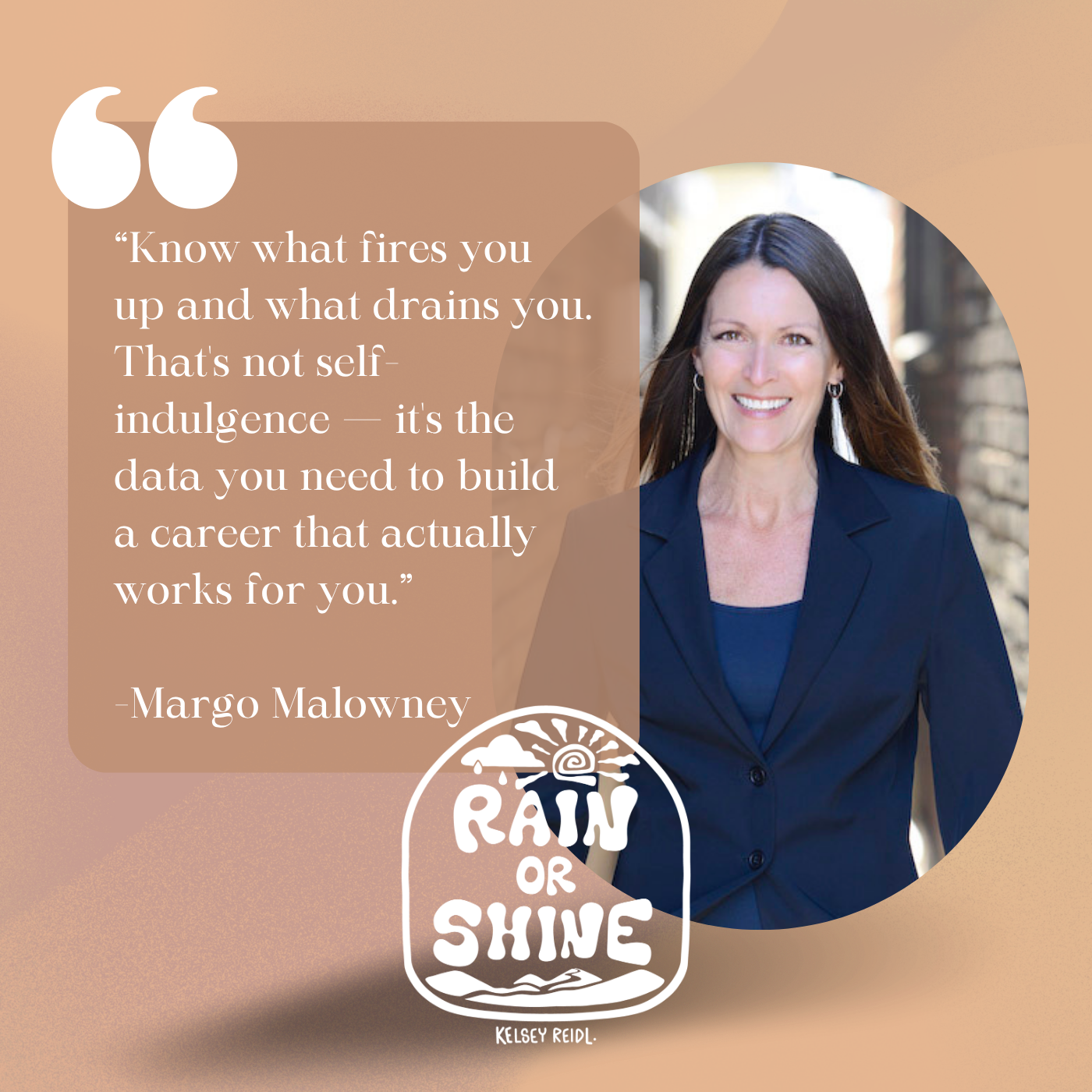
Know what fires you up — and what drains you. Margo has consistently chosen roles that align with her builder's mindset. The structured, plug-and-play jobs weren't failures; they were data. Use that data to move back toward what energizes you.
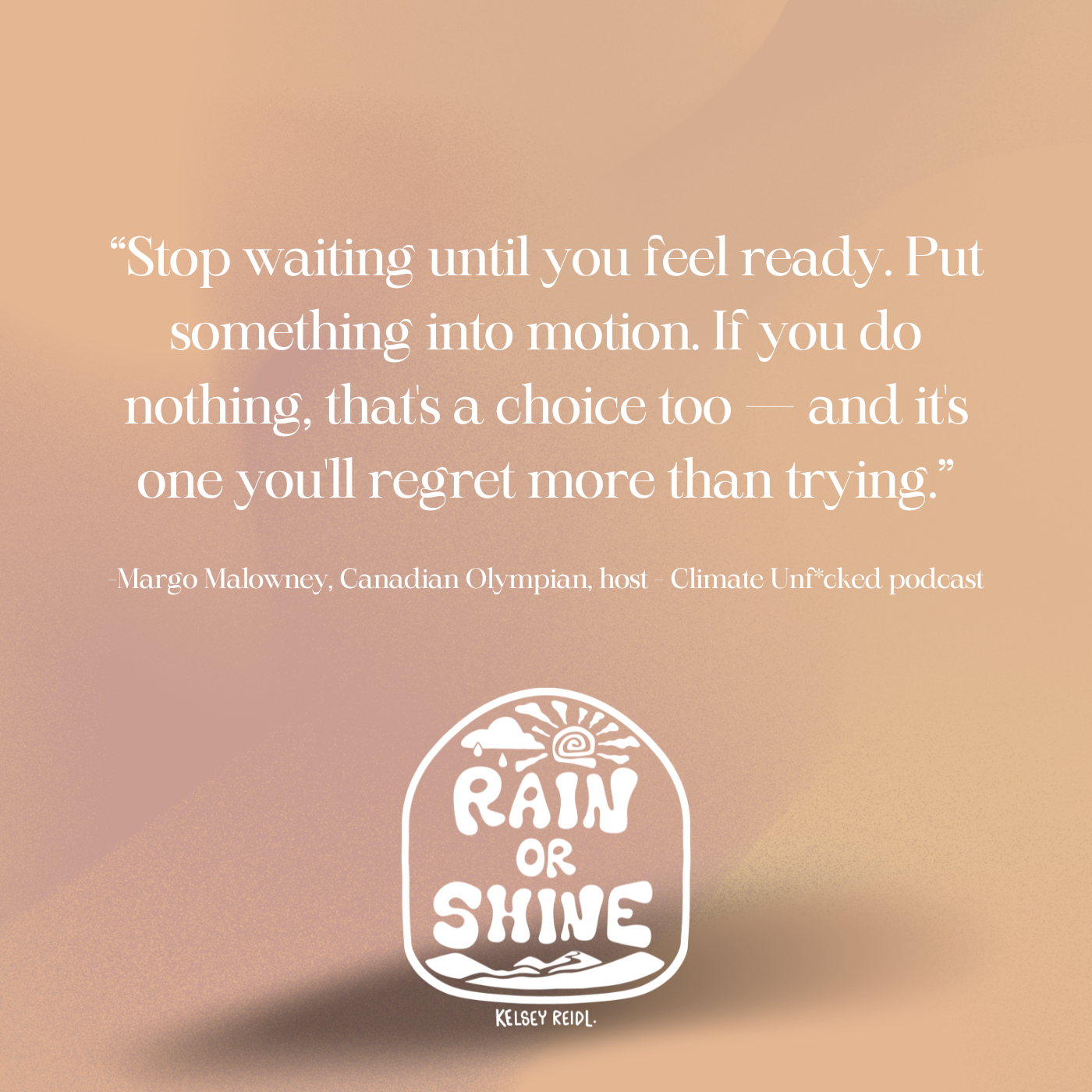
You don't have to wait until you're ready. Just start. Whether it's a sport, a career, or a conversation you've been avoiding — put it into motion. Fake it till you make it isn't a shortcut. It's a strategy.
Memorable Quotes
"With beach volleyball, every outcome you have to own — because you're involved in every single play. If you lose five in a row with five different partners, you can only look in the mirror."
"If you stay silent, nothing moves forward. Be brave. Just start the conversation."
"The better you are, the better I get. That's how sport improves, how community gets stronger, how businesses evolve."
Resources Mentioned
Margo’s LinkedIn: ca.linkedin.com/in/margomalowney
Book:Good Girl Pearl — available on Amazon, all proceeds to animal rescue
EcoAthletes:https://www.ecoathletes.org
Toronto Climate Week:https://www.tocw.ca
EcoAthletes: https://www.ecoathletes.org a global network of athletes and advocates
using sport as a force for climate action
Toronto Climate Week: https://www.tocw.ca Margo is a Partner Lead in the Sport
and Sustainability space
Good Girl Pearl by Margo —a childrens book fundraiser for animal rescue,
available on Amazon
Wave Event — Paris, Ontario, April 17th — Margo will be a featured speaker (link in show notes)
Laura Sinclair — mutual connection and previous Rain or Shine podcast guest
Kelsey’s website: KelseyReidl.com
Kelsey’s Instagram: @kelseyreidl
About the Guest
Margo is a Canadian Olympian who competed in the inaugural Olympic beach volleyball tournament at the 1996 Atlanta Games, helping build the sport in Canada from the ground up before it was formally recognized. She went on to spend nearly three decades in senior executive roles in marketing and communications across Canada, the US, and globally. Today she focuses her energy on sustainability, climate advocacy, and mentorship.
-
CLEANED & EDITED TRANSCRIPT FOR SHOW NOTES
Host: Margo, welcome to the Rain or Shine podcast. I'm really excited to sit down with you today and get to know you a little bit. We were introduced just a couple of months ago by our mutual friend Laura Sinclair, who has also been a guest on the pod. You're also going to be one of our speakers at our Wave event in Paris, Ontario on April 17th. Our listeners have heard me talk about this — we're so excited, and we'll link it in the show notes if anyone hasn't grabbed a ticket yet. I can't wait to hear more about your story. Thank you so much for being here today.
Margo: Wonderful. Thank you for inviting me. I've been learning a lot about you over the last few months as well, and I'm really excited to connect and also to explore one of your events — they look pretty unique and powerful.
Host: So let's start off with some rapid fire questions to get to know you a little better. Say you have a really long work week and you're pouring into many projects. What's one of your favorite ways to unwind and let your mind rest?
Margo: I want to say something wonderful like breathing or going for a dog walk — but what I find truly relaxing is painting. And not art painting. I actually love painting walls and rooms. I think the repetitive motion just lets my mind have a little breather. There's enough of a focus that I'm active, but my subconscious gets a rest. People laugh at me that I'll say, "Let's just go paint a room today!" But I find it deeply soothing.
Host: I actually love that. Maybe there's something about those of us who spend a lot of time on laptops — we want to get back to working with our hands and being away from screens.
Margo: Exactly. It activates just enough of your brain to access your subconscious. And you can actually see what happens — you create something, there's change, there's immediate impact. Even if I don't like the color and I paint it again the next week, it doesn't matter at all. I find that highly satisfying.
Host: I always tell my clients: if you're having a week where you're not winning in your career or business, go win in a creative pursuit. Paint a wall from start to finish and be proud of something. Get that dopamine up.
Margo: Absolutely. It's really about accessing those little dopamine channels to give you that boost you need to get through the more challenging moments.
Host: Our listeners are learners — they love to read, listen to podcasts, and seek advice. Is there a book, podcast, or piece of advice that has changed your life in a positive way?
Margo: I listen to a lot of podcasts and I'm a consummate reader. Right now I'm going through a lot of climate-related content — there's so much positive science and technology emerging in that space, and that's where I'm trying to apply myself. There's a really interesting one called Climate Unf**ked — it's passion-driven, not just hard science that feels heavy and doomsday. I'm really enjoying it right now.
Host: Love it — we'll link that in the show notes. And last rapid fire question: what's one thing you do every single day that is non-negotiable?
Margo: Taking my dog out for a walk. It's that connection point, the motion, being outside of the insular focus of your office. And there's real value in doing it not just for me but for another being — you can see the contribution. The more things he sniffs, the more his brain is wiring, the happier a dog he is. That win-win is really satisfying. He gets his boots and his hat this year, so it's a little comical too.
Host: You'll have to send us a photo of that! So I want to rewind a little bit — was sport always a part of your life? What was your relationship with it as a kid?
Margo: The short answer is yes, sport was always part of my life. My mother was a great athlete — she went to UNB and was captain of her basketball and volleyball teams and won athlete of the year multiple times. My father played football at U of T and Acadia. We grew up in Mississauga, and sport was always part of our conversations. My mother actually founded the Mississauga Women's Basketball League and ran it for about fifteen years. I would go with her on those special days when I was old enough, help her organize, and then sit and watch all these women compete. Optically, I got to see women competing and achieving from a very young age.
I have two younger brothers who are close enough in age that we did everything together. My mom signed me up for anything local she could — swimming, high diving, dance, horseback riding. I just thrived in all of it. As I got older, things narrowed, and I ended up playing mostly soccer and volleyball. Eventually I focused exclusively on volleyball.
Host: What was it about volleyball that really captured you? Was it the community? Were you just instantly good?
Margo: I would say the community — that's what's truly unique about the sport. I was always good, but I was high second-tier indoors; I never played at the national or provincial level. But the teamwork, the dynamic, the community on and off the court — in volleyball you go out and hang out with your competitors after you're done. You come together at tournaments and camps. So the network beyond your team is incredibly strong.
I eventually transitioned from indoor to beach volleyball, which has a couple of big differences. There are only two players instead of six, and you're playing outside in some of the most beautiful places in the world. What I really loved about beach was the accountability. With indoor, the ball can cross the net four or five times and you may never touch it. With beach, you have to own every single outcome because you're involved in every single play.
If you win five in a row with different partners, you can say something is working. If you lose five in a row with different partners, you can only look in the mirror and say, "I need to make some adjustments." That ownership, that accountability, that ability to improve — that was the real excitement of beach for me. It was almost an entrepreneurial sport. You're building it yourself.
Host: I want to double tap on the community piece. You mentioned going out with other teams, and I see such a beautiful parallel to entrepreneurship — so many people are told "don't talk to your competitors." But there's enough to go around. You can build real relationships with people who are competing against you.
Margo: That's right. And you still take joy in competing hard against each other — you wouldn't want anyone to not bring their best because you want to see if you can match them. You don't want to play down, and they don't want to play down against you. That's a healthy, respectful competition. And that's how sport improves, how community gets stronger, how businesses evolve. The better you are, the better I get.
Host: Let's talk about the Olympics. I believe the first Olympic beach volleyball games happened in 1996, and you were part of them. What did it take to get there?
Margo: It's something I value more the further away I get from it. When I started playing, beach volleyball wasn't a recognized sport — not by the Canadian Volleyball Association, not by Sport Canada, not by the Canadian Olympic Committee. It was driven entirely by the athletes themselves.
A lot of it happened in Vancouver and Toronto. I'd put on a suit, go downtown to my job at an investment bank, and then drive out to the beaches and meet everyone who'd done the same thing. We had this tribe of women. We'd bring our nets, our gear, bags of balls. We'd clear the sand, set up the courts, measure everything ourselves. The signs at the time literally said "No Volleyball Playing" — this was before there were any permanent courts.
After my undergrad, I played on the Canadian tour for a summer. Then a friend and I decided to go to Australia — specifically Bondi Beach — to skip winter and keep playing. I had turned down a full-time offer at the investment bank and worked as a waitress to save enough for the ticket and visa. That year at Bondi was completely transformative.
Athletes from around the world came to Bondi to train in the off-season, so the level of play was suddenly extraordinary. And then the World Tour stopped at Bondi that year. I watched for a couple days as a total fan. But by day two, I started watching the women's game more closely and thinking, "Those players aren't as strong as I expected." By the end of day three, my trajectory had taken a hard right: I'm going to play on this tour. From that moment, every decision I made was about keeping this sport in my life.
I moved to San Diego, started a master's degree, and began competing on the world tour. Then it was announced that beach volleyball would become an Olympic sport. We had been building this thing almost unbeknownst to all the organizations — suddenly they had a team sitting in a qualifying position for a sport they hadn't fully recognized or supported. In Canada at the time, beach volleyball was still viewed as beer and bikinis. There was real skepticism.
So it was a bittersweet journey. There was no path — we had been forging it ourselves with our machetes and our volleyballs. We had to become adaptive, resilient, and learn to negotiate with new regulations that didn't always fit the environment we'd built. But we made it. We played in the first game of the Olympics — which, I later found out, was actually a ticketing error. The games were supposed to start at nine, but our game started at eight, so my parents missed the first half.
Host: That's such a powerful story. What I want to reflect back is that you had a strong vision, you kept putting yourself in environments where growth was almost inevitable, and you surrounded yourself with the right people. That's such a lesson for anyone building something — when possible, get yourself to the place where your people are.
Margo: Absolutely. The easiest thing is to be surrounded by people with the same level of interest, passion, and commitment. There's no work involved because you're all speaking the same language. And you can do a lot of that online now, too — find the communities that share your vision so you can carry that energy through the inevitable downtimes, obstacles, and naysayers.
One thing I'll add: I used to hide the beach volleyball piece of my identity when I came back to Toronto. I'd tell people I was a student until the conversation went long enough that I felt I'd established enough credibility to mention, "Oh, by the way, I'm also playing on a world tour for Canada." As a female athlete, your credibility already requires extra work — add the bikini piece and you're starting at a deficit. So I'd essentially trailer the conversation to get to a place where I wouldn't be overlooked.
Host: I know that so much of your journey involved self-advocacy. For someone who feels they're on a path with no established playbook, what advice do you have?
Margo: I love that question, and I'll be honest — at the time I wasn't aware of it enough for myself. I held my tongue when I shouldn't have. I knew what beach volleyball looked like at the world level. We were the experts. But I sat back and let others make decisions because I felt it wasn't my place. I think that's a very female thing to do.
The advice I've come to believe in: fake it till you make it. Put it out there. You can't move forward if you don't make motion. If you do nothing, that's a choice. If you stay silent, nothing moves forward. You don't have to wait until you feel ready or until the idea is fully formed. Just start the conversation. Start the ball rolling. It might feel brave — but be brave.
Host: You've now spent nearly three decades in executive roles in marketing and communications leadership. What parallels have you noticed between sport and the corporate world?
Margo: What I've always been drawn to is the challenge — I like to build, create, and fix things. That was true in beach volleyball: no one had done it yet, so let's figure it out. A lot of the roles I've taken have been similar — companies being bought or sold, greenfield builds, startups. One was literally starting with a hole in the ground for an event venue. Another was a Silicon Valley startup where engineers were sleeping in the office and eating Cheerios at three in the morning.
In all those environments, you're surrounded by people who share the same vision. You have a clear purpose, you're course-correcting constantly, and it all maps directly to my sport journey. I think athletes who've built community in newer sports — who've had to communicate what they're doing and why, and hold true to a vision others don't immediately understand — are uniquely equipped to thrive in those entrepreneurial environments.
That said, I did take a couple of roles with more structured organizations. They looked great on a resume, and there was value in that — it connected me back to the Toronto and Canadian marketplace after years in the States. But it was not a place where my passion thrived. I couldn't stay there forever, and I didn't.
Host: So what would be the lesson — know your values first?
Margo: I don't think taking that role was a mistake. Sometimes you make a practical decision because it's good for credibility. Your values and needs also change over time — you have to be flexible. The key is not to stay there forever. Stay long enough to learn, take what you need, and then move back toward what really fires you up.
Host: From your years working with women in leadership, what common mistakes do you see that you wish you could help more people solve?
Margo: So much comes back to agency and advocacy — understanding your personal brand, not in a crafted marketing sense, but genuinely knowing what brings you joy, what energizes you, and what drains you. Those are just data points about how your system fires. When you understand those, you can start to own your voice because you're not fighting against things that are naturally hard for you. You can seek out roles where your nature is a fit rather than a force.
Host: Do you work with coaches on your own evolution?
Margo: I have. The first half of my professional career I was probably taking more external advice than acting on internal drive — more ladder thinking, more linear. It wasn't until later that I pursued this more intentionally. I took a leadership course from Oxford, sought out the smartest thinkers I could find, and I do work with a coach. My only regret is that I didn't start sooner. Having a framework to articulate things I already intuitively understood was a massive, massive game changer.
Host: If someone wants to connect with you and learn more, where can they find you?
Margo: I'm pretty active on LinkedIn. I'm doing advisory and volunteer work — I'm working with Toronto Climate Week and with a group called Echo Athletes, which has a collegiate cup where your dog walks and workouts go towards beach cleanups. You can find me on LinkedIn and I'm always happy to connect and share ideas.
And I'll do one little plug: during the pandemic I wrote a kids' book called Good Girl Pearl — it's a fundraiser for the rescue I worked with in the Beaches neighbourhood, and all the proceeds go to them. It's available on Amazon. Pearl is one of the older, discarded dogs I fostered. If you're remotely interested in supporting animal rescue, I'd love your support.
Host: I am buying that book the second we hang up. Thank you so much, Margot. We cannot wait to have you at our Paris Wave event on April 17th, and we will see you in just a few weeks!
Margo: Thank you so much. I look forward to the event and I really enjoyed our conversation today.

Book Your Free Marketing Strategy Call
Your business deserves to be found—both on Google and ChatGPT.
If you're a solopreneur, author, or thought leader wondering why your marketing isn't translating to consistent revenue, the problem usually isn't what you think.
After 8+ years of working with ambitious entrepreneurs, I've discovered something crucial: most marketing challenges aren't about needing more tactics—they're about solving the wrong problem.
Here's What We'll Uncover Together:
✓ The Real Constraint blocking your growth (it's rarely what you think)
✓ Your SEO Opportunity to rank on Google for what matters
✓ Your AI Visibility Gap and how to show up when prospects ask ChatGPT
✓ Your Lead Generation Blind Spots and where you're losing potential clients
✓ Your Custom Funnel Analysis showing exactly where the leaks are
Book now!
The Potential Return: A clear path to $10K-$50K+ in new revenue
I work with business owners who are done guessing and ready for a marketing strategy built on what actually works—not marketing myths.