What It Really Takes to Build a Business on Your Own Terms: Lessons from a Mental Performance Consultant
Episode 385: Rain or Shine Podcast
Guest: Cait Leavitt, Founder of Mind With Matter
From Side Hustle to Success: Building a Mental Performance Business with Authenticity
Episode 385: Rain or Shine Podcast
Guest: Cait Leavitt, Founder of Mind With Matter
Quick Summary
Cait, founder of Mind With Matter, shares her journey from working in Australia to returning to Canada to launch her mental performance and sports psychology business.
In this honest conversation, she opens up about overcoming self-doubt, the importance of community, navigating challenging days as an entrepreneur, and why "mind with matter" beats "mind over matter" every time.
In This Episode
Why Cait decided to leave full-time employment to start her own business
The pivotal advice that changed her perspective: "The job you want might not exist yet"
How she landed a contract with Canada Games (after thinking she'd "never get it")
The difference between knowing your values and actually connecting with them
Practical strategies for working through tough business days
How to discern between fatigue and fear when motivation is low
Building community in a new city as an adult entrepreneur
Why curiosity and joy are essential tools for getting unstuck
Key Takeaways
Trust the alignment: Instead of forcing outcomes, Cait operates from a place of abundance, trusting that what's meant to work out will work out—and that saying no to misaligned opportunities creates space for the right ones.
Community is non-negotiable: From practitioner meetups to supervisor check-ins to honest conversations with friends, Cait credits her support network as essential to her success and mental health as an entrepreneur.
"Good enough" is enough: On challenging days, Cait chunks down her tasks and asks, "What do I need to do to be good enough today?" This mindset shift removes the pressure to be extraordinary every single day.
Actions precede feelings: Whether building community or starting a business, waiting for motivation or perfect conditions means waiting forever. Taking action creates the feelings you're seeking.
Fatigue vs. fear: Learning to distinguish between genuine exhaustion and fear-based resistance is crucial. Cait’s test: Try working for 10 minutes. If momentum doesn't build, your body genuinely needs rest.
Memorable Quotes
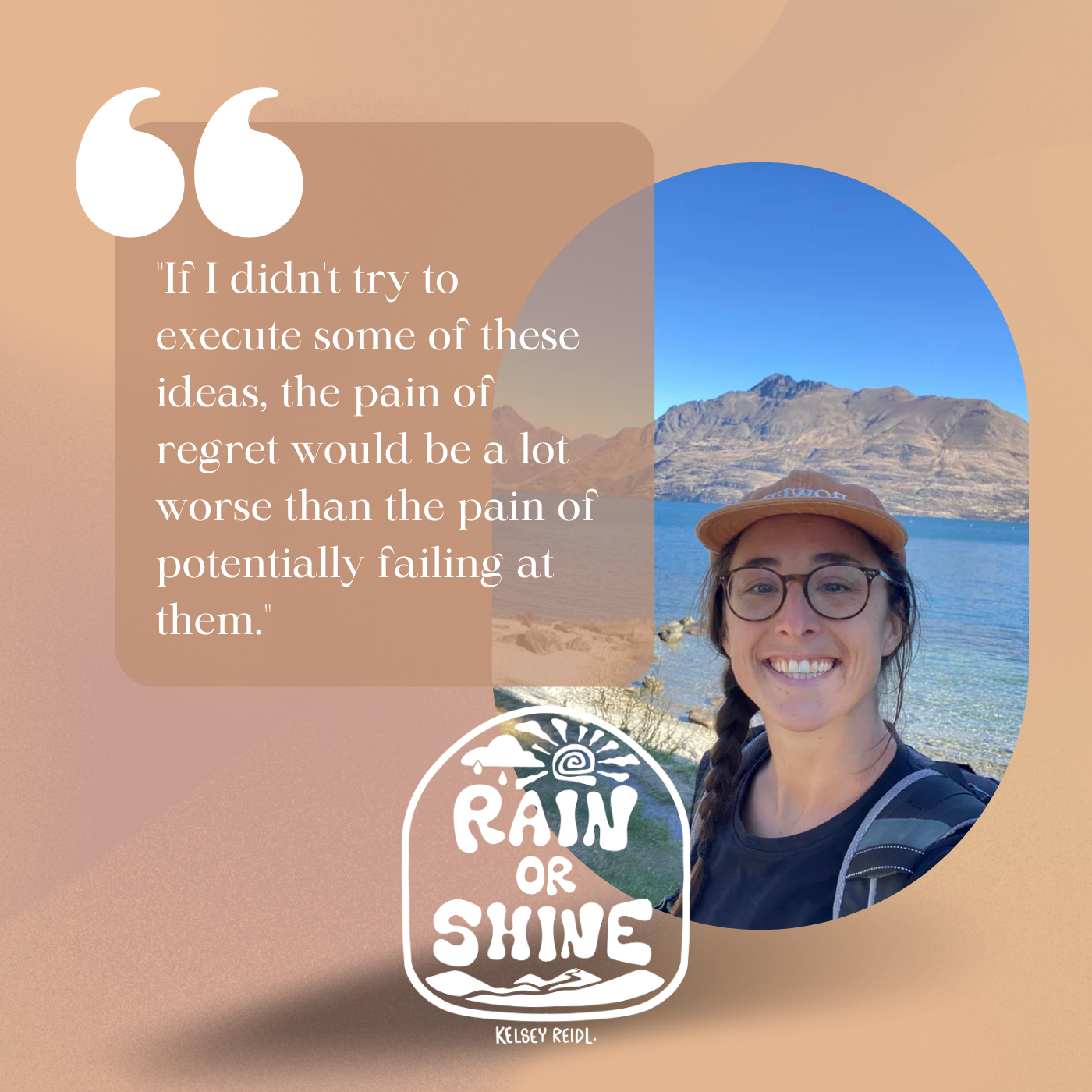
"If I didn't try to execute some of these ideas, the pain of regret would be a lot worse than the pain of potentially failing at them."
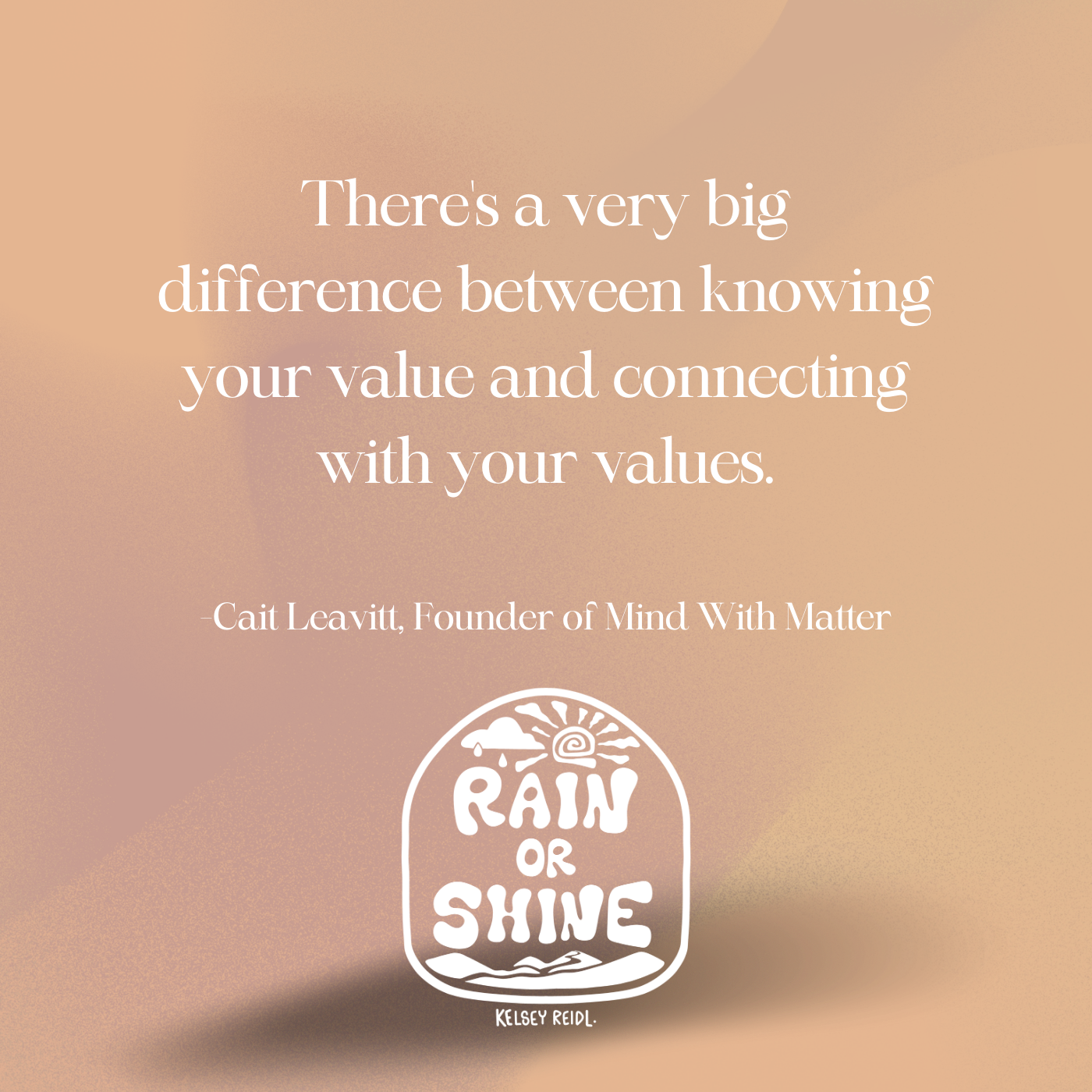
"There's a very big difference between knowing your value and connecting with your values."
"Every car needs coolant. The more I try and push myself to be amazing on this shitty day, the harder it's going to be for me to show up tomorrow."
About the Guest
Cait Leavitt is a sports psychologist and mental performance consultant who specializes in concussion recovery support. After gaining experience working in Australia and with various athletes and teams, she founded Mind With Matter—a practice rooted in the philosophy of working with what is, rather than pushing through at all costs. She currently serves clients from Squamish, BC, where she balances her work with her love of mountain biking and cycling.
Connect
Website: https://www.mindwithmatter.ca/
LinkedIn: https://www.linkedin.com/in/caitleavitt/
Resources Mentioned
Visionary 2026 Workshop: Annual business planning session on December 17th (www.kelseyreidl.com/2026)
All Things Visionary Newsletter: Weekly insights at kelseyreidl.com/newsletter
Mind With Matter (Cait’s business specializing in mental performance and concussion support)
Canada Games (where Cait served as mental performance consultant for Team BC)
Squamish, BC (Cait’s current home base and community hub)
Private business & marketing coaching with Kelsey, learn more
About the Host
Kelsey Reidl is a marketing strategist, business consultant, and host of the newly renamed Rain or Shine podcast (formerly Visionary Life). With over 350 episodes and seven years of podcasting, she helps entrepreneurs build sustainable marketing strategies while navigating the ups and downs of business ownership. She's also a speaker on topics like ranking on ChatGPT, a course creator, and a mother balancing it all with her signature "rain or shine" philosophy.
Connect
Instagram: @kelseyreidl
Website: kelseyreidl.com
Subscribe to the weekly newsletter: kelseyreidl.com/newsletter
-
Host: Cait Leavitt, welcome to the Rain or Shine podcast. I'm so excited to chat with you today. I was saying before we started recording that you've just kind of hit your stride. I feel you had a big move in the last few months. You have launched your business, you started Mind With Matter, and I'm really excited to dive into some of your success tips, some of those moments where maybe you had a little doubt in yourself and how you overcame it, and just to share your story with our listeners. So thank you for being here.
Cait Leavitt: Thank you for having me. I love the idea behind this podcast of highlighting the reality and experiences behind entrepreneurs.
Host: You're the perfect guest to have on. So can you take us back to the moment why you decided to start your business? Why Mind With Matter? What was the spark? What was your mindset? Did you have any doubts in the early days? Just rewind us to that moment.
Cait Leavitt: I had been working in Australia for about a year and a half and I decided to come back to Canada, and I sort of saw that as an opportunity to try. I had so many ideas and all the things I wanted to do, and I'd been working with clients on the side for a couple of years. I was like, this is the perfect time to fully give it a go because I learned a lot from my experiences in Australia.
Two of the things I knew to be very true: one, if I didn't try to execute some of these ideas, the pain of regret would be a lot worse than the pain of potentially failing at them. And also, full-time work within sports psychology or performance psychology and mental health is challenging. That, with my deep knowing that I struggle to work for companies that I don't have similar values with, I was like, hey, this is the perfect blend of an opportunity just to create it myself.
I remember early in my sports supervision, I don't know who I heard it from, but someone was like, this is such a dynamic industry. The job you want might not exist yet and you might need to create it for yourself. And so I was like, okay, I'm coming back. I know I have a lot of experience now. I know what I want to do. It's the recipe for success. And I'm so glad I did. But there was definitely a lot of doubt. I had no idea what I was doing other than I knew I had to try.
Host: What that person said to you is so interesting. You kind of have to just go pave your own path because that is both the most exciting thing that someone could say—oh my God, I get to be the creator—and also the most horrifying thing because you're like, oh, there is literally no blueprint. And that means I can do whatever I want. I can follow the nudges, I can go with gut feelings, I can really build this thing as big as I want to. But there's no guarantee that it will work because there's not this exact prescribed path where you complete your masters, go get a job, have a paycheck.
How did you overcome those doubts? Or what did you do when you had those moments of, yeah, this might not work? Were you okay with that? Did you have a backup plan? How did you move through the early doubts that you faced?
Cait Leavitt: I didn't have a backup plan. I knew I wanted to commit to at least a year. Honestly, I'd been thinking about it for so long that I knew in my gut that it was possible. So yeah, I did have the doubts, but I promised myself I would try for a year. And if I wasn't basically making enough to live my lifestyle within that time, I would try something else.
I heavily relied on community. I'm lucky that I have a family that's very business-oriented, so I could walk them through my ideas. And then also reaching out to you. I was like, I know, as you mentioned before, it's so exciting to have endless opportunities, but that can also be very debilitating and be like, hey, what do I actually do? And so sort of narrowing it down can be like, okay, this is what success could look like in a year. And then you basically helping me outline the steps of how to get there gave me a bit of a roadmap that still allowed for flexibility.
Host: I remember when we had our very first conversation, you had so many ideas. You had documents created, you had all these resources that you're like, can you look through this and see what's good here? And I just love, because I think that that is the nature of so many entrepreneurs, especially visionary entrepreneurs—we have sticky notes with ideas, we have digital notes with ideas, we talk about them all the time. But it is so paralyzing to know how do I take all these ideas, bring them down to earth, and give this thing a fair chance versus just stewing in what could be. And that's a really big step to take to be like, I might need some help to actually do this.
Cait Leavitt: And I think that's something when I talk to other practitioners or other entrepreneurs, that's the biggest thing—the community behind it. There's so many different people I rely on for different things, and without those resources and connections, I definitely would not be where I'm today.
Host: What would be an example of you relying on community or reaching out to somebody for support when a lot of people might just be like, I have to figure this out, or I just need to suffer through this myself?
Cait Leavitt: In Squamish we have really good practitioner meetups here where it's just who works within the health industry. We sort of go, we have one topic that we're going to focus on for the month, everyone can sort of share their experiences. I still reach out to both my supervisors all the time being like, okay, I just had a client mention this. They're a minor. Here are the considerations. What would you do?
And then my friends being like, wow, work was really hard today. Had a really tough session with the client. Don't feel like I made an impact. And then they can give me their perspective shift. But it's still not automatic for me to reach out to people, but I'm having enough experiences where the feeling of the support is so influential that I'm like, oh, I know this will help. So even if I don't want to do it, I'm going to do it anyways. And it just also makes it so much more enjoyable. We're meant to do things in community, and we can't get caught into the individualism of society. Intentionally connecting with community is such a gracious thing to have.
Host: It's almost like rewiring your brain to not always think, how can I do this? How can I do this? But like, who do I know that's already gone through this? Or can connect me with the solution? And it's so not the default, especially with my own brain. I'm always trying to muscle through things myself. But oh my gosh, when you start to think about the network that each of us have access to, whether it's friends or old colleagues or people we know on the internet, most people are so willing to share their playbooks with you, and all it takes is getting over your own ego and asking. So it's such a good reminder.
Cait Leavitt: I always think when people reach out to me for questions on certain things, specifically usually around concussion, I'm always happy to help. I'm never like, oh, this is such a burden. So I have to remind myself of that sometimes too—that other people probably have that same mindset of being like, yeah, I'm happy to help.
Host: So can you walk us through your first, holy shit, this might actually work moment? Because there's a really big difference from having ideas and starting to put things out there and building the website to, oh, I'm maybe actually onto something. There's some proof or validation that my business idea has potential.
Cait Leavitt: There's a few that stick out for me. I think one, when I was starting all my concussion support work, was talking to other practitioners and the consistent messaging when I was brainstorming like, hey, I'm thinking of doing this. Do you see value in this? How could it help your work? Everyone was like, wow, this is really the missing piece of concussion recovery. So getting that consistently was so helpful.
And then another one was getting the contract to be the mental performance consultant at Canada Games for Team BC, which I just completed and was a phenomenal experience. But I vividly remember doing the application. I was like, oh, just classic cover letter, update the resume. And I sent it off and I walked downstairs. I was visiting Toronto at the time and I told them, I was like, I just applied for a job that I'll literally never get. I was like, there's so many BCs that are really rich in the mental performance area, and I was like, there's some people with more experience, but happy I applied, put it out there, and completely forgot about it.
And then a few weeks later when I got the interview, I had literally fully let go, had no expectation. And when I got the interview I was like, oh my God, I might actually be good at what I do enough to get an interview for a pretty sought-out contract. And that was the really defining moment just because I went from being like, it's not that I'm bad at what I do, I just know there's people who have more experience. And to getting the contract was really memorable.
Host: Wow. Yeah, that's a huge moment. I'm trying to think, what is the lesson there that we extract from that? Because you could have just saw the job posting, not applied. You could have been like so panicked and, oh my God, every day messaging the supervisor and the hiring manager and so fixated that if I don't get this, I'm a failure. But yeah, what is your learning from that whole experience?
Cait Leavitt: Not to sound super cliche, but something that I've really relied on heavily in my first year is just trusting that what's aligned will work out. Sort of looking at it from a state of abundance, being like, okay, if this contract doesn't work out, something else will. Versus being like panicking, being like, oh my God, I really want it. Or not even applying out of fear. It's just like, okay, if this is meant to be, it'll work out. And if not, saying no to something that isn't aligned creates more space for things that are. And honestly, doing the work, following your routines, but also trusting that things will work out, I think was what I took from that one. Because I really had no expectation, but I didn't have enough fear that I didn't want to apply. I was like, yeah, the worst thing that happens is I don't get a call back. That doesn't hurt my ego. So yeah, the trust of it all.
Host: So good. Yeah. What comes up for me is just that there are so many times in life that, whether it's conscious or subconscious, we just say, oh, I'm not qualified for that, or I could never try this new sport. Or, oh, that person's out running a marathon, I couldn't do that. But it's like, then we just shut down the opportunity before we've even given it a fair chance. And had you just looked at that application and went, oh, they'll never choose me. Or, oh, I'm not qualified. But it's like you literally don't know. And that's just a story we would tell ourselves. And maybe you're not, and you'll find out, but the fact that you just kind of went for it, and I think it's having that bold confidence. It's actually an essential skill of a business owner to be like, yeah, maybe I'm not, but I'm going to do it anyways as if this is good practice. If it's meant to be, it will be. And who the heck knows what's possible. I'm in charge of my future here.
And I think we have to work on that skill of just putting ourselves out there and almost acting as if anything is possible versus feeling like, oh, I'm maybe not as qualified or as good as these others.
Cait Leavitt: And I think when I sent that application, I don't think I didn't feel like I had confidence, but looking back at it, it's just like, okay, there are risks of not getting it—maybe just ego risks of not getting it. But it was like I really looked at it as just, this could be a cool opportunity and just leaving it at that and taking away the expectations and pressure around it. I think actually allowed it to come through.
Host: So cool. Now, obviously that's a career high for you. I'm curious because as we know, not every day running a business is filled with wind and excitement and people patting you on the back and pushing you up the hill. Sometimes there's shit days and, you know, that comes at every level. And I'm a big believer that if we just pretend rainy days don't exist, then when they come, we're disappointed. We're like, oh shoot, it's raining. Where it's like we know that the seasons of our year bring rain, and that means that there will also be sunshine and we don't have to be disappointed or feel like it's a shock that it's a rainy day.
But I'm curious, have you felt those days or had one of those days in running your business where you just felt like this isn't going that well? And then what tools did you use or do you use on an ongoing basis to move through those challenging days?
Cait Leavitt: There's definitely lots of challenging days. And like you said, sort of preparing for them in advance and knowing that they will come really helps when they do arrive. I think there's been different challenges that I face. One of the bigger ones is just when things don't go as planned, which obviously we know plans don't always go. But as an entrepreneur when your entire income is dependent on your work, it's a little bit more stressful.
So plans not following through and my concussion symptoms have been a massive barrier. They've gotten a lot better, which has honestly helped my work so much. So when plans don't go through, it's taking time to sit with that. It feels like shit and allowing yourself to be like, okay, this sucks. But then usually what I try to do is reconnect. We all know that knowing your values are important—they're what motivate us on a long-term basis. But what I've learned from these challenging days is there's a very big difference between knowing your value and connecting with your values.
Why I started this was because I have a deep desire to have a positive impact on people, obviously specifically within the mental health and performance realm. But that lights a fire in me like nothing else. And so on those days when I feel like shit is hitting the fan, I look at screenshots from clients or parents of clients or coaches of the behavior change that they've seen, or I look through my chart notes of clients to see their progress to really remind myself of the impact that I am making.
And then again, I really rely on community. So whether it's professional or personal, relying on them for a perspective shift is mandatory. That's what makes it so much more enjoyable. And as I've said before, we are wired to connect with people. That's how our brains work. And so definitely doing that has been really helpful.
And then on the days where it's like you're really in the thick of it, I chunk it down. I'm like, okay, what do I need to do to be good enough today? Not even successful—just what do I need to do to be good enough today to be able to close a laptop and be like, I tried my best. And I write out those specific tasks and I just focus on those and make space for myself at the end of the night to process sort of what's going on on a deeper level.
Host: Oh, for so many years, I just wouldn't allow myself to be good enough. And I thought that every day had to be that sunny day and I had to be uber productive and achieve the highest of high levels every single day in my business and in my life. And only recently I've realized, and I love how you word this, chunk it down, what is good enough? And you even said it, it's not even successful. I'm not trying to push any boundaries. I'm literally just I want to show up, build that muscle today, maybe just do one or two small things to keep the business flowing and that momentum and that channel open. But releasing the expectation that things have to move way forward every single day, because I just don't think that's reality. Imagine just trying to sprint through your entire life—eventually you're going to need rest, you're going to need sleep, you're going to need to take a rest day and recovery day. But sometimes in business we sit down and we're like, alright, let's conquer the goals. That doesn't apply to me here.
Cait Leavitt: Yeah. I remember a therapist once said to me, every car needs coolant. And I'm a very energetic person. I'm really good at go, go, go. You're very similar. The rest is how I rest looks very different for other people. But realizing that being like the more I try and push myself to be amazing on this shitty day, the harder it's going to be for me to show up tomorrow because my body is yelling at me that it needs rest, whatever that looks like.
And this was a big thing with concussion recovery—you can't push yourself till your symptoms are in the red zone because the recovery from that is longer than if you actually just took a 15-minute break to let your brain come back at it. It's becoming much more automatic now, but yeah, you just have to make space for the shitty things that come up because the more you suppress them, the more they live in you. And the consequence of that is a lot worse than allowing yourself to take an hour off and go bike on your lunch ride or whatever it looks like for you.
Host: Absolutely. And I'm sure you have to talk through with a lot of your clients why that's important, right? Because even as an athlete, a lot of these people operate on the, I must follow my training plan and I must continue to push even if I'm uncomfortable. We're taught that sometimes is to just push through the discomfort. But I think that's an important other side of the conversation, is that if you're pushing through the red, what's coming on the other side could be even worse than if you were to just stop and have a little reset ritual.
Cait Leavitt: Exactly. And that's why my company's called Mind With Matter. There are times when you want to push through pain, and I just don't really buy into the whole mind over matter of go, go, go, push, don't work in alignment sort of thing. It's just when you work with what is going on in front of you, you'll be able to be much more sustainable moving forward versus trying to only go at 110%.
Host: Yeah. That's something that I am always trying to think about myself too, because sometimes I feel like, okay, my brain is telling me I just want to do nothing today. I'm unmotivated. I'm a piece of crap, who cares if I sit down and create a podcast this week? And sometimes when I actually sit down and I do the mind over matter, I get into momentum and I get flow. But sometimes it works the opposite where I'm like, oh my God, I should have just taken today off because I got nothing done and I just pushed. How does one discern between whether pushing through to have action that creates momentum versus, oh no, I actually need to listen to my body?
Cait Leavitt: I think there's two things. It's one, you need to have the self-awareness of being like, is your body responding to this because of an old narrative that you're living by—you're not good enough or it's not okay to fail, or whatever the limiting belief is. Is that what you're listening to, or is your body genuinely needing rest? And it takes a lot of intentional practice to be able to discern that from the messages from your body.
And I think also a big thing for me again that I learned from my concussion is sort of titrating it, being like, okay, I'm feeling exhausted. Can I try and work for 10 minutes on something that excites me or that is somewhat exciting to me today? And if after that 10 minutes I don't have one step of momentum, then I'll take an hour off and see how I feel and try again. And if I try again, I'm still too tired, okay, my body needs a rest day. And that actually is productive because you can't keep running at full speed.
But yeah, it's really the self-awareness of is this fatigue or is this fear? And then dipping your toe in and seeing how that feels instead of being like, I have all this to do today. It's like, okay, what would it be like to work for 10 minutes and how does that feel? And then make the decision.
Host: I'm totally stealing that. Is this fatigue or is this fear? Because yeah, those are two very different things that I think I can get them confused sometimes, but it's a simple question of what am I actually feeling right now? And then making a plan accordingly.
Cait Leavitt: And that can be as simple as usually they'll show up differently in our body. And the more that you ask yourself and set aside five minutes, being like, okay, what's showing up physically for me, you'll be able to discern if it's fear or fatigue. But it does take practice to be like, oh, okay, is it a tightness in my chest? That's probably your fear. Is it a heaviness in my shoulders? That's probably fatigue. And then based on the answer, you know what you need to do.
Host: So good. You mentioned earlier that one of the ways that you kind of keep yourself going on the crappy days is you root down into your community. This is a big topic and you recently did a big move. You moved out to the west coast of Canada. I'm assuming you kind of had to rebuild community a little bit. For some people when they move somewhere, that is one of the most overwhelming things of, how am I going to meet people? How am I going to rebuild that community? Woe is me, I'm an adult. It's hard to make friends. I'm curious, what were some of the things you did that allowed you to plug into a community which you're now speaking highly of? These are your entrepreneur friends, your meetups. What are some tips you could share there?
Cait Leavitt: Well, I think I had lived on the west coast for 10 years, but I went to Australia for a little bit. And so when I came back I was like, I know what works for me and what doesn't. And so that's why I chose to go to Squamish because I knew I couldn't be in the city. It just wasn't aligned for me. And I had two friends in Squamish when I came here. And it was sort of the similar mindset I had to starting my company. I was like, I'm going to give this all I have for a year. And if it doesn't work, I'll know that I tried. And I've lived in so many different places. Moving is not scary to me at all. That mindset of I'm just going to try and see how it goes.
And then also being really intentional with creating community. Because my community in Australia wasn't phenomenal. And so I knew how important it was to have. And it was things—I was actually just talking to my friend about this on a bike ride of, wow, it must be really hard to make friends if you don't have as many hobbies. I have made so many friends through mountain biking and cycling. It is unbelievable. Very easy when you live in a place like Squamish because the vast majority of the population likes the same activities as me. So, but I chose that because I was like, I know I spend the most of my time playing sports. Where is a place that I can go play sports recreationally that creates community?
But when my friends have moved and had that same challenge, it's sort of like, okay, what is something that brings you joy and how can you bring other people into doing that? And my friend who lives in Australia likes sports but is not the most active, sporty individual in the world, but she's like, I'm going to try tennis and just to see what it's like and sort of go from there. But it does—I'm not going to say it's easy to make community. It can be really challenging. But I also think that there are physical spaces that you can go to that do make it easier, and knowing that it's a hard choice but in the long run, it's usually worth it.
Host: One of the things that you said, I love, you said, bring other people into the things you love doing. Not wait for people to come to you. Wait for people to invite you out to the thing. Wait for them to anoint you their friend. It's like, no, do the things that light you up. Try to find people to invite into that. And then of course they're going to invite you back, you're going to join their communities. But sometimes we do have to put ourselves out there. And that goes for whether you're trying to make a change with your community, your health, your business. Sometimes we have to be the ones to be the initiator because if we just sit back waiting for shit to happen to us, not a lot changes. Right? So I thought that was really important to bring people into your life.
Cait Leavitt: Yeah. There's a mantra that I sort of come back to for a lot of areas of my life, and it's actions precede feelings. So it's like if you're wanting to create a community, waiting for that to happen, you might be waiting for a really long time. Whereas if you are proactive about bringing people in, that action can create the feeling that you're wanting. But people can get stuck in the waiting of it all, I think. With my life experiences, I just was sick of waiting and I'm pretty good at taking action.
Host: That is one muscle that I think is important to have as a business owner—I'm not waiting around for things to happen. I'm just going to flex that action muscle. And we just never know which action is actually going to produce the results.
Based on the work that you do, I am curious, are there some common themes that you often find yourself coaching your clients through that would be applicable to the listener who's maybe having a hard day, or they're not excelling in life or business or their sport the way they want to? For the person who's just feeling, ugh, there's some friction here. I don't know what's going on. I want to move faster, I want to be better. I want to have a more beautiful life, but I'm just feeling a little stuck. Are there any tools that you would offer to that person that you're often sharing with your own clients?
Cait Leavitt: I think a big one that I work with all of my clients is, can we bring some curiosity into this? Which can be challenging, but it's like, okay, if this isn't working, what's another way you could look at it? Or what's one thing that you could do that might help clear your mind? And it's just like, instead of fixating on a plan and all the steps, and every day I'm going to do this—that can be really rigid. And so to bring more creativity and joy into it, what can you be curious about and what actions align with that curiosity?
And a lot of times people have the expectation of, simple things—if I'm helping a client learn how to regulate, it's like, okay, they have this expectation that doing one minute of breathwork is going to be wildly effective and change everything. And it's like, okay, can we be curious about what this might be like instead of putting pressure of it having to fix everything? I don't know if I described that well, but yeah, be curious instead of having all these expectations.
And also, this is going to sound so cliche, but it's follow what brings you joy. Life is so short. We don't always know the effect of something. So if you do something because you're curious or because you think it might be fun, you have no idea the positive impact that might have on you or other people around you. And then again, just trusting that it might work out or something might not come from it. But knowing that you tried will often be more motivating than feeling stuck.
Host: That is something that I often talk with my clients about too, is anytime they're in a launch and they're feeling underwhelmed or stuck, or they're just having one of those blah seasons of business, I'm like, what inspires you? What brings you joy, and are you doing that right now? Because sometimes when we're not having professional wins or athletic wins or whatever, if we're not having wins in one area, go win in another area. Go crochet something and maybe that brings you joy. Go have a date night, go mountain biking. We can't always just be winning, winning, winning in one area of life and expecting that that's just never going to stop. But sometimes when you ask yourself that question of what brings me joy, what is kind of going on, can I find a win in another area, you can literally get unstuck in the other area.
Cait Leavitt: Yeah. And another thing that came up as you were saying that is, yeah, why did you decide to try this in the first place? So this is what I was saying—if I'm having shitty days at work, it's like, okay, what is my why? And it's having a positive impact. Okay, what are the actions or what are the reminders I can do that actually connect me with that feeling that I'm searching for? And there's a lot of neuroscience of what that does, but when you actually pay attention to how you already have a little bit of what you've been looking for, it enables you to open up to get more of it. So there's lots of different ways, but curiosity, joy, and connecting with your values, I would say are pretty big themes.
Host: Something that I see it in having a one and a half year old—he's the most curious and everything is an adventure of curiosity. And then you realize that somehow into adulthood, I think we just stop asking the questions and stop questioning, well, why do I feel bad when I hang out with these people? Why am I not energetic these days? And we just accept that things just are, and it's like, well, no, no. That skill of curiosity of always looking for the answers within ourselves and by interacting with the world around us—if we lose that, that's when life is over.
Cait Leavitt: Or life just becomes so stagnant. And you don't even have to be curious about work. It's like, what is a topic that interests you? Can you read about that for 10 minutes and see the impact that that has on your mind and your body?
Host: Yeah. So important. So many good tips here. I'm curious if people want to connect with you, if they want to learn more about your work, what you do, what you're up to, where are the best places for them to connect with you, Cait Leavitt?
Cait Leavitt: On my website, so mindwithmatter.ca. I don't have any socials for my work at this point. Isn't that nice? It's not an aligned marketing strategy for me, so I've stayed away from that. But yeah, so LinkedIn or my website would be the best places.
Host: Amazing. Yeah, we'll link those in the show notes. And you're such a joy to chat with. And we of course wish you all the success as you continue to grow Mind With Matter. And thank you so much for sharing all your wisdom on the Rain or Shine podcast today.
Cait Leavitt: Thank you for everything that you've created.

Book Your Free Marketing Strategy Call
Your business deserves to be found—both on Google and ChatGPT.
If you're a solopreneur, author, or thought leader wondering why your marketing isn't translating to consistent revenue, the problem usually isn't what you think.
After 8+ years of working with ambitious entrepreneurs, I've discovered something crucial: most marketing challenges aren't about needing more tactics—they're about solving the wrong problem.
Here's What We'll Uncover Together:
✓ The Real Constraint blocking your growth (it's rarely what you think)
✓ Your SEO Opportunity to rank on Google for what matters
✓ Your AI Visibility Gap and how to show up when prospects ask ChatGPT
✓ Your Lead Generation Blind Spots and where you're losing potential clients
✓ Your Custom Funnel Analysis showing exactly where the leaks are
Book now!
The Potential Return: A clear path to $10K-$50K+ in new revenue
I work with business owners who are done guessing and ready for a marketing strategy built on what actually works—not marketing myths.