403 We Sat in a Room Full of Badass Moms in Business. Here's What They Said
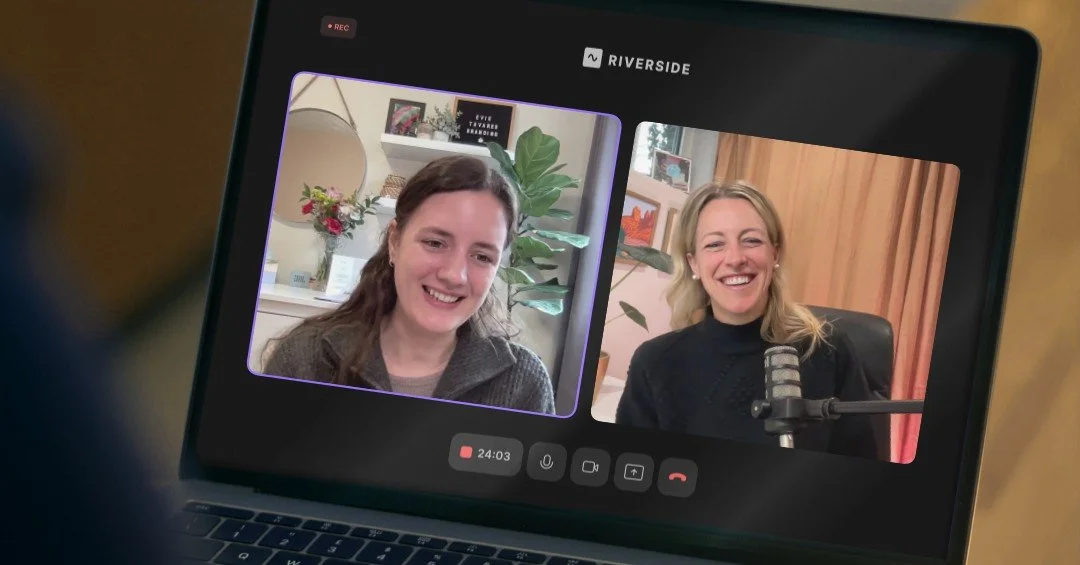
403 We Sat in a Room Full of Badass Moms in Business. Here's What They Said
Episode 403: Rain or Shine Podcast
Hosts: Kelsey Reidl and Evie Tavares
Unfiltered Tea with Evie & Rain or Shine with Kelsey | This Mother Means Business Event Recap
Episode 403: Rain or Shine Podcast
Hosts: Kelsey Reidl and Evie Tavares
Quick Summary
In this special crossover episode, Evie and Kelsey sit down for a candid debrief following their day at the This Mother Means Business event hosted by Laura Sinclair at The Pearl in Burlington. From conversations about shame and visibility to AI-powered systems and knowing when to get off the wrong train, this episode is packed with real insights from successful women in business — shared between two friends who just couldn't stop talking on the drive home.
In This Episode
Why attending women's business events is one of the best prescriptions for stagnant growth
Dr. Tracy's keynote on shame, motherhood, and the vulnerability of building a business in the light
The powerful exercise about the stories we tell ourselves — and how to rewrite them
What successful women's day-in-the-life routines actually look like (spoiler: less hustle, more intention)
Julie Cole's famous quote on sunk cost fallacy and knowing when to get off the wrong train
Rita from the Printing House on turning adversity into your greatest strength
CIBC's Women's Hub and why banks need to show up at women's events
How AI can reduce mental load for mothers in business — and why you don't have to have started early to start smart
The right way to follow up after networking events
Watch The YouTube Video
Key Takeaways
Expand your network constantly. Stagnant revenue, growth, or engagement is often a sign you're not meeting enough new people. Events are the prescription.
Rewrite the stories that hold you back. Whether it's "I don't have time to be creative" or "I have to do everything myself" — those narratives are quietly blocking your growth.
Delegation is not a luxury; it's a strategy. Knowing your season and offloading what you can — cooking, grocery shopping, admin — is how you protect your energy for what matters most.
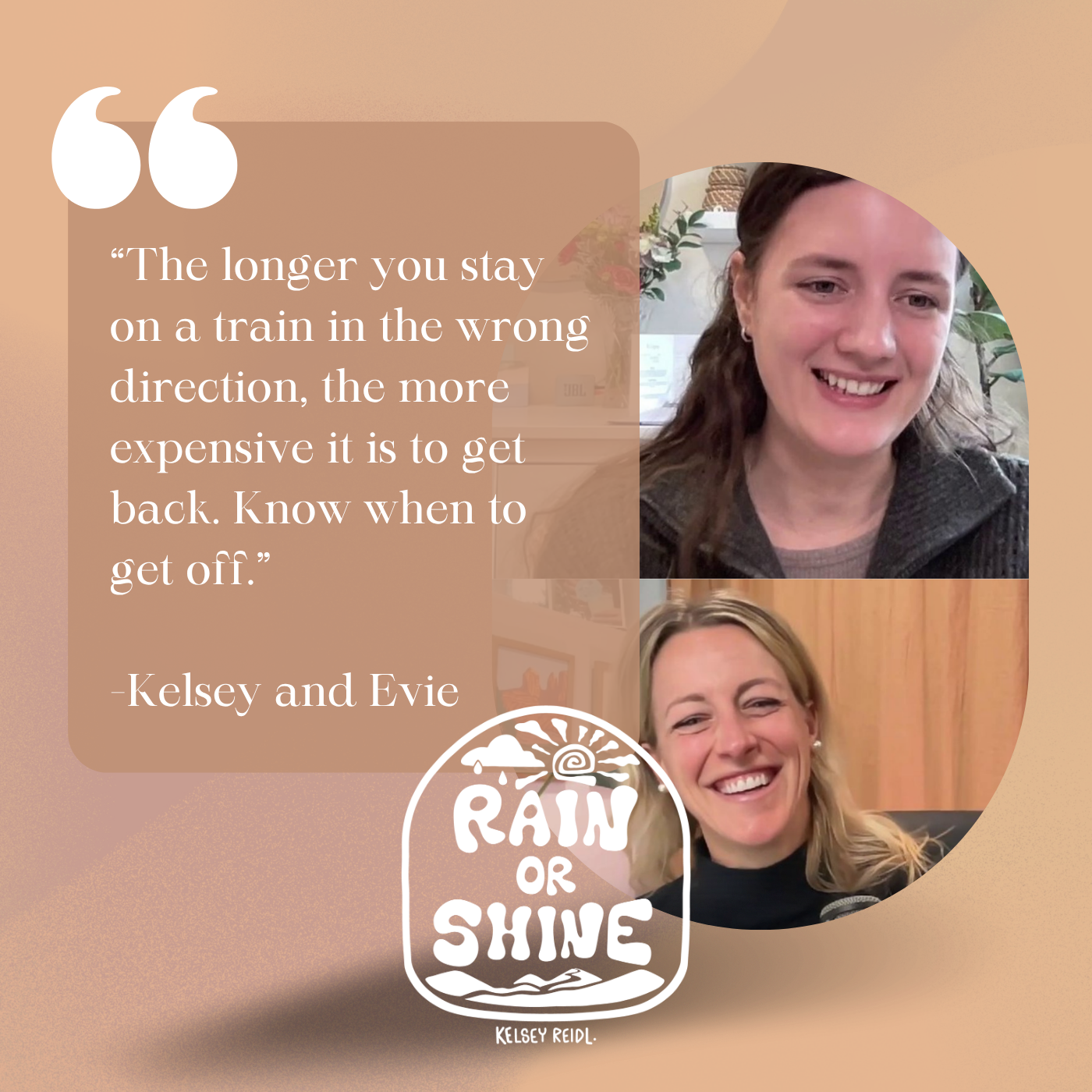
The longer you're on the wrong train, the more expensive it is to get back. Know when to pivot: in your business model, your social media strategy, and your habits.
If it only lives in your head, it's already costing you. Document your processes, use AI to reduce mental load, and stop carrying everything alone.
Memorable Quotes
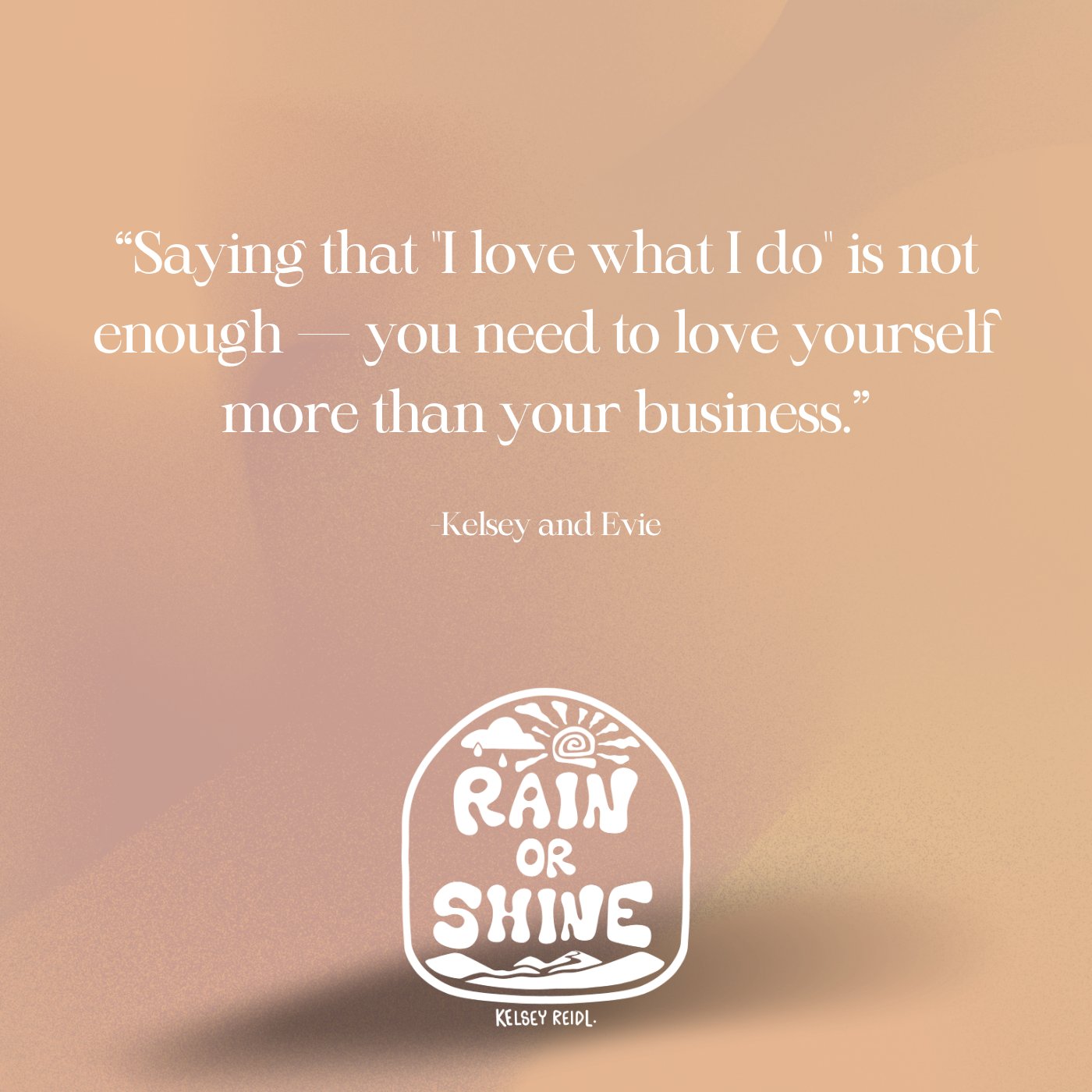
"I love what I do, but I need to love me more." — Anora West, Panelist
"The longer you're on a train in the wrong direction, the more expensive it is to get back." — Julie Cole, Mabel's Labels
"The people who win at AI didn't start first. They started smart." — Johanna (AI Keynote Speaker)
Resources & People Mentioned
Kelsey’s Website: www.KelseyReidl.com
Kelsey’s Instagram: @KelseyReidl
This Mother Means Business — Event hosted by Laura Sinclair at The Pearl, Burlington
Dr. Tracy — Family psychiatrist; keynote speaker on shame and motherhood
Julie Cole — Co-founder of Mabel's Labels; afternoon panel speaker
Anora West — Accounting firm founder; afternoon panelist
Rita — Business Development Manager, The Printing House Canada
Christina Bartold — Business Advisor, CIBC
CIBC Women's Hub — Banking resources and support for women in business
Johanna — AI keynote speaker ("AI Will Not Replace the Woman with Vision")
Asana — Project management tool (mentioned by Evie for AI integration)
Factor Meals — Meal delivery service (mentioned as a practical delegation tool)
High Five Women — Another women's event community mentioned
About Your Hosts
Evie Tavares is the host of Unfiltered Tea with Evie, a podcast where she has real, unfiltered conversations about business, motherhood, and everything in between.
Kelsey Reidl is the host of Rain or Shine, a podcast dedicated to helping entrepreneurs build businesses and lives they love — no matter what the season brings.
-
DELIVERABLE A — CLEANED & EDITED TRANSCRIPT
[00:00] — WELCOME & INTRODUCTIONS
Evie: Welcome back! This is Evie, and I'm here with Kelsey. You're actually listening to two shows today at once — two hosts coming in for a little debrief on an event we were both at yesterday. Welcome to Unfiltered Tea with Evie and Kelsey, and I'll let Kelsey welcome you to hers as well.
Kelsey: Welcome to Rain or Shine! This is a fun opportunity for us to sit down and talk about what's on our minds from the event yesterday. Personally, these are the podcasts I love listening to most — just truly sit back, relax, and listen to two friends having a conversation about business.
Evie: Exactly. I have my cup of tea ready. I know you don't drink tea, so...
Kelsey: I don't — I have a green juice, but I just realized it's empty and I got really sad.
[00:52] — THE EVENT: THIS MOTHER MEANS BUSINESS
Evie: So yesterday we were at the This Mother Means Business event at the Pearl in Burlington, hosted by Laura Sinclair. I've known Laura basically since I started my business — I've done mentorship with her and been part of her online community. It was really cool to go to the event. You and I were talking about this because we've both been to events like High Five Women, and you host your own events too.
What's really cool is that a lot of the people there have been to these other events, so there's a similar audience — but each event has its own differentiator, its own vibe. If you asked me to pick one, I don't think I could. You get something different out of each one.
Kelsey: Yes! Walking into that room and seeing not only you but so many connections we've built over the years at different events — it almost feels like a reunion. But you also know that each event brings its own unique set of people. You're thinking, "How have I never met this amazing human who does similar work?" or "This is someone I'd love to collaborate with" or "This is a brand I'd love to use and now I'm meeting the founder."
It's always inspiring. I love the balance of seeing familiar faces while also being exposed to so many new people. I genuinely believe that when we feel stagnant in business — whether it's revenue, social media growth, or event sales — it's probably a result of not meeting enough new people. The diagnosis and the prescription is the same: go shake hands or hug a bunch of awesome women. That's what these events afford you to do.
Evie: Yes! And I loved the networking part where they literally said, "Don't go network with your friends — go find new people."
Kelsey: And I immediately went over and talked to Christina Bartold, who I already know. Did not follow that advice. But I did meet some really cool people — like the founder of a swimwear brand. I'm looking for swimwear for the summer, so we exchanged info right away. She said I could come try things on at her house. Cool connections like that!
[03:54] — KEYNOTE HIGHLIGHTS: THE PANEL DISCUSSIONS
Evie: Once we got into the speakers — there were keynote speakers, panels, and some experiential elements — did you have a few favorite takeaways?
Kelsey: I'll share one of my big takeaways and then pass it back to you. I was actually writing a LinkedIn post about this morning, reflecting on my favorite part of yesterday's event. Honestly, it was a ten out of ten. It had such a grounded, down-to-earth feeling while still feeling elevated. Getting away from the laptop for a full day felt nourishing.
But when I think about my favorite part, it was the panel discussions. We often go to events craving the keynote speaker — the expert who talks down at the audience. I love those. But the panels that Laura wove in felt cozy — three women on a couch being asked genuine, down-to-earth questions.
One of my favorite moments was when Laura asked the first panelists about their typical day in the life. It sounds so basic — tell me your morning routine — but I found it so relatable. Because we think that at these big levels of success, there'll be some crazy ritual or habit. But what they said was things like: taking every Friday for themselves, or taking a five-kilometer walk with their husband at 9:30 a.m. just to talk.
That last one hit me hard — what a luxury to have space in the morning and not have to wait until 9 p.m. for those conversations. It's a reminder of what entrepreneurship can afford you when you build it intentionally.
Evie: Yes, and even though it seems like such a simple question, everybody had a different answer — and there was so much value in those answers. Dan and I have gone through seasons like that. He does most of our cooking, and when it's a really busy stretch, I'll just say, "Do you want to order Factor meals this week?" Little things like that take the cognitive load off during a busy season. You don't have to make it fancy. It's okay to outsource.
Kelsey: That's a really good point, and it connects directly to what the conference is about — This Mother Means Business. Being a mother and a business owner is a combo where we often pile on expectations: I have to cook, do laundry, buy the kids' shoes, and also run my business. We need to know what season we're in and be okay with delegation.
[09:21] — DR. TRACY: SHAME, VISIBILITY & THE STORIES WE TELL OURSELVES
Evie: That ties in nicely to the first keynote speaker, Dr. Tracy, who is a family psychiatrist. Her whole talk was around shame — how, as mothers, we carry so much of it. She gave an example that it's not necessarily something ingrained in childhood; it just happens as humans, especially when we're building businesses.
When we want to build in the dark — because we're afraid of judgment, seeking approval, needing validation — it keeps us hidden. She made a point that as mothers, we're so busy monitoring and reading other people's emotions that putting ourselves and our businesses into the light is incredibly vulnerable. It's not what we're used to.
Someone asked her how she worked through the shame, and her answer was essentially: there's no magic fix. You just do the thing. Even if you feel shame around it, take the steps. It'll feel uncomfortable. You'll have anxiety. But the more you put yourself out there, the easier it gets. Build your business in the light — let people see the behind the scenes, see your passion. It doesn't have to be something you hide.
Kelsey: That's such a good takeaway. The very nature of how we were raised — watching our moms and grandmothers — was "you don't put yourself first." But when you start a business, you have to go first. You have to step into visibility. That almost goes against our nurturing instincts of making sure everyone else is tended to before taking an hour for your business or recording a podcast.
I love that she gave us permission and shared personal stories of having to wrestle through that — and then coming out the other side, now impacting millions of people.
Evie: And someone asked her, "How do you do all the things?" Her answer? "You don't." Full stop. Mic drop. You don't have to do everything on your own. Lean on your partner, your family, your friends. And some things you can simply delete — they don't need to be done at all.
Kelsey: I never felt that more acutely than when I had my son two years ago. I used to insist on doing all my own grocery shopping — picking my own apples. But then I became a mom and realized that takes two hours a week minimum. And I thought: I don't actually have to do this. You can pay No Frills one dollar to do it for you. But I had shame around that because the story was, "Grocery shopping is my thing. I want to be in control of it."
Which brings me to the other part of Dr. Tracy's talk I loved — she asked us all to write down the story we tell ourselves. What I wrote was: "I don't have enough time or space to dream and be creative on behalf of my business." I've said that out loud a million times. And as a result, I don't feel creative.
Then she asked: what does that actually mean about you? I realized I'm telling myself a story that I'm not in a season where I can be creative — and therefore ideas don't drop in. My reflection from that was: how can I rewrite that story? Maybe I don't have empty white space in my calendar, but what about while I'm sipping coffee? Or playing blocks with my two-year-old Freddie? How can I weave creativity into life as it is now, instead of waiting for a perfect season that may never come?
Evie: I love that. I didn't go as deep on my story in the moment — I think I'm still processing it. And I think that's really cool, actually. Sometimes you're not going to absorb everything right there in the keynote. You take it home, you ponder it, you let it unfold.
Kelsey: That's honestly the best part of events. You're absorbing in the moment, but the real aha moments often come when you take five minutes to reflect on your notes — or have a conversation like this one — where it becomes something you carry forward rather than a paper you crumple up and file away.
[16:36] — THE AFTERNOON PANEL: JULIE COLE, RITA & CHRISTINA
Evie: There was a mic-drop moment from the first panel I have to mention. It was from Anora West — I believe she runs an accounting firm — and she said: "I love what I do, but I need to love me more." Do you remember that one?
Kelsey: Oh yes. What resonated with you about that?
Evie: For me, my business and motherhood are such huge parts of my identity. But this was a reminder to still have an identity outside of both of those things. I really want to write for myself — not just journaling, but creative writing. Play piano. Color. Do little things every day that are just for me as a person, not me as a business owner or me as a mom. Because if you're not looking after yourself in that way, you can't show up fully in those other areas.
Kelsey: It's crazy how we can let business and other identities creep in so deeply that we almost forget we are the vessel that brings everything else to life. If I don't love myself first, how am I supposed to impact on greater levels, start new companies, or show up for my kids? None of it happens if I don't put myself as the number-one priority.
So — I'm turning this back on you. What are you going to do in the next seven days to show yourself that you're the priority?
Evie: I think it's giving myself the opportunity to sit down and do something creative. Because when I can't fulfill that need, it affects me — I get a little grumpy, honestly. If I just sat down for an hour of quiet and gave myself space to color, draw, play piano, write something that's not a caption or a business doc — I think that would be a really good goal.
Kelsey: I love that. And I see how hard it is, because I've had those same ambitions. Schedule creative time, lean into hobbies. But it's always the first thing to get pushed off the list. If you find any tips, report back.
Evie: Ha — because it doesn't feel like it should be a priority, and then it impacts you and you're like, "Oh. We need to do something about that."
[20:30] — JULIE COLE, RITA & CIBC'S CHRISTINA
Kelsey: I loved the afternoon panel. Julie Cole was on it, along with Christina, the business advisor from CIBC (the title sponsor), and Rita from the Printing House. Rita shared this incredible backstory of growing up in a war-torn country, then moving to London, England, and later being uprooted again and relocating to Toronto. Being taken out of your place of comfort over and over helped her understand community and relationship building almost out of a basic human need.
Hearing that story made me realize: our struggles become our strengths. Here is a woman who has gone through immense adversity — a single mom — now with a beautiful career as a business development manager. Her gift for service, for genuinely caring about clients, comes directly from having had to build community and friendships in brand new places as a child. It's a reminder that anything hard we've been through — any season we'd rather forget — there might be a superpower hiding in it.
And another thread through her story: it's always possible to rebuild. Even if you have to start over at 30 or 40 — even if your business fails — rebuilding from scratch is possible. People do it. We get to do it.
Evie: I loved that panel because it also included voices you don't always hear at these events — Rita from the Printing House and Christina from CIBC. Seeing the outside-looking-in perspective from people who support business owners was really cool. Christina touched on CIBC's Women's Hub initiative, because they saw a real gap between women in business and banking. Even having worked in a bank myself, I don't always think of going to the bank for business support. Seeing them come to us — instead of expecting us to come to them — was refreshing.
Kelsey: We honestly need more banks at these events. Not because I'm a super fan of banks, but because most of the room was either intimidated, confused, or simply didn't understand what the bank could actually do for them. We all use banks — but few of us understand the full capabilities of how to leverage them in our favor. That's a real gap.
Evie: And some people view banks the same way they view lawyers — a little intimidating, not sure how to approach them. Having someone like Christina there just puts a face to the name. Makes it easier to reach out.
Kelsey: Julie Cole said something I love: "The longer you're on a train in the wrong direction, the more expensive it is to get back." Sometimes we have gut feelings that something isn't working — a business, a strategy, a platform — but we keep saying yes out of obligation. Five years later, you realize you should have gotten off at the first stop.
I see this with clients a lot. Someone has been posting on a social media platform for seven years, Monday-Wednesday-Friday at 7 a.m. — very rigid schedule — and when we look at the return on investment, there's nothing there. That's the sunk cost fallacy in action. Once we've invested time or money into something, we feel like we have to stick with it. But Julie gave us permission: if it's not right, get off the train, go back to the station, and make a new decision based on what you now know.
Evie: And she also talked about going where your people are. She started Mabel's Labels 25 years ago in mom blogs — that's where the traction was. When Facebook came along and moms moved there, she moved too. Then Instagram. The through line isn't the platform; it's the audience. Know where your audience actually hangs out online and put your energy there.
Kelsey: That's such a great insight from someone who's been in business multiple decades. She'll just throw it at you: "Things were different 25 years ago — let me tell you about it."
Evie: She even said, "If 25 years later I was still just sitting in my basement making labels, I probably should have quit." It's okay to evolve. It's okay to stop doing the thing that isn't scaling. And it's okay — necessary, even — to bring people in to help.
Kelsey: Exactly. The moment she said that, I thought about how important it is to always be stepping into the next level. As service providers, we can get so caught in the weeds of doing the work that we never hand off anything. You don't want to be in a basement forever.
Evie: Put somebody else in the basement for a little while!
[31:39] — THE AI KEYNOTE: START SMART, NOT FIRST
Evie: The last keynote was about AI — but not in the way you'd expect. The framing was something like: "AI will not replace the woman with vision." It's not about AI replacing your creativity or strategy. It's about using AI for systems and mental load.
I've been digging into this myself — building a personal assistant and a business assistant. I've got it connected to my calendar and my project management tool, Asana. I can say, "Here's what I have going on today. These are the tasks I want to get done. Help me build a schedule that includes a lunch break and a walk with the dog." And it actually organizes my day — it even moved my heaviest tasks to the morning, which I know is better for me but never actually do on my own.
Kelsey: Her talk really reiterated that us moms and business owners can rely on AI to reduce mental load — whether that's simplifying business operations or handling personal life logistics like meal planning, carpool schedules, or Easter basket shopping. We carry so much. AI can genuinely take some of that away, and it's almost silly not to let it.
If you're still staring at the fridge for an hour wondering what to make Thursday night — that's mental load you don't have to carry. If you love that kind of planning, great. But if it feels like a burden, offload it.
And she said something I loved: "The people who win at AI didn't start first. They started smart." Anyone who starts today can start in a really strategic way — giving AI great context, telling it where you're at, and building from there. It's not about being an early adopter. It's about stepping in and exploring how these tools free up your bandwidth for what actually matters.
Evie: She also said: "If it only lives in your head, it's already costing you." Every system, every process you carry around mentally — that's constant cognitive load. If you document it, automate it, or hand it off to AI, you get that mental space back.
Kelsey: That's so powerful. So many things live in our heads that we get frustrated about — or frustrated at our partners about — just because there's no system behind them. Even something like dog food. Every six or seven weeks we run out and it always feels like a burden. Why haven't I just set a recurring reminder or subscription? That's exactly the kind of thing she was talking about.
Evie: Whatever we can do to make our days easier. That was the overall vibe I took from yesterday: here are the things other moms in business are doing to make their days more sustainable. Not burning out trying to do everything, but doing small things every day to make life a little lighter — mentally and practically.
Kelsey: Yes. And honestly, there could be a whole event just around that — what tools are you actually using to make life easier? If each of us walked away with even three new tools, that's kind of life-changing.
[37:07] — WRAPPING UP: THE POWER OF FOLLOW-UP
Kelsey: The only other thing I wrote down was a list of people I need to follow up with. At an event, you meet so many people and think, "I want to send them a message, get to know them better." So my last takeaway is: don't let the event momentum die. Follow up with key people. Even if your list feels overwhelming, narrow it down to the two or three you really connected with — the ones where something felt different — and start there.
Evie: Yes! And a note on how to do that authentically. I used to follow up after events saying things like, "Great to connect — looking forward to supporting you!" And people would respond thinking I was pitching them. I absolutely was not. Now I say "cheer you on" instead of "support you" — just to keep the lines clear. Keep it genuine, keep it simple. And remember: having in-person connections is one thing, but continuing to nurture and grow them online and at future events is what makes the relationship last.
Kelsey: Totally. Ask yourself: who are the two or three people I really vibed with? Those are the ones most likely to become something meaningful. Don't let the overwhelming list stop you from doing anything.
Evie: Perfect. This was so much fun — and I think I actually liked this format better than a solo recap. I love hearing other people's perspectives. It brings the whole day back. Thank you so much for doing this, Kelsey. We'll share it on both shows and chat soon!
Kelsey: It was a blast! Be sure to follow Evie if you don't already. We had so much fun recording this.

Book Your Free Marketing Strategy Call
Your business deserves to be found—both on Google and ChatGPT.
If you're a solopreneur, author, or thought leader wondering why your marketing isn't translating to consistent revenue, the problem usually isn't what you think.
After 8+ years of working with ambitious entrepreneurs, I've discovered something crucial: most marketing challenges aren't about needing more tactics—they're about solving the wrong problem.
Here's What We'll Uncover Together:
✓ The Real Constraint blocking your growth (it's rarely what you think)
✓ Your SEO Opportunity to rank on Google for what matters
✓ Your AI Visibility Gap and how to show up when prospects ask ChatGPT
✓ Your Lead Generation Blind Spots and where you're losing potential clients
✓ Your Custom Funnel Analysis showing exactly where the leaks are
Book now!
The Potential Return: A clear path to $10K-$50K+ in new revenue
I work with business owners who are done guessing and ready for a marketing strategy built on what actually works—not marketing myths.