Meet Laura Sinclair! Founder of This Mother Means Business
VISIONARY SPOTLIGHT
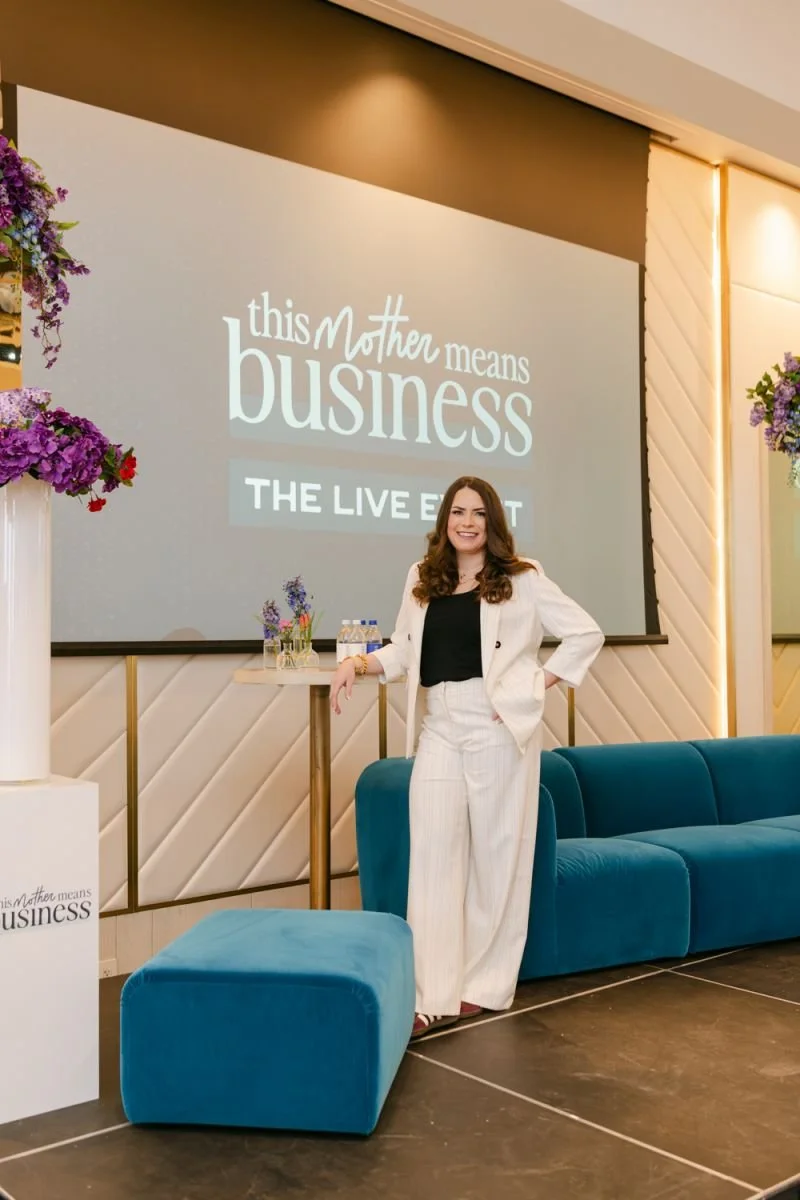
Photo: Laura Sinclair, LinkedIn
Some conversations feel like the start of a friendship, and this was one of them.
I'd been soaking up Laura's content for a while: her podcast, her Instagram, and the way she talks about motherhood and ambition without any of the fluff. Sitting down with her for our very first conversation on the Rain or Shine podcast felt like chatting with a friend who just gets it. She's a corporate marketer turned gym owner turned business mentor, a mom of two, and the founder of a community for ambitious moms. So for this Visionary Spotlight, I'm pulling from that conversation to bring you her story, in her own words.
Tell us about your business and how it started.
Laura started her career in PR and corporate marketing, eventually running digital media for one of the biggest luxury automotive companies in the world. But she never felt settled. "Entrepreneurship wasn't introduced to me really as a concept as a child. It was very much, you go to school and you get a degree and then you go work for somebody else."
She remembers coming home from work, tired of process for process's sake, and telling her boyfriend, "Man, I just wanna run a gym."
Her first taste of entrepreneurship came in 2015, when she left BMW to help a friend build an online nutrition coaching company. Together they grew it to nearly seven figures a month. But they had nothing in writing, and when the relationship started to break down, Laura needed an exit plan. That exit plan turned out to be a CrossFit gym that was being run into the ground.
She bought it for $32,000 in cash, came home from her honeymoon in Bali, and took it over two weeks later. Of the roughly 85 members, about 50 of them weren't happy to see her. "What do you mean there are rules now? What do you mean I have to pay more now? What do you mean you fired that coach?" A year later, her daughter was born. Over the next five years she turned the gym into a business that was making more in a month than she paid for it, and it pretty much ran itself.
How did you navigate a major setback in your business or life?
On March 15, 2020, Laura was eight weeks pregnant with her second child when the pandemic shut everything down. Gyms in Ontario faced heavy restrictions, and by the time they reopened her membership had dropped from about 250 to 115. Her son was born that October, and she decided to close the gym for good at the end of December.
"I want different for my life and I don't want to spend the next five to seven years building this back up to where it was."
She was left with a three-month-old, no income, and about $40,000 from selling off the gym equipment. So she started helping small business owners with social media, the same skill that had filled her gym's funnel, and built a social media agency. In 2023 she launched the This Mother Means Business podcast, and it grew from there into retreats, a membership community, and an annual event.
Why is this mission so important to you?
"You just don't get it unless you get it."
Laura has a lot of stories of being given advice she could never use as a mom. In one paid mastermind, she told the leader she was tired and wanted more simplicity, and his advice was to run her free connection calls three times a week instead of twice a month. Then he told the whole room he was sick of entrepreneurs who weren't willing to do the work. When he came over afterward to check if he'd upset her, her answer was simple: "Do you wanna come over to my house and do bedtime while I host those calls?"
Another time, she told a business coach that her marriage was struggling, she wasn't sleeping, and she felt like a bad mom, while her daughter threw Cheerios from her high chair in the background. He said he was sorry to hear it, and then asked to look at her spreadsheet. She canceled her membership right after.
Laura has thick skin, but she knows thousands of women would hear that kind of thing and decide entrepreneurship isn't for them. That's why she does this work. It's also why, as a mentor, she always asks first: "Is it okay if I push you right now?"
"You can have it all. You can't do it all."
-Laura Sinclair
Where are entrepreneurs overcomplicating their business?
Most of the time, according to Laura, the complexity comes from not knowing what's actually working. That's especially true for business owners making under $200,000 a year.
Her go-to exercise is to look at where your last three to five clients came from. "They'll go referral, referral, referral, in-person event, referral." So if nearly all of your clients come from referrals, why is all your effort going into a 30-day reel challenge?
Once you know your minimum viable marketing plan, simplicity follows. "Stop trying to chase a trend. Stop trying to look for, you know, someone else was doing that, so then I should do that. It's really about getting in touch with your own business." The same goes for your offers. If you have 25 of them with one person in each, that's probably not necessary.
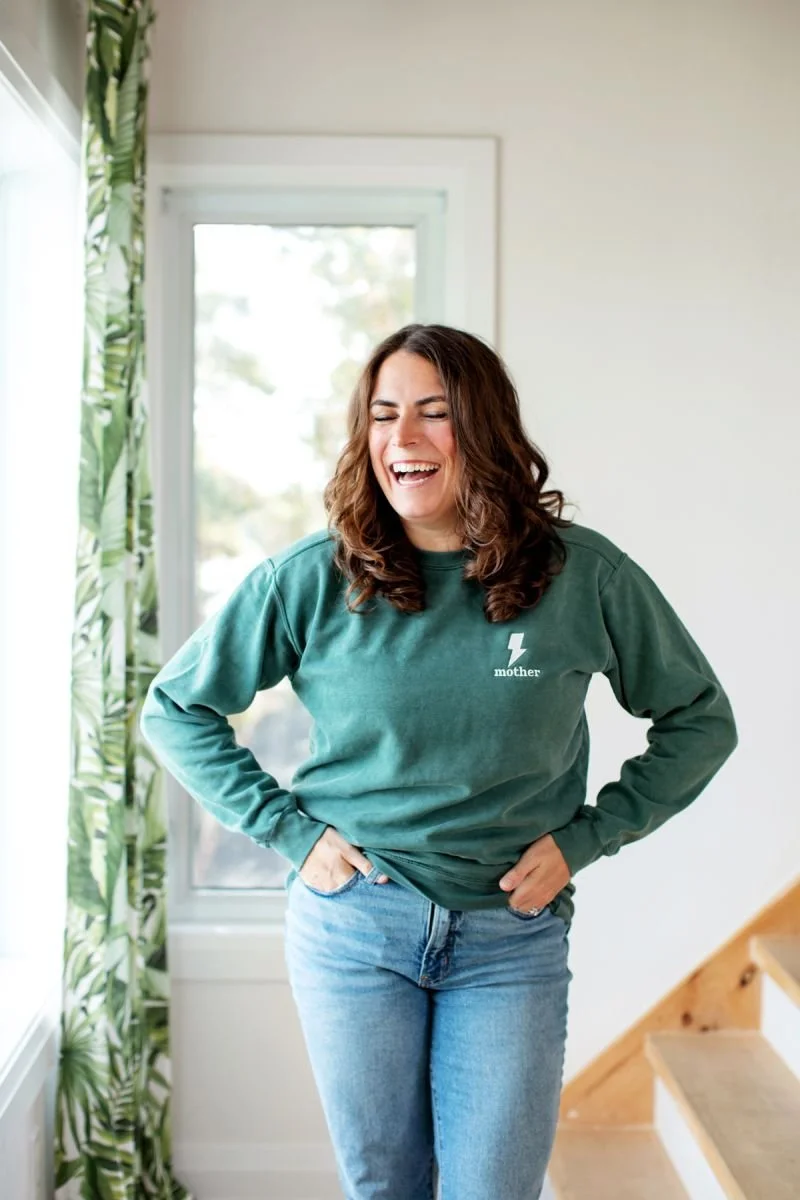
Photo: Laura Sinclair, LinkedIn
What does a simple business actually feel like?
Laura was refreshingly honest on this one. Up until mid-2025, her business was simple. Then she chose to add complexity: corporate sponsors, new revenue streams, a bigger team. Her kids are both in school now, and she has the time and resources to grow. "Simple was fun, and now it's complexity time."
When it was simple, she says, it felt like trust. "It's not feeling scattered, it's knowing truly that it's working." When you know that a certain output brings in a certain result, "it feels great, and I could have stayed there, but I'm a Capricorn, so I wasn't going to."
When a woman at an event told her she wished she could do everything Laura does, Laura's first question was "How old are your kids?" The answer was three months and two years. "I could not have done this with a three-month-old and a two-year-old. There's no way."
What’s something you always do?
Move her body after school drop-off. Her kids love what they call "family drop off" every morning, which Laura will admit is wildly inefficient. But once the kids are at school, that time is hers, usually a workout. "A lot of my job is being of service to others, and certainly being a mom is also being of service to others. So it's really important that I take my time for me." Which is why she doesn't take calls until 11 a.m.
What’s something you never do?
Work evenings or weekends, even in this busier growth season. "I still have my business structured in a way that I don't work in the evenings. I don't work on the weekends." Also, she'll never keynote her own event again.
Why host an in-person conference?
Because her community asked for it, and Laura admits she's a "yes girl." She planned her first This Mother Means Business event completely on her own, keynoted it, and 65 women showed up. Her 2026 event, at the Pearl in Burlington, Ontario, brought together about 150 moms.
It's not a sit-still-for-eight-hours conference. The day covers wellness, skills, and tools, with a lot of intentional networking, including a networking wall where every attendee pins up a Polaroid of herself under the category she's an expert in. "Anytime I'm putting on an event, it's because I want you to come and make friends. That's truly the energy behind it."
And if you're nervous about going alone? About half the room at her first event came solo.
Advice for other entrepreneurs having a rough day?
Say it out loud to someone you love. About 70 days out from her event, Laura messaged her business partner to say she was panicking. "She's like, Laura, calm down, it's fine. So like sometimes I just need someone to give me a little shake."
And check whose expectations you're carrying. Most of our definitions of a "good mom" or a "good entrepreneur" come from someone else. Laura has defined both for herself, and that means no guilt about being away about 20 days a year. "In order to be a good mom, I have to do the things that I need for myself, because otherwise I'm distracted and I don't show up for my kids in the way that I want to."
“Most of the stress I created for myself wasn't actually from motherhood or my business. It was from the expectations I was carrying.”
-Laura Sinclair
A resource that’s added value to her journey?

A book Laura has read three or four times, about the upper limits we unknowingly place on ourselves. She reread it again this year.
Bonus resource: Great Callings by Brianna Wiest. It's shaping how she approaches this season of trying new things for the first time, especially the idea that what you create has to be for you, not for external validation.
Laura's full story, including the podcast, events, and ways to work with her, can be found on her website and Instagram.
Visionary Spotlight
Want to be featured in an upcoming Visionary Spotlight?
Email support@kelseyreidl.com