VISIONARY SPOTLIGHT

Photo: Matt Diamante, heytony.ca
Some people make the complicated feel simple. When it comes to SEO, Matt is one of them.
I'd been following Matt on Instagram for years before I realized he was a fellow Canadian entrepreneur, so I was thrilled to finally get him on the Rain or Shine podcast. You all know how passionate I am about SEO, and Matt has a gift for demystifying it, along with the newer world of showing up in AI search. He's also a former process server, film crew truck driver, band member, and founder of a publication that hit 4 million visitors a month. So for this Visionary Spotlight, I'm pulling from our conversation to bring you his journey, in his own words.
Tell us about your business and how it started.
Matt found marketing by accident. He went to college for heating and cooling, dropped out after the first year, took a year off, and started a band. When his parents pushed him to go back to school, he picked an advertising program because he figured it would help the band. "But when I was actually in school for it, I was like, 'Oh, I actually really like this. It's a whole other creative outlet.'"
He fell in love with SEO, web development, and social media, and started freelancing before he even graduated, taking on $500 and $1,000 website projects. "At the time I thought, 'Wow, I'm basically getting away with murder.' But looking back, those people got so much benefit from that $500."
After college came an unpaid internship at Shaw Media, then a paid one at an agency, which he quit after four months because he hated working at a bigger agency. He left advertising altogether to drive trucks on film sets, working on client projects from his phone's hotspot during downtime. When film work proved too sporadic to pay the bills, he leaned back into freelancing.
What's the real story behind your marketing skills?
An online publication he started, an alternative lifestyle magazine with an anti-nine-to-five message. Matt and his team grew it from zero to 4 million visitors a month, organically.
It wasn't a straight line. A few months in, their investors were pushing for more than 30,000 monthly views. Then, over the holidays, one piece of content went viral, crashed their server, and exposed ad setups they had to fix on the fly. The traffic got them featured by Google Plus, and Vice approached them to join its ad network. At its peak, the publication was making $30,000 to $40,000 a month, while spending $20,000 to $30,000 a month to produce six to ten pieces of content a day.
Eventually it fizzled. Early team members left, and investors grew tired of waiting 120 days for ad network payments. But what Matt learned about hooks, curiosity gaps, and what makes content go viral came with him when he started posting on social media years later.
“If I want to make the world a better place, I can do that one small business at a time.”
-Matt Diamante
Where did the name "Hey Tony" come from?
Matt's name isn't Tony. One day while walking to lunch, he overheard a group of burly construction workers changing over the streetcar tracks, and one said to another, "Hey Tony, you always know how to put a smile on my face."
"I just thought, what a genuine expression of emotion from somebody you wouldn't expect." That's the feeling he wants anyone who works with his agency to have. "Let's be transparent, let's put smiles on each other's faces."
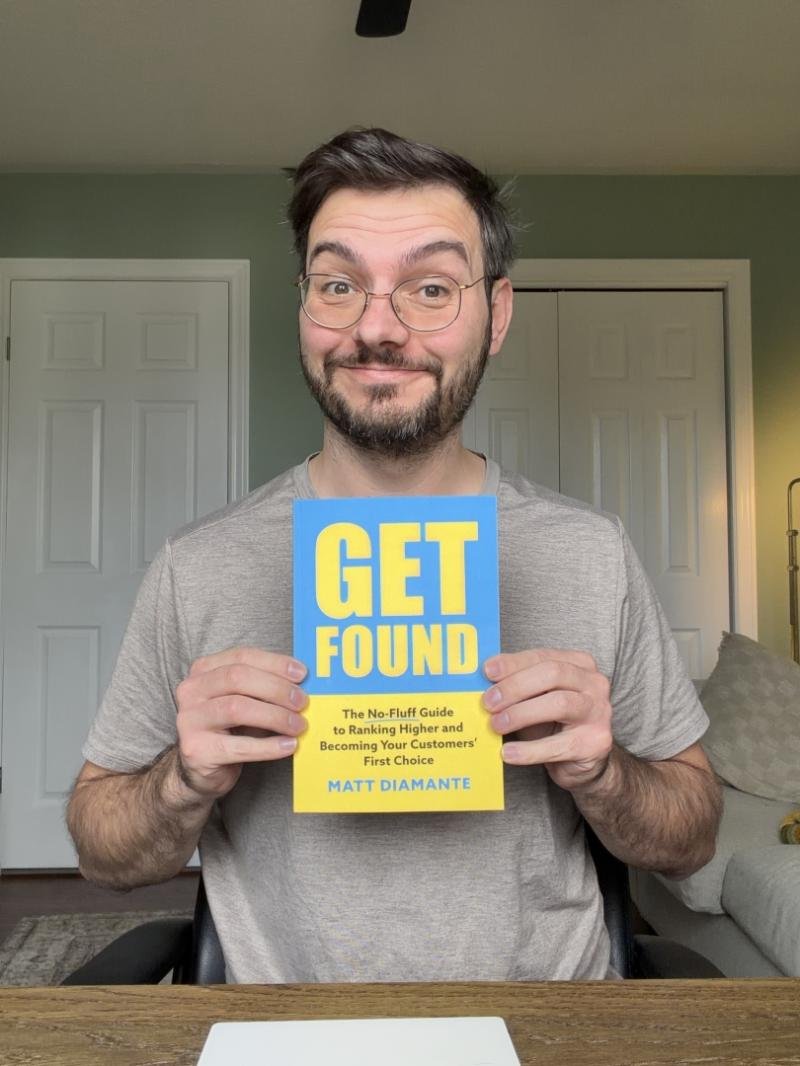
Photo: Matt Diamante, heytony.ca
How did you navigate the slow early years?
The early days of the agency weren't just slow for a few months. They were slow for a few years. Matt was running on referrals, which made the business unpredictable. "You might have ten clients one month or two the next." There was no advertising budget and no formal strategy. "My business plan was pretty simple: make money."
Over time, he figured out which services were actually worth it. A $50,000 website build for a private school sounded great but was a huge hassle. Meanwhile, $2,000 a month for a dental practice's SEO was much easier work, with no urgency and no weekend ad monitoring. "I was like, SEO is the golden thing. Let's do more of that."
Why are you so passionate about SEO?
Part of it is protecting business owners. Matt says much of the SEO industry is full of people taking advantage of them: cold emails, no reports, no real work, or spammy backlinks. Business owners often can't tell, because their expertise is in something else entirely. That's why he's so vocal about teaching people to do it themselves.
But the bigger reason is what small businesses make possible. When good businesses grow, they hire more staff, create jobs, send their kids to college, and pour money back into their local economies.
How is SEO changing with AI search?
It's more of the same, with one big shift: get to the point faster. Think of recipe websites with a long story before the actual recipe. That preamble needs to go. If someone asks how much your service costs, answer in the very first sentence, then go deeper from there.
What's the most unusual job you've ever had?
Process server, delivering court documents for things like divorces and unpaid child support. When he had to get documents to an office an hour away without time to stop and print at home, he rigged his car with an inverter, a printer, and a laptop. "That's basically how you run a business. You're always asking yourself: how can I figure out how to do this more efficiently?"
What do you need in place to start ranking?
Matt's foundations are simple:
A Google Business Profile. If you're a local business, it's your calling card. It puts you on the map, collects reviews, and establishes that you're legit.
Your own website. You don't own your Google profile, Etsy shop, or social media, so you're at the mercy of their algorithms. Your website is the one place you own and control.
Topical authority. This is where most people underinvest. Any time you hear a customer question more than once, write it down, then answer it in a 500 to 1,000-word blog post.
And for service-based businesses, every service needs its own page. An electrician should have separate pages for panel upgrades, ceiling fan replacements, and light fixture installs. "Each page is a door into your business." If you don't explicitly talk about a service, Google won't know you offer it, and neither will potential customers.
As for Google reviews, his advice is to build a system that reminds you to ask every single time a customer is happy. You can't ask for a five-star review, but you can incentivize leaving one, like offering 10% off their next visit. "Stop being afraid to ask."
How do you stay consistent with blogging?
Block one hour a week. In Matt's Hey Tony Inside community, the people seeing the biggest results are the ones who show up to a weekly one-hour session where everyone writes a blog post together using AI.
Here's the prompt he recommends pasting into ChatGPT or Claude:
"I'm writing a blog post answering this question: [paste your question]. Ask me anything you need to know in order to write a blog post that is truly helpful and unique. It should include my experience, expertise, case studies, examples, and opinions. Keep it limited to 10 questions. Ask me them one at a time because I'll be using voice mode to answer them."
That way, AI pulls your expertise out of you through conversation instead of generating generic content from the internet.
What made you start posting on social media?
In January 2023, Matt was tired of the unpredictability of a referral-only business, so he started reading. The One Thing taught him to find one daily action that moves him toward his long-term goals. Gary Vaynerchuk's Jab, Jab, Jab, Right Hook made the case for posting consistently every day. He put the two together: posting daily would be his one thing.
He hadn't been on social media personally in years. "When I joined Instagram in 2023, I was like, 'What is this Reels thing? What happened to IGTV?' My wife was like, 'Where have you been? You work in marketing.'"
So he gave himself one year to prove those authors right or wrong. Now social media drives everything: the agency, his email list, his book, and his community. A 30-second video used to take him four hours. Now he can go from no idea to posted in five to ten minutes.
And he doesn't batch. "If your first video goes viral, the rest of the batch probably won't replicate that." Posting daily lets him see what works and adjust the very next day.
“SEO is just solving somebody's problem.”
-Matt Diamante
How do you wind down after a busy week?
With a nice glass of red wine, and lately, a lot more local wine. After moving to the Niagara Region last year, he and his wife visit a new winery every couple of weeks. "I think we just have it in our heads sometimes that it's not as good if it's made in Ontario, but I actually think it's better."
Advice for other entrepreneurs having a rough day?
Trust that it gets easier with reps. Whether it's content, blogging, or asking for reviews, the hard part is starting and sticking with it. "It seems harder than it actually is. Once you start, your brain just starts thinking in content ideas naturally. It's a muscle."
A resource that’s added value to her journey?

The book that helped Matt identify the single daily action that could move his business forward, which for him became posting on social media every day.
Bonus resource: Jab, Jab, Jab, Right Hook by Gary Vaynerchuk, the book that convinced him daily posting could build a more sustainable business.
Matt's full story, including his book Get Found and the Hey Tony Inside community, can be found on any social network by searching Matt Diamante or Hey Tony.
Visionary Spotlight
Want to be featured in an upcoming Visionary Spotlight?
Email support@kelseyreidl.com