Meet Dr. Shannon Holmes! Vocal Performance Coach
VISIONARY SPOTLIGHT
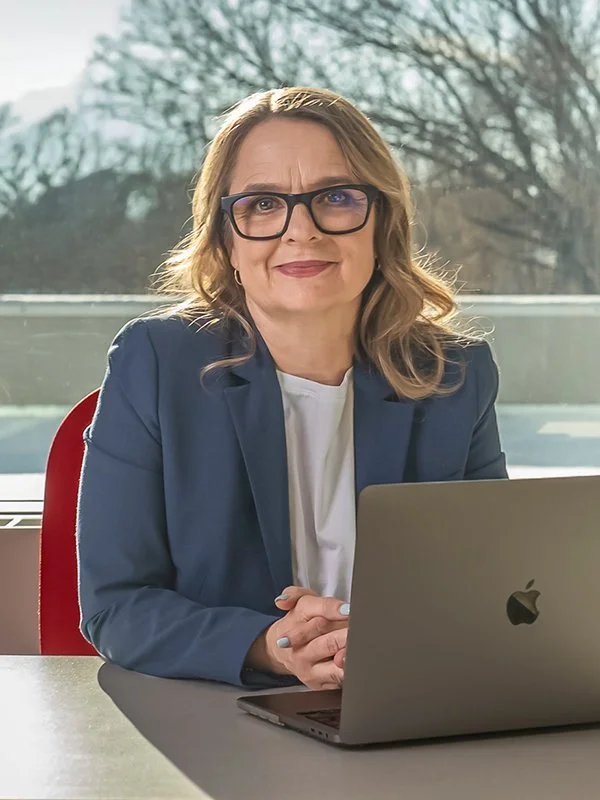
Some stories make you completely rethink what "too late" even means. Dr. Shannon Holmes's is one of them.
Six children. A master's degree in her early forties. A PhD at 50, earned while flying back and forth between Montreal and England. Dr. Shannon is a vocal performance coach and former professional theatre and opera performer, and I had been dying to pick her brain for months before she joined me on the Rain or Shine podcast ahead of her talk at the Wave event. So for this Visionary Spotlight, I'm pulling from that conversation to bring you her journey (plus some voice tips you can use today), in her own words.
Tell us about your business and how it started.
Dr. Shannon had her first child at 23, while she was still in her undergrad and seriously pursuing a career in theatre and opera. In those circles, that was frowned upon. "At the time, you either had a career or you had children. I always knew I wanted both, and I always knew I wanted a large family."
In the beginning, she went to great lengths to hide her kids from the people she worked with professionally. After about three children, she hit a turning point and started living her truth as a working performer who was also a mom.
Around that time, she was doing more and more teaching and coaching. She had her last child at 40, then went back for her master's degree, and loved it so much that she decided to go all the way. "I'm getting a PhD." She completed it in the UK, flying between Montreal and England while her partner held the fort at home. There was plenty of pushback from family and friends, but she was following her curiosity. "I feel like we all did that PhD together. It was a long, hard road, and I don't regret a moment of it."
Is it ever too late to chase your dream?
In the opera world, there's an expiry date. If you haven't hit certain milestones by a certain age, the thinking is that you're done. Dr. Shannon carried that belief for a long time, and she still hears it from her 25-year-old students who tell her they feel "so old."
"It is truly just a number. As clichéd as that sounds, you can make whatever decisions you want to make at any age."
"You can have everything, but not all at the same time."
-Dr. Shannon Holmes
Why does your voice matter so much?
Think about calling a friend to ask how they're doing. They say "fine" in a flat, held-back way, and you know right away something's wrong. That's the voice at work.
Research on human voice perception shows that within roughly a quarter of a second, we make judgements about someone's credibility, authority, and even whether they're a threat, just from the sound of their voice. Because our voices are so vulnerable, we develop protective habits over time. We also all have what Dr. Shannon calls vocal masks: the voice we use with our dog, the voice we use when we call the bank, the voice we use with our best friends.
"Everyone talks about finding your authentic voice, but no one really breaks down what that actually means." That question became a big part of her PhD.
Can you actually get better at using your voice?
"One hundred percent." The key is understanding the difference between your natural voice and your habitual voice. Someone who says "I'm just monotone" wouldn't sound monotone telling a great story to their closest friends. Those habits show up most under pressure (on stage, on a mic, in the spotlight), and that's when we mistake them for who we really are.
She describes the work as peeling an onion, taking back the layers of habit that cover up your real voice. "I ran my first marathon at 40, and I was never an athletic person. You can train your body, and you can train your voice. Same principle."
What’s something you always do?
Wash her face before bed, every single night, even though she can't stand it. "I get water all over the sink, all over my shirt. I'm not someone who can wash her face without making a mess." She does it because she hates waking up with mascara on even more, and because it's a nightly reminder that she can do hard things. "These are habits you're never going to want to do, and you do them anyway because you want that feeling on the other side."
Where should someone start?
With the body. "The body and voice are one." Nervousness, tension, and anxiety all live in the body, and whatever is happening there shows up in your voice. Most people think their voice lives in their throat, but it's a whole-body instrument. And you don't actually want to get rid of your nerves. Just like athletes before a big game, that flutter and elevated heart rate are signals that it's go time.
What can you do in the minute before you speak?
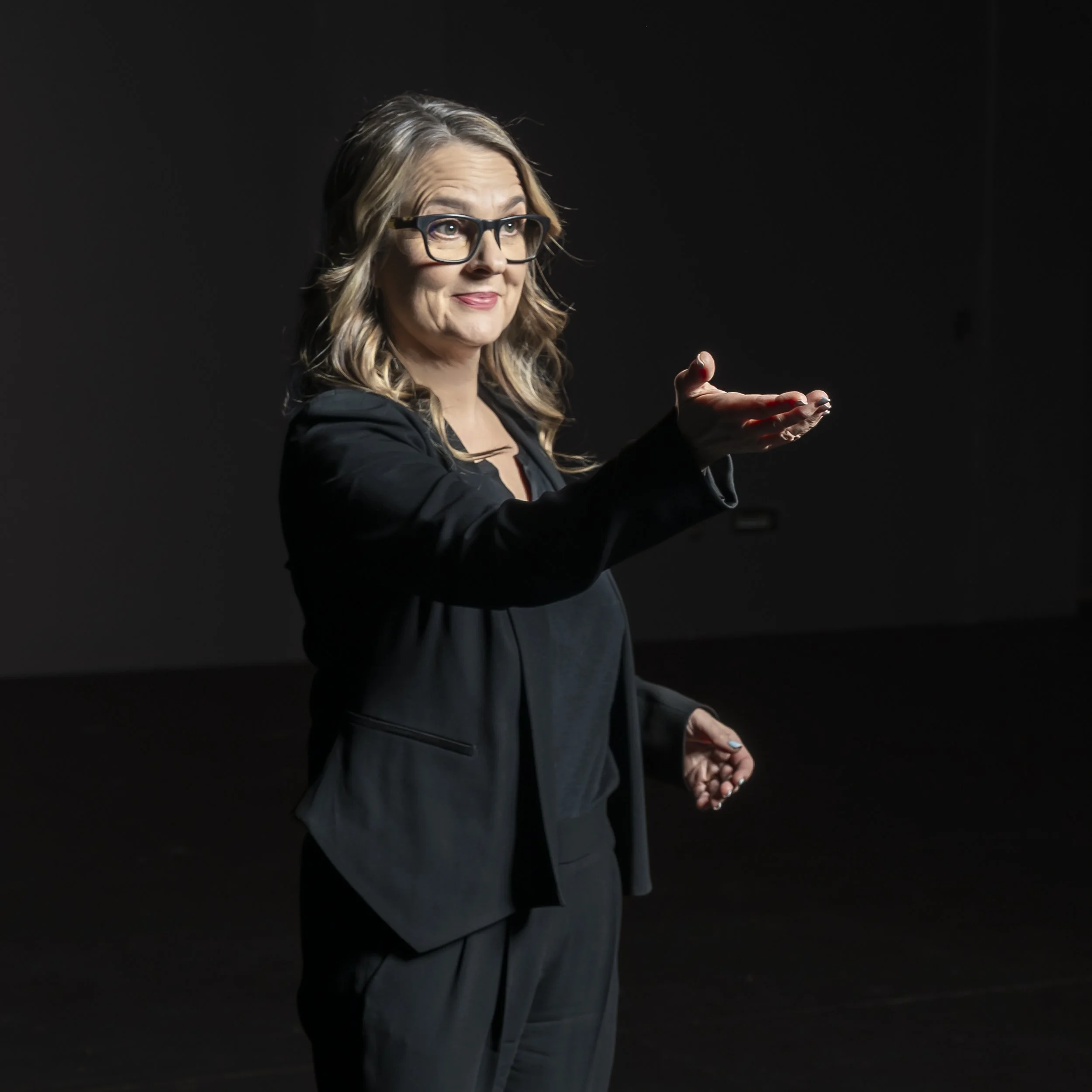
Take up space. Whatever you're about to do is bigger than everyday life, so physically expand rather than collapse. Open your arms out to the side, and take a full breath in on a slow count, followed by a longer exhale.
Then do what opera singers do when they walk into a new space: "breathe in the room." Even for 10 seconds, orient yourself to the space and feel your feet on the floor before you start, whether you're walking on stage or popping up on Zoom. People are already making judgements the moment you appear.
And don't hold your breath. "We hold our breath when we don't want to feel things. When we're nervous, we hold our breath to stop feeling fear. And that's our first mistake." Breathing through it tells your nervous system that you're okay.
Advice for working moms juggling it all?
When you're with your kids, really be with them. Dr. Shannon is grateful that cell phones didn't exist when her children were small, because it made it easier to switch off and be present.
And ask for help, something that was genuinely hard for her early on. "Take the help. Say yes to the help. And be okay with things not being exactly how you want them at home." She's not talking about the values you instill in your kids.
She means things like the laundry. Let it go.
Her go-to practice tip?
Don't leave your voice to chance. "It drives me a little bit crazy that people put so much energy into everything else and leave the voice to chance." We'll spend hours on the slides and the outfit, but skip preparing the voice that delivers it all.
Her advice is to practise in low-stakes moments, like speaking up in a meeting or being intentional about how you communicate with your doctor. Those everyday moments are where you build the skill before the big pitch.
“If the body isn't free, the breath isn't free, and if the breath isn't free, the voice isn't free.”
-Dr. Shannon Holmes
Dr. Shannon's full story, including how to apply to work with her, can be found on her website and Instagram. Rain or Shine listeners can mention the podcast in their application for a special rate.
Visionary Spotlight
Want to be featured in an upcoming Visionary Spotlight?
Email support@kelseyreidl.com